
Advantages of tailored accounting for UK SMEs in 2026
- David Rawlinson
- Mar 31
- 8 min read

Generic accounting packages promise simplicity, but UK small and medium-sized enterprises often discover they deliver frustration instead. When your business operates across multiple VAT schemes, manages seasonal cash flow swings, or navigates sector-specific compliance rules, off-the-shelf solutions fail to adapt to your reality. Tailored accounting addresses these gaps by aligning financial processes with your actual operations, compliance obligations, and growth trajectory. This article examines seven concrete advantages personalised accounting delivers to UK SMEs, compares tailored versus generic approaches across key decision factors, and provides a practical framework for selecting the right solution for your business.
Table of Contents
Key Takeaways
Point | Details |
Custom fit for SMEs | Tailored accounting is shaped around your SME’s unique industry and operational needs. |
Simplifies compliance | Personalised solutions make it easier to stay compliant with UK standards like FRS 102 and MTD. |
Supports business growth | Flexible, scalable accounting lets your processes grow with the business. |
Better decision-making | Bespoke reporting delivers financial insights you can use to drive progress. |
Why generic accounting falls short for UK SMEs
Generic accounting services apply identical templates regardless of whether you run a construction firm, an e-commerce shop, or a consultancy. This one-size-fits-all approach creates immediate problems. Your financial reports lack the granularity to track project profitability, your VAT returns miss industry-specific reliefs, and your year-end accounts require manual adjustments because the software cannot handle your revenue recognition model.
The limitations compound over time:
Compliance gaps: Generic systems rarely accommodate FRS 102 Section 1A micro-entity exemptions or construction industry scheme deductions without workarounds
Reporting blind spots: Standard dashboards show revenue and expenses but ignore the metrics that actually drive your decisions, such as customer acquisition cost or inventory turnover
Planning constraints: Fixed templates cannot model scenario planning for expansion, restructuring, or sector downturns
Integration friction: Off-the-shelf packages often fail to connect with your CRM, project management tools, or specialist invoicing systems
“Generic accounting services fail to adapt to the unique financial challenges of UK SMEs, leaving businesses with incomplete visibility and reactive rather than proactive financial management.”
These pain points explain why many SMEs outgrow their initial accounting setup within 18 months. The professional accounting benefits of switching to bespoke accounting support become clear when you compare the cost of manual corrections against the efficiency of a system built for your workflow.
Top advantages of tailored accounting for SMEs
Tailored accounting enables better adaptation to the unique financial challenges UK SMEs face. Here are the seven advantages that matter most:
Industry-specific customisation: Your chart of accounts, reporting categories, and compliance workflows reflect your sector’s requirements. A hospitality business tracks covers and average spend per table, whilst a professional services firm monitors billable hours and realisation rates.
Proactive financial management: Instead of reviewing last month’s results, you receive forward-looking cash flow projections, scenario models for pricing changes, and early warnings when key ratios drift outside healthy ranges.
Simplified compliance: Tailored systems automate FRS 102 or FRS 105 reporting requirements, apply the correct VAT treatment to mixed supplies, and generate HMRC-ready submissions without manual intervention.
Meaningful management reporting: You define which KPIs appear on your dashboard. Track gross profit by product line, monitor debtor days by customer segment, or analyse marketing ROI by channel.
Scalable architecture: As you add locations, hire staff, or launch new revenue streams, your accounting system expands without requiring a complete rebuild. New cost centres, departments, or entities integrate seamlessly.
Workflow integration: Tailored solutions connect your accounting data with inventory management, payroll, CRM, and project tracking tools, eliminating duplicate data entry and reconciliation errors.
Strategic advisory access: Personalised accounting relationships typically include regular reviews with advisors who understand your business model, enabling strategic guidance rather than transactional bookkeeping.
Pro Tip: Even micro-entities with turnover below £632,000 benefit from tailored bookkeeping. Customising your nominal codes and automating bank feeds saves hours each month and provides the financial clarity needed to make confident decisions about pricing, hiring, or investment.
The advantages of hiring accountants for businesses extend beyond compliance. Tailored approaches transform accounting from a backward-looking obligation into a forward-looking management tool, directly supporting the role of accountants in SME growth.
Tailored vs generic accounting: A side-by-side look
Understanding the practical differences helps you evaluate which approach suits your current situation and growth plans.
Factor | Generic Accounting | Tailored Accounting |
Setup cost | £300-£800 initial | £1,200-£3,000 initial |
Monthly fee | £50-£150 | £200-£600 |
Compliance automation | Basic HMRC submissions | Industry-specific rules, FRS 102/105 adaptation |
Reporting flexibility | Fixed templates | Custom dashboards, KPI tracking |
Scalability | Requires platform change | Grows with business |
Integration | Limited API connections | Full workflow integration |
Advisory support | Transactional queries only | Strategic planning included |
Best for | Startups, simple operations | Established SMEs, complex needs |
This comparison reveals a clear pattern. Tailored accounting offers proactive solutions whilst generic services provide basic, reactive support. The higher upfront investment in tailored systems pays dividends through reduced errors, faster month-end closes, and actionable insights that generic templates cannot deliver.
Generic accounting suits businesses with straightforward operations, minimal compliance complexity, and limited growth plans. Tailored solutions become essential when you manage multiple revenue streams, operate across jurisdictions, employ staff, or need financial data to inform strategic decisions. The accounting compliance checklist for UK SMEs highlights requirements that generic systems often miss.
Compliance and reporting made simpler with tailored accounting
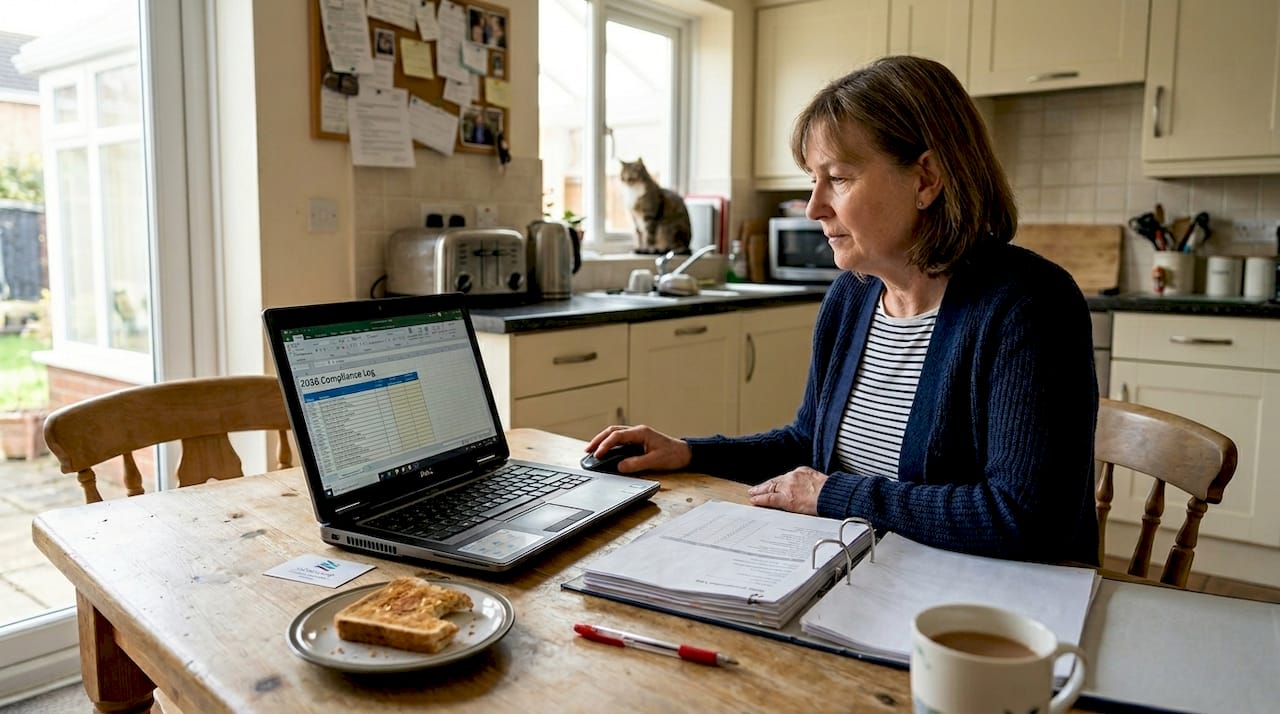
HMRC compliance demands precision, and FRS 102/105 allow tailored reporting for small and micro-entities in the UK. Personalised accounting systems optimise your financial statements by applying the appropriate framework automatically.
Consider the documentation requirements:
Reporting Element | FRS 102 (Small Entity) | FRS 105 (Micro-Entity) | Generic System Handling |
Balance sheet | Required | Required | Standard template |
Profit and loss | Required | Required | Standard template |
Cash flow statement | Optional | Not required | Often auto-generated unnecessarily |
Directors’ report | Required | Simplified | Manual preparation needed |
Accounting policies | Detailed | Minimal | Generic boilerplate |
Related party disclosures | Required | Exemption available | Requires manual review |
Tailored systems apply the correct framework based on your entity size and structure, eliminating unnecessary disclosures for micro-entities whilst ensuring small entities meet full requirements. This precision reduces preparation time and audit risk.
Pro Tip: Many SMEs miss the reduced disclosure framework available under FRS 102 Section 1A. If your turnover sits below £10.2 million and your balance sheet below £5.1 million, you qualify for simplified reporting. Tailored accounting automatically applies these exemptions, saving professional fees and preparation time.
The SME compliance checklist becomes manageable when your system tracks deadlines, generates compliant submissions, and flags exceptions. Tailored solutions also support accountants working with SMEs by providing audit trails, supporting documentation, and reconciliation reports that meet professional standards.
Future-proofing: Cloud and digital tailored accounting for growth
Making Tax Digital requirements continue expanding across UK tax obligations. Cloud-tailored accounting is superior for MTD compliance and scalability, offering SMEs significant advantages over traditional desktop systems.
Cloud-based tailored solutions deliver:
MTD-ready infrastructure: Automatic digital links between your accounting records and HMRC submissions, eliminating manual data transfer and reducing VAT errors under Making Tax Digital rules
Remote collaboration: Your accountant, bookkeeper, and management team access real-time data simultaneously, enabling faster decision-making and eliminating version control issues
Automated workflows: Bank feeds, receipt capture, invoice matching, and expense categorisation run continuously, reducing manual data entry by 70-80%
Mobile accessibility: Approve invoices, review cash position, or check project profitability from any device, anywhere
Continuous backups: Cloud providers maintain redundant data centres, protecting your financial records against hardware failure or local disasters
Seamless updates: New features, tax rate changes, and compliance requirements deploy automatically without disrupting your workflow
The initial setup effort for cloud-tailored systems exceeds desktop alternatives. You invest time mapping your workflows, configuring integrations, and training your team. This upfront work pays long-term dividends through reduced manual effort, improved accuracy, and the flexibility to scale operations without changing platforms.
Cloud accounting for UK SMEs particularly benefits businesses with remote teams, multiple locations, or seasonal staffing patterns. Your financial infrastructure supports growth rather than constraining it.
How to choose the best tailored accounting for your SME
Selecting the right personalised accounting approach requires systematic evaluation. Follow these steps:
Assess your complexity level: Document your revenue streams, compliance obligations, reporting needs, and integration requirements. Businesses with single revenue sources and straightforward VAT may not need extensive customisation.
Define your decision metrics: Identify which KPIs actually drive your business decisions. Manufacturing firms need cost of goods sold by product line, whilst service businesses prioritise utilisation rates and project margins.
Evaluate technology readiness: Review your current systems, team capabilities, and willingness to adopt new workflows. Cloud solutions require reliable internet and staff comfortable with digital tools.
Calculate total cost of ownership: Compare setup fees, monthly subscriptions, training costs, and ongoing support against the time saved and errors prevented. Factor in the value of strategic advisory access.
Test integration capabilities: Verify that proposed solutions connect with your CRM, inventory management, payroll, and banking systems. Poor integration creates manual work that negates efficiency gains.
Plan your transition: Map the migration path from your current system, including data conversion, parallel running periods, and team training. Rushed implementations create errors and resistance.
Secure ongoing support: Ensure your provider offers responsive technical support, regular system reviews, and proactive updates about regulatory changes affecting your business.
Custom solutions offer greater reporting flexibility and growth adaptability than generic packages. The micro-entity bookkeeping tips and tailored accounting guidance available from specialist providers help you navigate the selection process with confidence.
Unlock tailored accounting with Concorde Company Solutions
Your SME deserves financial infrastructure that supports growth rather than constraining it. Concorde Company Solutions delivers personalised accounting, payroll services, and compliance support designed specifically for UK small and medium-sized businesses.

Our team builds accounting systems around your actual operations, integrating with your existing tools and providing the management reporting you need to make confident decisions. Whether you require FRS 105 micro-entity accounts, construction industry scheme handling, or multi-entity consolidation, we configure solutions that fit your reality. Explore our tailored SME solutions or contact us directly to discuss how personalised accounting can transform your financial management. We serve businesses throughout Leeds and across the UK, combining local expertise with cloud-based flexibility.
Frequently asked questions
What makes tailored accounting better for UK SMEs?
Tailored accounting provides customisation to your specific business needs, improving compliance accuracy and enabling decision-making based on metrics that actually matter to your operations.
Does tailored accounting help with Making Tax Digital requirements?
Yes, cloud-tailored solutions support MTD compliance through digital links between your records and HMRC, reducing VAT errors and automating submission workflows.
Is tailored accounting expensive compared to generic services?
Initial costs run higher, but cloud-tailored systems deliver superior scalability and long-term savings through efficiency gains, reduced errors, and strategic advisory access that generic packages cannot provide.
Can tailored accounting adapt to FRS 102 and FRS 105 standards?
Yes, personalised systems automatically apply FRS 102/105 tailored reporting frameworks based on your entity size, ensuring compliant financial statements without unnecessary disclosures.
Recommended


Comments