
Role of Accountants for Small Business: Complete Guide
- David Rawlinson
- Dec 4, 2025
- 6 min read

Most british small business owners agree that navigating finances without expert help can be daunting. Over 90 percent of small businesses see accountants as essential to their daily success, proving just how vital professional support is in the United Kingdom. The right accountant offers so much more than tax returns and payroll. Explore how these skilled professionals protect your company’s finances, fuel sustainable growth, and keep you on the right side of the law.
Table of Contents
Key Takeaways
Point | Details |
Accountants as Strategic Partners | Modern accountants provide vital strategic support, helping small businesses with financial management and growth strategies beyond traditional number-crunching. |
Comprehensive Accounting Services | Essential services include tax planning, financial reporting, and payroll management, which are crucial for maintaining compliance and financial health. |
Navigating Legal Compliance | Understanding legal duties and HMRC compliance is critical for small businesses to avoid penalties and safeguard their operations. |
Selecting the Right Accountant | Choose accountants who demonstrate technical competence, industry knowledge, and a proactive approach to support your business goals effectively. |
Defining the Role of Accountants for Small Business
Accountants play a pivotal role in supporting small businesses through comprehensive financial management and strategic guidance. Far beyond traditional number-crunching, modern accountants serve as critical strategic partners who help businesses navigate complex financial landscapes. Research from Sage reveals that 91% of small businesses consider accountants integral to their operational success.
The core responsibilities of accountants for small businesses extend across multiple critical domains. These include financial reporting, tax compliance, budgeting, cash flow management, and providing strategic financial advice. Strategic business guidance has become increasingly important, with 49% of small businesses actively seeking proactive counsel from their accounting professionals to support growth and decision-making.
Specific accountant responsibilities for small businesses typically encompass:
Preparing and filing accurate tax returns
Managing payroll and employee financial records
Developing financial forecasts and budgets
Identifying potential cost-saving opportunities
Ensuring regulatory compliance
Providing insights for strategic business planning
Maintaining precise bookkeeping and financial documentation
Modern accountants have transformed from mere number processors to essential business strategists. With digital technologies enabling more sophisticated financial analysis, accountants now offer nuanced insights that can significantly impact a small business’s trajectory and financial health.
Essential Accounting Services for Small Firms
Small businesses require a comprehensive suite of accounting services to maintain financial health and strategic growth. These services go far beyond simple bookkeeping, encompassing critical financial management functions that help businesses navigate complex regulatory environments and make informed decisions. Firms offering comprehensive accounting support play a pivotal role in ensuring small businesses remain financially robust and compliant.

The core accounting services essential for small firms typically include financial reporting, tax preparation, payroll management, and strategic financial planning. Statutory accounts preparation is particularly crucial, involving the meticulous compilation of financial statements that meet legal requirements and provide insights into the business’s financial performance. Limited company accounting requires specific expertise to ensure accurate documentation and compliance with regulatory standards.
Key accounting services for small firms encompass:
Tax Planning and Compliance
Corporation tax return preparation
Self-assessment tax submissions
VAT return management
Tax efficiency strategies
Financial Reporting
Profit and loss statements
Balance sheet preparation
Cash flow analysis
Management accounting reports
Bookkeeping and Record Management
Maintaining accurate financial records
Reconciling bank statements
Expense tracking
Digital accounting software integration
Payroll Services
Salary calculations
PAYE submissions
National Insurance contributions
Pension auto-enrolment management
Effective accounting services provide small firms with more than just number-crunching. They offer strategic insights, help identify potential financial risks, and support businesses in making data-driven decisions that can significantly impact long-term growth and sustainability.
Legal Duties and HMRC Compliance Explained
Navigating the complex landscape of legal duties and HMRC compliance represents a critical challenge for small businesses. Statutory obligations require meticulous attention to detail and a comprehensive understanding of regulatory frameworks. Limited company compliance demands rigorous documentation and adherence to multiple legal requirements that can significantly impact a business’s financial standing and operational integrity.
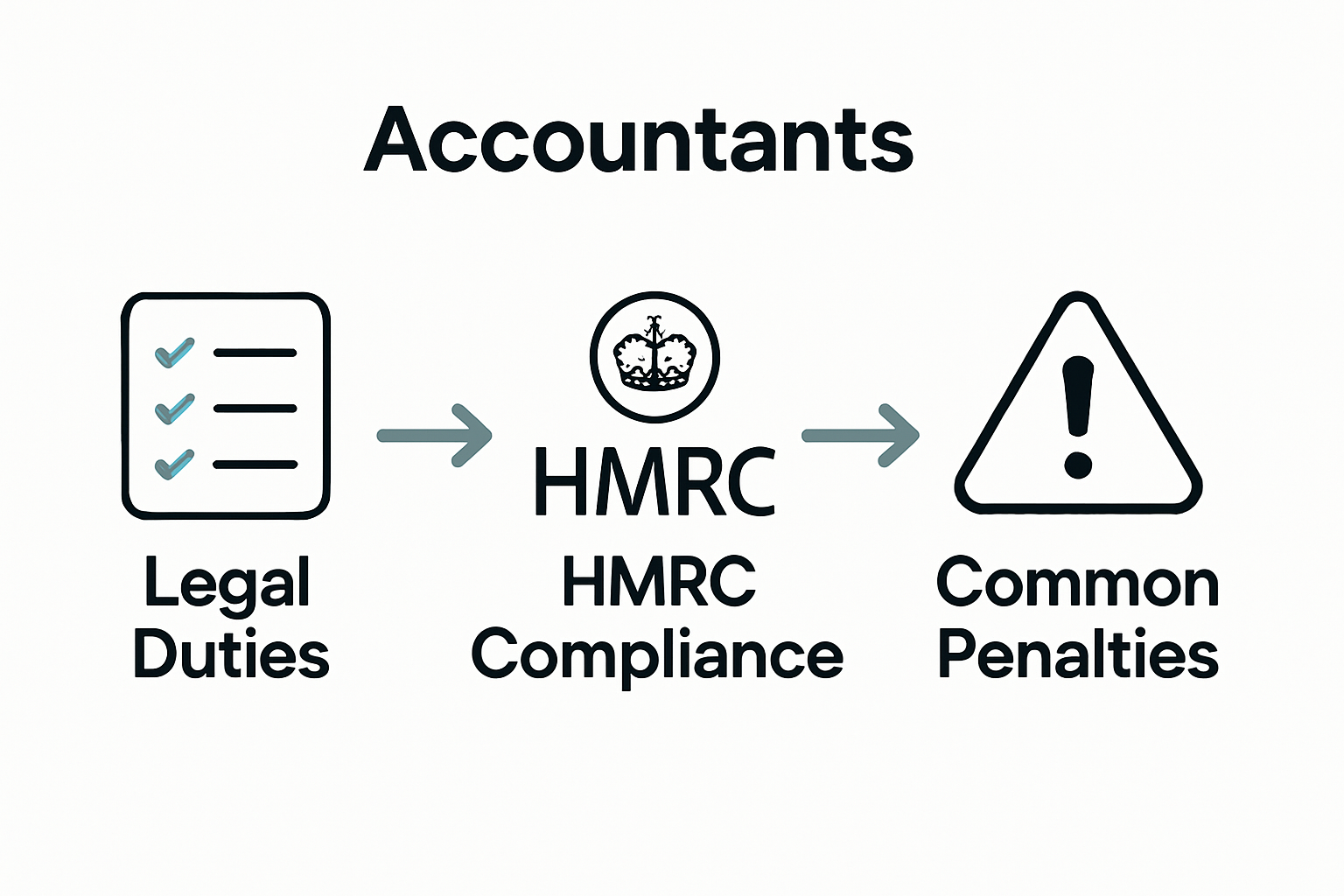
HMRC compliance involves several key responsibilities that businesses must fulfil to remain legally compliant. Digital tax reporting initiatives are transforming how businesses manage their tax obligations, with the Making Tax Digital programme introducing more sophisticated reporting mechanisms. These requirements include precise record-keeping, timely tax submissions, and maintaining transparent financial documentation across various reporting periods.
Critical legal duties for small businesses encompass:
Taxation Compliance
Corporation tax returns
Self-assessment submissions
VAT registration and reporting
PAYE management
Statutory Reporting
Annual accounts filing
Confirmation statements
Company register updates
Shareholder communications
Regulatory Obligations
HMRC registration
Maintaining accurate financial records
Complying with Companies House requirements
Implementing appropriate accounting standards
Financial Disclosure
Transparent financial reporting
Declaring potential conflicts of interest
Maintaining audit trails
Submitting annual financial statements
The consequences of non-compliance can be severe, including substantial financial penalties, legal challenges, and potential disqualification of company directors. Professional accountants play a crucial role in guiding businesses through these complex regulatory landscapes, ensuring that all legal requirements are met with precision and strategic foresight.
Financial Management and Business Growth Support
Accountants play a transformative role in supporting small businesses beyond traditional financial record-keeping. Research from the Association of Accounting Technicians highlights how professional accountants assist SMEs in developing comprehensive growth strategies through sophisticated financial forecasting and analytical techniques. Their expertise extends far beyond number-crunching, providing strategic insights that can fundamentally reshape a business’s trajectory.
Financial strategy development represents a critical aspect of accountants’ support for small businesses. Empirical research demonstrates that businesses working closely with professional accountants can experience significant revenue growth, with an average increase of 11.5%. This collaborative approach involves deep financial analysis, identifying potential investment opportunities, and creating robust financial models that support sustainable business expansion.
Key areas of financial management and growth support include:
Strategic Financial Planning
Long-term financial forecasting
Cash flow management
Investment strategy development
Risk assessment and mitigation
Business Performance Analysis
Profitability trend identification
Expense optimization
Competitive financial benchmarking
Performance metric tracking
Growth Strategy Development
Market expansion analysis
Funding and capital acquisition strategies
Business model refinement
Scalability assessment
Financial Optimization
Cost reduction strategies
Efficiency improvement recommendations
Technology integration planning
Resource allocation optimization
The most effective accountants act as strategic partners, transforming raw financial data into actionable intelligence. They provide nuanced insights that help businesses make informed decisions, identify potential growth opportunities, and navigate complex financial landscapes with confidence and precision.
Selecting the Right Accountant for Your Needs
Choosing the right accountant represents a critical strategic decision for small businesses, requiring careful consideration of multiple professional capabilities. Digital technology proficiency has become a fundamental criterion for modern accounting professionals, enabling businesses to leverage sophisticated financial management tools and insights.
Professional expertise goes beyond traditional number-crunching, demanding a holistic approach to financial strategy and business support. Small businesses should seek accountants who demonstrate not just technical competence, but also a deep understanding of their specific industry, regulatory landscape, and growth objectives. The ideal accounting partner acts as a strategic advisor, offering nuanced guidance that transcends routine financial administration.
Key considerations when selecting an accountant include:
Technical Competence
Professional qualifications
Industry-specific experience
Digital technology skills
Understanding of current tax legislation
Strategic Capabilities
Business growth advisory skills
Financial forecasting abilities
Performance analysis expertise
Proactive problem-solving approach
Communication and Accessibility
Clear, jargon-free communication
Responsiveness to queries
Transparent fee structures
Regular financial reporting
Technology Integration
Compatibility with digital accounting platforms
Cloud accounting capabilities
Data security protocols
Software integration skills
Ultimately, the right accountant serves as a trusted financial partner, offering insights that can transform raw financial data into strategic business intelligence. Businesses should prioritise professionals who demonstrate not just technical skills, but a genuine commitment to understanding and supporting their unique organisational goals.
Partner with Experts Who Understand the Role of Accountants for Small Businesses
Managing your small business finances involves juggling many responsibilities from statutory accounts to HMRC compliance. If you feel overwhelmed by tax returns, payroll management or strategic financial planning, you are not alone. Many business owners seek trusted accounting partners who provide tailored support to navigate these challenges with confidence.

At Concorde Company Solutions, we specialise in delivering clear, transparent accounting services designed for small businesses. From expert Limited Company Accounts preparation to seamless company tax returns and reliable payroll management, our team acts as your strategic financial partner. Don’t wait until compliance pressures or cash flow concerns mount. Connect with us today and take the first step towards simplifying your accounting and accelerating your business growth.
Frequently Asked Questions
What are the primary responsibilities of accountants for small businesses?
Accountants for small businesses typically manage financial reporting, tax compliance, budgeting, cash flow management, and provide strategic financial advice to support business growth.
How can accountants help small businesses with financial management?
Accountants assist small businesses by developing financial strategies, analysing business performance, and identifying potential growth opportunities, which can lead to improved revenue and sustainable expansion.
Why is tax compliance important for small businesses?
Tax compliance is crucial as it ensures adherence to legal obligations, avoiding severe penalties and legal challenges. Accountants help businesses accurately manage their tax responsibilities to maintain financial health and operational integrity.
What should I consider when selecting an accountant for my small business?
When choosing an accountant, consider their technical competence, strategic capabilities, communication style, accessibility, and proficiency with digital technology to ensure they align with your business needs.
Recommended


Comments