
Corporation Tax Explained: What UK Businesses Need to Know
- David Rawlinson
- Dec 13, 2025
- 7 min read

Most british businesses know that Corporation Tax can dramatically affect their bottom line, yet misunderstandings about the process result in costly penalties for thousands each year. Staying compliant is more than ticking boxes—it shapes ongoing financial security and trust with HM Revenue and Customs. This guide sheds light on how Corporation Tax works and highlights practical steps every British company should master to keep their finances safe and their business ahead.
Table of Contents
Key Takeaways
Point | Details |
Corporation Tax Overview | Corporation Tax is a mandatory levy on total profits for UK businesses, including limited companies and foreign organisations with UK branches. |
Calculation Process | Accurate tracking of taxable profits is essential, with tax rates varying from 19% to 25% depending on profit thresholds. |
Filing Deadlines | Companies must submit their Company Tax Return within 12 months and pay tax liabilities within 9 months and 1 day of their accounting period’s end. |
Allowed Deductions | Businesses can minimise tax liabilities through allowable expenses, such as salaries, operational costs, and capital investments. |
What Corporation Tax Means for UK Companies
Corporation Tax represents a critical financial obligation for businesses operating within the United Kingdom. According to the UK government’s official guidelines, this tax applies to limited companies, foreign organisations with UK branches, and certain unincorporated associations like clubs and societies. Essentially, it is a mandatory levy calculated on the total profits generated by an organisation during its accounting period.
The tax encompasses multiple profit streams, including trading revenues, investment returns, and capital gains from asset sales. Corporation Tax rates fluctuate based on the company’s total annual profits, creating a progressive taxation structure that adjusts according to business performance. Historical records show the tax has undergone significant evolution since its introduction in 1965, reflecting the dynamic nature of the United Kingdom’s fiscal policies.
For UK businesses, understanding Corporation Tax involves recognising several key components. Companies must:
Calculate their total taxable profits accurately
Maintain comprehensive financial records
Submit their Corporation Tax return within specific timeframes
Pay the calculated tax liability to HM Revenue and Customs (HMRC)
Navigating Corporation Tax successfully requires meticulous financial management and a thorough understanding of current tax regulations. While the process might seem complex, strategic planning and professional guidance can help businesses manage their tax obligations efficiently and effectively.
How Corporation Tax Is Calculated and Paid
Corporation Tax calculation represents a nuanced process that requires meticulous financial tracking and understanding of current UK tax regulations. According to official government guidelines, the tax liability depends directly on a company’s total taxable profits, with rates varying based on specific profit thresholds. The primary Corporation Tax rates currently stand at 25% for profits exceeding £250,000, while smaller businesses benefit from a reduced rate of 19% for profits up to £50,000.
The calculation process involves several critical steps. Companies must first determine their total taxable profits, which includes income from trading, investments, and chargeable gains. Detailed tax guidance reveals a complex marginal relief system for businesses with profits between £50,000 and £250,000, where the tax rate gradually increases from 19% to 25%. This sliding scale ensures that smaller businesses are not disproportionately burdened by taxation.
To accurately calculate and pay Corporation Tax, businesses should follow these essential steps:
Maintain precise financial records throughout the accounting period
Calculate total taxable profits, including all revenue streams
Apply the appropriate tax rate based on total profit level
Complete and submit the Company Tax Return to HMRC
Pay the calculated tax liability by the specified deadline
Successful Corporation Tax management requires ongoing financial diligence and a comprehensive understanding of current tax regulations. While the process might seem complex, breaking it down into systematic steps and potentially seeking professional accounting advice can help businesses navigate their tax obligations effectively and minimise potential compliance risks.
Key Filing Deadlines and HMRC Requirements
Navigating the complex landscape of Corporation Tax filing requires precise attention to HMRC’s strict deadlines and requirements. According to government guidelines, companies must submit their Company Tax Return within 12 months of their accounting period’s conclusion, with Corporation Tax payments due significantly earlier - within 9 months and 1 day after the period ends. Missing these critical timelines can trigger substantial financial penalties that could seriously impact a business’s financial health.
The Company Tax Return, formally known as the CT600 form, represents a crucial compliance document for limited companies. Detailed reporting requirements highlight the importance of accurate and timely submissions, with penalties commencing immediately upon missed deadlines. Initial late filing penalties start at £100 for submissions up to 3 months overdue, escalating for more prolonged delays and potentially causing significant administrative and financial challenges.
To ensure smooth compliance with HMRC requirements, businesses should adopt the following strategic approach:
Mark key tax filing dates in the company calendar
Maintain meticulous financial records throughout the accounting period
Prepare tax documentation well in advance of deadlines
Consider professional accounting support for complex tax situations
Set up reminder systems to prevent missed submission dates
Successful Corporation Tax management goes beyond mere compliance. It requires proactive financial planning, systematic record-keeping, and a comprehensive understanding of HMRC’s evolving requirements. While the process may seem daunting, breaking it down into manageable steps and potentially seeking professional guidance can transform tax filing from a stressful obligation into a structured, predictable business process.
Allowable Deductions, Reliefs and Exemptions
Corporation Tax deductions offer businesses strategic opportunities to reduce their tax liability through carefully planned financial management. According to official government guidelines, companies can substantially lower their tax burden by claiming various allowances and reliefs, including comprehensive deductions for business expenses, capital investments, and research and development activities. These mechanisms provide crucial financial flexibility for organisations seeking to optimise their tax position.

Businesses can leverage multiple categories of allowable expenses to minimise their Corporation Tax liability. Detailed tax guidance reveals specific deductible costs that include essential business expenditures such as travel costs, employee salaries, office supplies, and equipment purchases. Capital allowances represent a particularly valuable mechanism, enabling companies to claim tax relief on significant investments in business assets like machinery, technology infrastructure, and professional equipment.
Key areas where businesses can claim Corporation Tax deductions include:
Operating expenses directly related to business activities
Staff salaries and associated employment costs
Professional development and training programmes
Business travel and transportation expenses
Office equipment and technological infrastructure
Research and development investments
Marketing and advertising expenditures
Professional service fees and consultancy costs
Successful tax planning requires a comprehensive understanding of these deduction opportunities. While the process might seem complex, systematic record-keeping, careful expense tracking, and potentially seeking professional accounting advice can help businesses maximise their available tax reliefs and ensure full compliance with HMRC regulations.
Common Pitfalls and How to Avoid Penalties
Corporation Tax compliance demands meticulous attention to detail and proactive financial management. According to government regulations, businesses face significant financial risks for overlooking critical filing requirements. The penalty structure begins with an initial £100 charge for returns submitted up to 3 months late, with increasingly severe consequences for prolonged delays, including potential 10% additional charges on unpaid tax assessments.
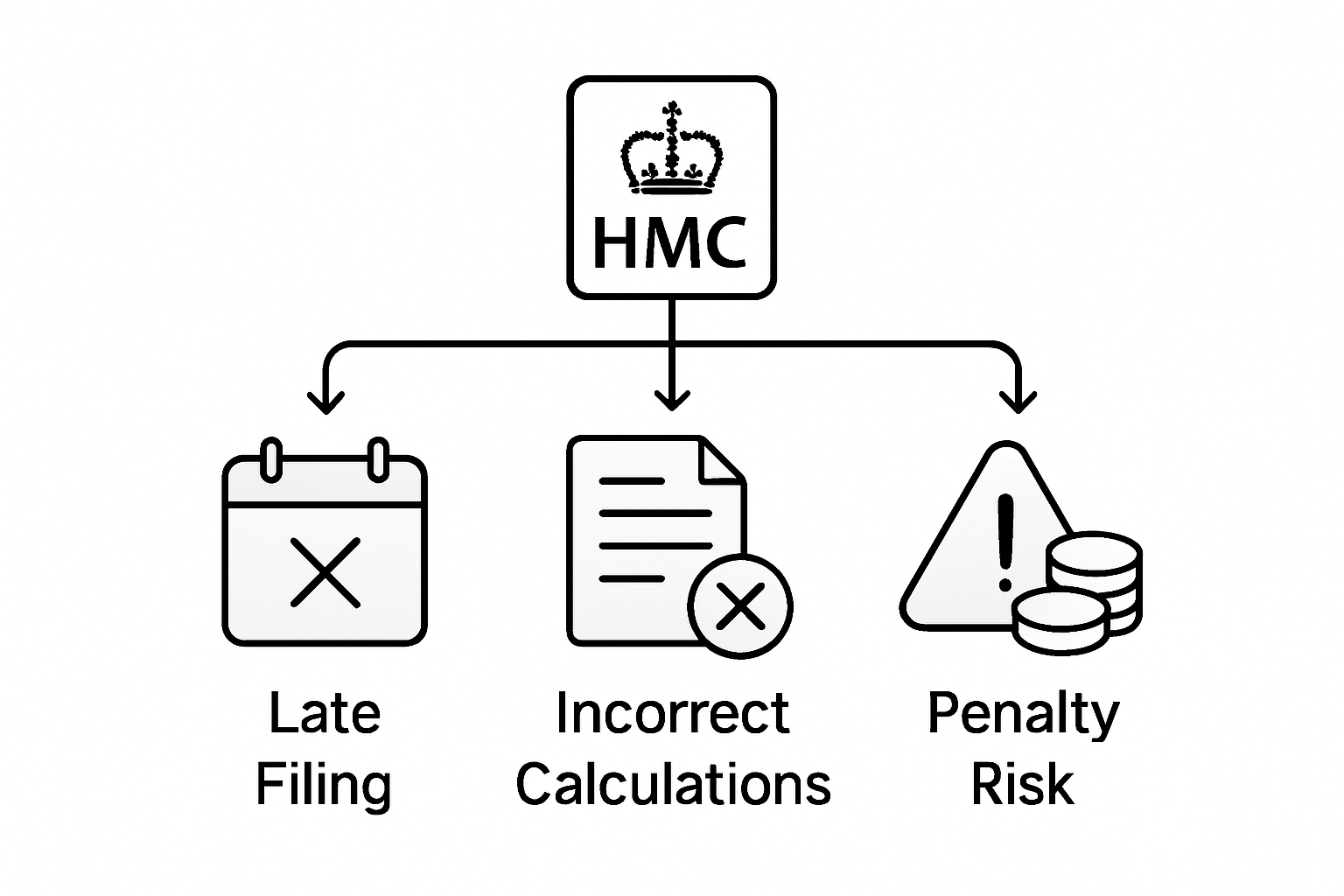
Maintaining accurate and comprehensive business records represents a fundamental requirement for avoiding punitive measures. HMRC’s guidance emphasises the critical importance of precise financial documentation, highlighting that deliberate failures in record-keeping or inadequate instalment payments can trigger substantial penalties. Systematic financial tracking becomes essential for businesses seeking to mitigate potential compliance risks and maintain good standing with tax authorities.
Key strategies to prevent Corporation Tax penalties include:
Establish robust financial record-keeping systems
Create multiple reminders for critical tax filing deadlines
Maintain accurate and up-to-date accounting documentation
Reconcile financial records regularly
Understand specific HMRC reporting requirements
Set aside sufficient funds for tax payments
Consider professional accounting support
Review and double-check all tax return information
Successful tax management goes beyond mere compliance. It requires a proactive approach, combining meticulous financial practices with a comprehensive understanding of regulatory requirements. While navigating Corporation Tax obligations might seem challenging, implementing systematic processes and seeking professional guidance can transform potential pitfalls into manageable, predictable business operations.
Simplify Your Corporation Tax with Expert Support
Managing Corporation Tax can feel overwhelming with strict HMRC deadlines, complex calculations, and the challenge of maximising allowable deductions. Many UK businesses struggle to keep precise records, understand the sliding tax rates, and submit accurate returns on time. At Concorde Company Solutions, we understand these pain points and offer clear, personalised accounting support tailored to your business needs.
Whether you need help with company tax returns, bookkeeping, or ensuring compliance with the latest tax regulations, our dedicated team in Garforth, Leeds is committed to making your financial management straightforward and stress free. Benefit from our transparent pricing and long-term partnership approach that empowers you to focus on growing your business.

Take control of your Corporation Tax today by contacting Concorde Company Solutions. Discover how our expert services such as statutory accounts, accurate company tax returns preparation, and tailored bookkeeping solutions can ensure full HMRC compliance and minimise unnecessary tax burdens. Act now to secure peace of mind and financial confidence with a trusted accountancy partner.
Frequently Asked Questions
What is Corporation Tax?
Corporation Tax is a mandatory tax applied to the profits of limited companies, foreign entities operating in the UK, and certain unincorporated associations. It is calculated on total profits during an accounting period.
How is Corporation Tax calculated?
Corporation Tax is calculated based on a company’s total taxable profits, which includes trading income, investment returns, and capital gains, with current rates set at 19% for profits up to £50,000 and 25% for profits exceeding £250,000.
What are the key filing deadlines for Corporation Tax?
Companies must submit their Company Tax Return within 12 months of their accounting period’s end and pay Corporation Tax within 9 months and 1 day following that period. Missing these deadlines can result in substantial penalties.
What deductions and reliefs can companies claim to reduce Corporation Tax?
Companies can claim deductions for allowable business expenses, including staff salaries, office supplies, capital allowances on equipment, and costs associated with research and development, among other expenses.
Recommended

Comments