
Tax Trends in 2025 – What Leeds Businesses Must Know
- Richard Ellis
- Feb 15
- 8 min read


Tax changes arriving in 2025 are causing concern for small businesses and sole traders across Garforth and Leeds. With HMRC’s modernisation efforts and digital transformation, the way you manage compliance and keep financial records is set to change in a big way. From stricter reporting requirements to rising payroll pressures, understanding these new rules early can mean the difference between smooth operations and costly penalties. This overview brings clarity on key trends, so you can plan with confidence.
Table of Contents
Key Takeaways
Point | Details |
Digital Transformation | Businesses must embrace digital tax reporting to comply with HMRC’s new requirements and enhance efficiency. |
Rising Tax Liabilities | Key changes in taxation such as increased taxes on dividends and freezes on income tax thresholds will affect financial planning. |
Enhanced Compliance Obligations | Accurate digital record-keeping and real-time reporting are essential to avoid substantial penalties due to stringent compliance measures. |
Strategic Workforce Planning | With rising National Insurance Contributions and wage pressures, businesses need to reassess their compensation structures for sustainability. |
Defining Tax Trends in 2025 for the UK
The tax landscape for UK businesses in 2025 is undergoing significant transformation, driven by strategic digital initiatives and fiscal challenges. HMRC’s modernisation efforts are reshaping how businesses approach tax compliance and reporting, particularly through ambitious technological upgrades.
Key developments are emerging from HMRC’s strategic roadmap, with a primary focus on closing the national tax gap and enhancing administrative efficiency. Strategic tax administration objectives indicate several critical trends:
Digital transformation of tax systems
Enhanced data analytics for compliance monitoring
Increased recruitment of tax compliance personnel
Modernisation of tax collection processes
The government’s commitment to reducing the £47 billion tax gap is particularly noteworthy. By investing in technological infrastructure and human resources, HMRC aims to create a more robust and responsive tax ecosystem. Tax gap closure strategies demonstrate a multifaceted approach involving digital tools, staff training, and advanced data integration.
Businesses in Leeds and across the UK must prepare for these emerging trends by:
Embracing digital tax reporting platforms
Maintaining meticulous financial records
Staying informed about regulatory changes
Investing in compliance training
Make Tax Digital initiatives are particularly transformative, requiring businesses to adopt more sophisticated digital reporting mechanisms. This represents a fundamental shift from traditional paper-based systems to real-time, technology-driven tax management.
The future of tax administration lies in seamless digital integration and proactive compliance strategies.
Pro tip: Invest in robust accounting software that supports real-time digital tax reporting to stay ahead of HMRC’s evolving requirements.
Types of Tax Changes Impacting Businesses
The tax landscape for UK businesses is experiencing significant transformations in 2025, with strategic changes set to impact financial planning and compliance across multiple sectors. Budget 2025 tax announcements reveal a complex approach to fiscal management that businesses must carefully navigate.
Key tax changes expected to impact businesses include:
Extended freezes on income tax thresholds
Increased taxes on dividend income
Higher taxation on savings income
Refined compliance monitoring mechanisms
The government’s fiscal strategy aims to raise approximately £26.6 billion by 2030/31 through these calculated tax modifications. Corporate taxation is experiencing particularly nuanced shifts, with emphasis on creating a more responsive and adaptive tax ecosystem.

To clarify how various tax changes affect businesses in 2025, here is a concise comparison:
Tax Change | Target Area | Projected Impact |
Dividend tax rate increase | Shareholders, SMEs | Higher distributions costs |
Savings income taxation rise | Investors, businesses | Reduced net investment gains |
Income tax threshold freeze | Employees, payroll | Increased tax liabilities |
Capital Gains Tax overhaul | Property, investments | Altered asset disposal plans |
Small and medium enterprises (SMEs) in Leeds and across the UK will need to pay special attention to several critical areas:
Reviewing dividend taxation strategies
Reassessing savings and investment structures
Updating financial reporting mechanisms
Preparing for potential threshold adjustments
Digital tax reporting continues to be a significant trend, with HMRC pushing businesses towards more transparent, real-time financial documentation. This shift requires businesses to invest in sophisticated accounting technologies and maintain meticulous financial records.
Proactive tax planning is no longer optional but a critical survival strategy for modern businesses.
Pro tip: Consult with a tax professional to develop a comprehensive strategy that anticipates and mitigates potential tax impact on your specific business model.
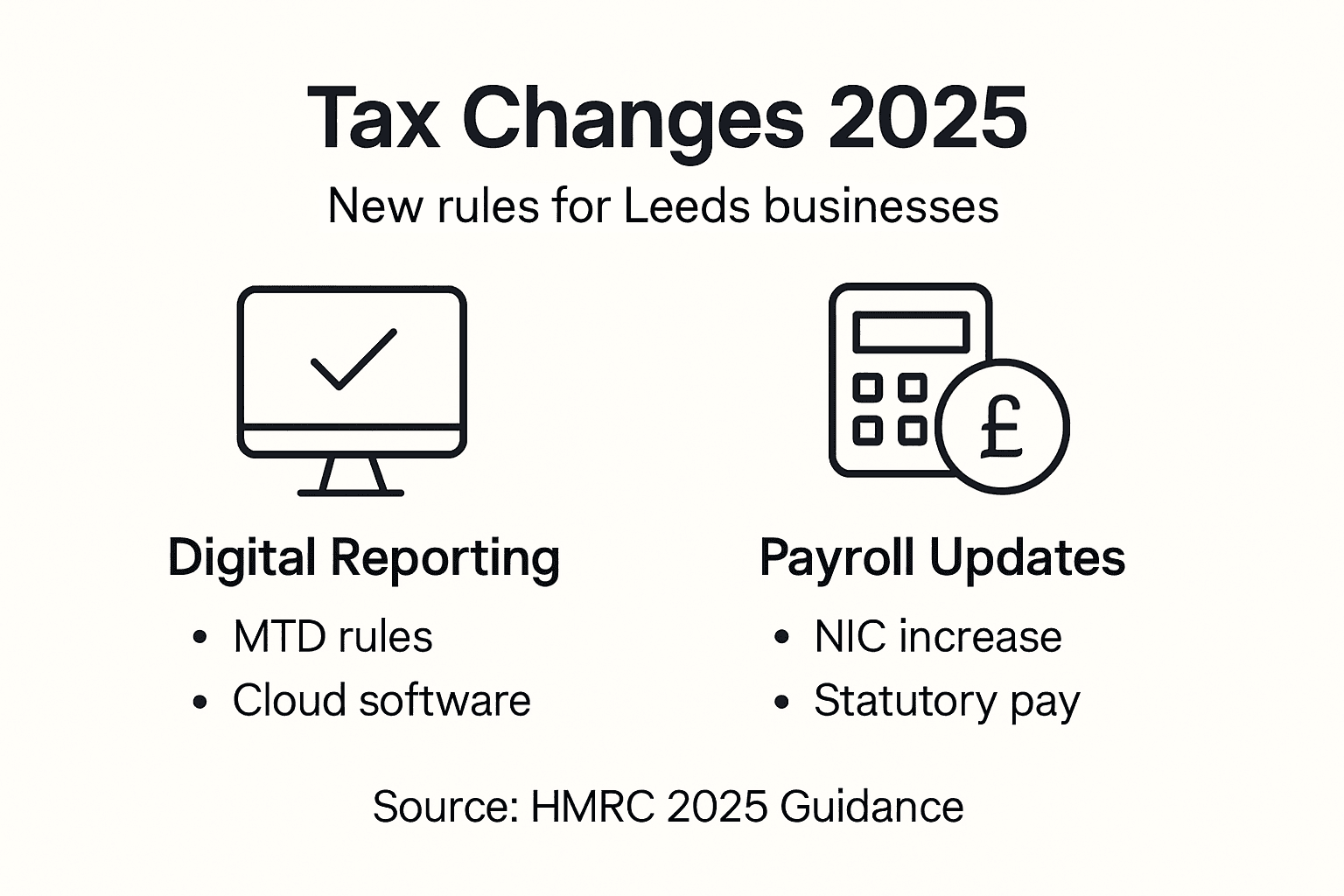
Employer NIC Rises and Wage Pressures
Employers in Leeds and across the UK are facing unprecedented challenges with rising National Insurance Contributions (NIC) and complex wage dynamics in 2025. Budget 2025 projections indicate significant financial pressures that will reshape payroll strategies for businesses of all sizes.
Key developments impacting employer wage structures include:
Increased National Insurance Contribution rates
New £2,000 cap on salary sacrifice pension contributions
Rising National Minimum Wage requirements
Enhanced compliance monitoring of payroll expenses
Payroll expenditure is set to become more complex, with the government aiming to generate an additional £4.7 billion in NIC revenue by 2029/30. This strategic fiscal approach will directly impact how businesses manage their human resources and compensation packages.
Small and medium enterprises must adapt by:
Reviewing current compensation structures
Reassessing employee benefit packages
Exploring alternative remuneration strategies
Implementing more efficient payroll management systems
Salary packaging will require more nuanced approaches, with businesses needing to balance competitive compensation against increased taxation pressures. The new pension contribution cap represents a particular challenge, potentially limiting traditional tax-efficient remuneration strategies.
Financial flexibility and strategic workforce planning are now critical survival skills for UK businesses.
Pro tip: Conduct a comprehensive review of your current compensation structure to identify potential tax-efficient alternatives before the new financial year begins.
Making Tax Digital and Digital Returns
The UK tax landscape is undergoing a revolutionary digital transformation, with Making Tax Digital (MTD) set to fundamentally reshape how businesses interact with HMRC. Tax administration reforms represent a significant shift towards comprehensive digital record-keeping and reporting mechanisms.
Key features of the digital tax transformation include:
Mandatory digital record maintenance
Quarterly digital tax reporting requirements
Enhanced compliance monitoring systems
Simplified submission processes
Increased transparency in tax documentation
Starting in 2026, businesses will be required to implement comprehensive digital reporting strategies. Digital tax submissions will become the standard, replacing traditional paper-based approaches and requiring significant technological investment from companies across Leeds and the United Kingdom.
Small and medium enterprises must prepare by:
Upgrading accounting software systems
Training staff in digital reporting methods
Establishing robust digital record-keeping protocols
Implementing secure data management practices
Compliance technologies will play a crucial role in this transition, with businesses needing to adopt sophisticated digital tools that integrate seamlessly with HMRC’s evolving digital infrastructure. The government’s budget legislation emphasises modernisation and increased administrative efficiency.
Digital transformation is no longer optional but a mandatory evolution for UK businesses.
Pro tip: Invest in cloud-based accounting solutions that are MTD-compatible and provide automatic digital tax reporting features to streamline your compliance journey.
Dividend, CGT, and Statutory Pay Updates
The 2025 Budget introduces significant changes to taxation and statutory pay that will substantially impact businesses across the United Kingdom. Budget 2025 tax reforms represent a comprehensive approach to reshaping financial policies affecting businesses and investors.
Key taxation updates include:
2% increase in higher tax rates on dividends
Modifications to Capital Gains Tax (CGT) treatment
Abolishment of dividend tax credits for non-UK residents
Changes to employee ownership trust regulations
Enhanced anti-avoidance measures
Dividend taxation is experiencing notable transformations, with top tax rates rising dramatically to 47% for property and savings income from April 2027. This substantial increase will require businesses to recalibrate their financial strategies and distribution models.
Businesses must prepare for these changes by:
Reviewing dividend distribution strategies
Reassessing investment structures
Consulting tax professionals for personalised guidance
Updating financial planning approaches
Statutory pay mechanisms are also evolving, reflecting the government’s commitment to creating a more adaptable and responsive fiscal environment. The changes demand proactive planning and strategic financial management from small and medium enterprises in Leeds and beyond.
Taxation is no longer static but a dynamic landscape requiring continuous adaptation.
Pro tip: Engage a tax specialist to conduct a comprehensive review of your current financial structures before the new tax rates take effect.
Key Compliance Obligations and Avoiding Penalties
The landscape of tax compliance is becoming increasingly stringent, with HMRC implementing more robust enforcement mechanisms to reduce the national tax gap. HMRC compliance strategies demonstrate a focused approach to identifying and penalising non-compliant businesses.
Critical compliance obligations for businesses include:
Maintaining accurate digital financial records
Submitting timely and precise tax returns
Implementing robust internal control systems
Ensuring transparent financial reporting
Conducting regular internal audits
Penalty risks have become more sophisticated, with HMRC leveraging advanced data analytics to identify potential non-compliance. Businesses must understand that errors are no longer simply administrative oversights but potential triggers for significant financial penalties.
For a quick overview, the following table summarises key compliance upgrades required for UK businesses under new HMRC strategies:
Compliance Upgrade | Business Action Required | Strategic Benefit |
Digital record-keeping | Adopt cloud accounting tools | Greater reporting accuracy |
Enhanced internal controls | Establish audit frameworks | Reduced risk of penalties |
Real-time tax submissions | Automate filings via software | Faster regulatory responses |
Regular staff training | Schedule quarterly workshops | Improved compliance awareness |
Businesses should prioritise compliance by:
Investing in comprehensive accounting software
Conducting regular internal financial reviews
Staying updated on regulatory changes
Developing a proactive compliance culture
Seeking professional tax advice regularly
Government policy trends indicate an increasing emphasis on closing tax loopholes and reinforcing strict enforcement measures. Digital record-keeping has become a critical component of demonstrating compliance and transparency.
Compliance is not just about avoiding penalties, but about building a sustainable and trustworthy business reputation.
Pro tip: Implement a quarterly compliance checklist and schedule regular professional tax reviews to stay ahead of potential regulatory changes.
Stay Ahead of 2025 Tax Changes with Expert Support from Concorde Company Solutions
UK businesses face complex challenges in adapting to new digital tax reporting requirements, rising employer NICs, and evolving dividend rules. The pressure to maintain meticulous records and meet HMRC compliance standards is greater than ever. With Making Tax Digital and tighter enforcement, small and medium enterprises in Leeds need reliable accounting expertise to avoid costly penalties and optimise tax strategies.

Partner with Concorde Company Solutions to confidently navigate 2025’s tax landscape. Our dedicated team offers personalised support in payroll management, company tax returns, and bespoke bookkeeping solutions tailored to your business needs. Don’t let regulatory changes disrupt your operations. Take action now and secure your financial future by visiting Concorde Company Solutions and exploring how our specialised services can keep you compliant and ahead of HMRC’s evolving demands.
Frequently Asked Questions
How will the changes in National Insurance Contributions affect my business’s payroll?
The increased National Insurance Contributions will raise payroll costs, leading businesses to reassess their compensation structures and explore alternative remuneration strategies to manage financial impacts.
What is Making Tax Digital (MTD) and how does it affect businesses?
Making Tax Digital (MTD) requires businesses to maintain accurate digital records and submit tax returns digitally, marking a significant move towards real-time, technology-driven tax management that businesses will need to adopt by 2026.
What are the key tax changes businesses should prepare for in 2025?
In 2025, businesses should be aware of extended freezes on income tax thresholds, increased taxes on dividend income, higher taxation on savings income, and refined compliance monitoring mechanisms that will impact their financial planning.
What steps can businesses take to comply with the new tax regulations?
Businesses should invest in digital accounting software, maintain meticulous financial records, conduct regular internal audits, and stay informed about regulatory changes to meet compliance obligations and avoid penalties.
Recommended
Comments