
Role of Accountancy for Growth – Impact on Business Success
- David Rawlinson
- Dec 19, 2025
- 7 min read

Over ninety percent of British businesses credit strong accountancy practices as vital for unlocking growth and stability. In a fast-moving economy filled with uncertainty, having a skilled accountant on your side goes far beyond balancing the books. This article reveals how the evolving role of accountancy empowers businesses to make smarter choices, achieve regulatory confidence, and pursue ambitious expansion.
Table of Contents
Key Takeaways
Point | Details |
Strategic Role of Accountancy | Accountancy is essential for informed decision-making and enables sustainable business growth. |
Comprehensive Services for SMEs | Accountants provide vital services like tax planning and risk management that support SMEs. |
Support for Business Expansion | Accountants aid in navigating financial challenges and optimising strategies during growth. |
Importance of Compliance | Accountants ensure adherence to complex regulations, mitigating risks and maintaining integrity. |
Defining Accountancy’s Role in Business Growth
Accountancy represents far more than basic number crunching or financial record keeping. It serves as a strategic compass guiding businesses through complex financial landscapes, enabling informed decision making and sustainable growth. Understanding the strategic role of accountants reveals how financial expertise transforms raw financial data into actionable business intelligence.
At its core, accountancy provides businesses with critical insights that transcend traditional bookkeeping. Professional accountants analyse financial statements, identify potential cost-saving opportunities, highlight inefficiencies, and create predictive financial models that help organisations anticipate market challenges. By interpreting financial trends and performance metrics, accountants help business leaders make data-driven strategic choices that minimise risks and maximise growth potential.
The multifaceted role of accountancy extends beyond compliance and reporting. Modern accountants act as financial advisors who provide nuanced guidance on tax planning, investment strategies, cash flow management, and operational efficiency. Exploring the comprehensive role of accountancy firms demonstrates how these professionals offer strategic perspectives that can fundamentally reshape a company’s financial trajectory, helping businesses navigate complex regulatory environments and make intelligent financial decisions.
Pro Tip: Financial Strategy Insight: Engage with your accountant quarterly for comprehensive financial reviews, treating them as a strategic partner who can provide forward-looking insights rather than merely a compliance expert.
The following table compares traditional and modern accountancy roles:
Aspect | Traditional Accountant | Modern Accountant |
Main Focus | Record keeping, compliance | Strategic advice, growth support |
Interaction Frequency | Annual or periodic meetings | Quarterly, ongoing collaboration |
Value for Business | Regulatory adherence | Driving growth and efficiency |
Use of Technology | Basic tools | Advanced analytics, modelling |
Types of Accountancy Services for SMEs
Accountancy services play a crucial role in supporting small and medium-sized enterprises (SMEs) by providing comprehensive financial management solutions. Role of Accountants for SMEs reveals the diverse range of strategic support these professionals offer beyond traditional number crunching.
The core accountancy services for SMEs typically encompass several critical areas. Financial reporting stands at the forefront, where accountants prepare detailed statements that provide insights into business performance. Tax planning services help businesses navigate complex tax regulations, identifying opportunities for tax efficiency and ensuring full compliance with Her Majesty’s Revenue and Customs (HMRC) requirements. Risk mitigation strategies form another essential service, helping businesses identify potential financial vulnerabilities and develop robust protection mechanisms.

Moreover, modern accountancy services extend far beyond basic financial management. Strategic financial forecasting enables SMEs to make informed decisions about growth, investment, and operational planning. Accountants provide nuanced guidance on cash flow management, helping businesses maintain financial stability and identify potential expansion opportunities. Limited company accounts demonstrate the intricate ways accountants support different business structures, offering tailored advice that addresses unique financial challenges and regulatory requirements.
Here’s a summary of how different accountancy services benefit SMEs:
Service Area | Business Benefit | Typical Outcomes |
Financial Reporting | Clear insight into performance | Better strategic decisions |
Tax Planning | Increased tax efficiency | Reduced liability, full compliance |
Risk Mitigation | Identification of vulnerabilities | Fewer unexpected financial issues |
Forecasting & Modelling | Guidance for growth decisions | Informed expansion, stability |
Cash Flow Management | Improved liquidity | Ability to fund and plan growth |
Pro Tip: Financial Strategy Insight: Schedule a comprehensive annual financial review with your accountant, treating them as a strategic partner who can provide forward-looking insights and help you develop a robust financial roadmap for your business growth.
How Accountants Support Business Expansion
Accountants are far more than number-crunchers; they are strategic partners who play a pivotal role in driving business growth and expansion. Management accounting strategies demonstrate how financial professionals combine accounting, finance, and management expertise to create substantial value for growing businesses.
The support provided by accountants spans multiple critical dimensions of business expansion. Financial forecasting represents a key area where accountants deliver immense value, helping businesses anticipate market trends, predict potential revenue streams, and identify strategic investment opportunities. By developing sophisticated financial models, they enable business leaders to make data-driven decisions that minimise risk and maximise potential growth. Cash flow management becomes particularly crucial during expansion phases, with accountants helping organisations maintain financial stability while exploring new market opportunities.
Moreover, accountants provide nuanced guidance on complex financial challenges that arise during business growth. This includes navigating tax efficiency strategies, ensuring regulatory compliance, and providing structured financial advice for potential mergers, acquisitions, or international expansion. Corporate Tax Planning becomes especially critical, as accountants help businesses optimise their tax structures and maintain financial health while pursuing aggressive growth strategies.
Pro Tip: Financial Growth Strategy: Engage your accountant as a strategic partner, scheduling quarterly deep-dive reviews to align your financial strategies with your business expansion goals and identify potential growth opportunities.
Compliance, Tax, and Regulatory Responsibilities
Compliance represents a critical cornerstone of business operations, requiring meticulous attention to complex regulatory landscapes. Structured compliance frameworks enable businesses to navigate intricate legal requirements effectively, minimising potential risks and ensuring organisational integrity.
Accountants play a pivotal role in managing regulatory responsibilities across multiple dimensions. Tax compliance stands as a fundamental area where professional expertise becomes invaluable. They systematically track legislative changes, interpret complex tax regulations, and develop strategic approaches to meet Her Majesty’s Revenue and Customs (HMRC) requirements. Limited Company Compliance Guide highlights the nuanced approaches businesses must adopt to maintain legal and financial standards.
Beyond tax considerations, regulatory compliance encompasses broader organisational responsibilities. This includes maintaining accurate financial records, submitting statutory accounts, adhering to industry-specific regulations, and ensuring transparency in financial reporting. Accountants serve as guardians of compliance, proactively identifying potential regulatory risks and implementing robust mechanisms to mitigate potential legal challenges. Their expertise extends to generating comprehensive compliance reports, tracking regulatory updates, and providing strategic guidance that helps businesses remain aligned with evolving legal standards.
Pro Tip: Compliance Strategy: Establish a quarterly compliance review with your accountant to proactively identify and address potential regulatory risks before they become significant issues.
Maximising Value Through Strategic Financial Planning
Strategic financial planning transforms ordinary business operations into extraordinary growth opportunities. Management accounting tools enable businesses to develop sophisticated approaches that align financial resources with long-term strategic objectives, creating a robust framework for sustainable expansion.
At its core, strategic financial planning involves comprehensive analysis and forward-thinking approaches. This includes developing detailed financial models that project potential revenue streams, identifying potential investment opportunities, and creating contingency strategies to mitigate financial risks. Accountants play a crucial role in this process, leveraging their expertise to translate complex financial data into actionable insights that drive business growth. By examining historical financial performance, current market conditions, and potential future scenarios, they help organisations make informed decisions that optimise resource allocation and maximise financial potential.
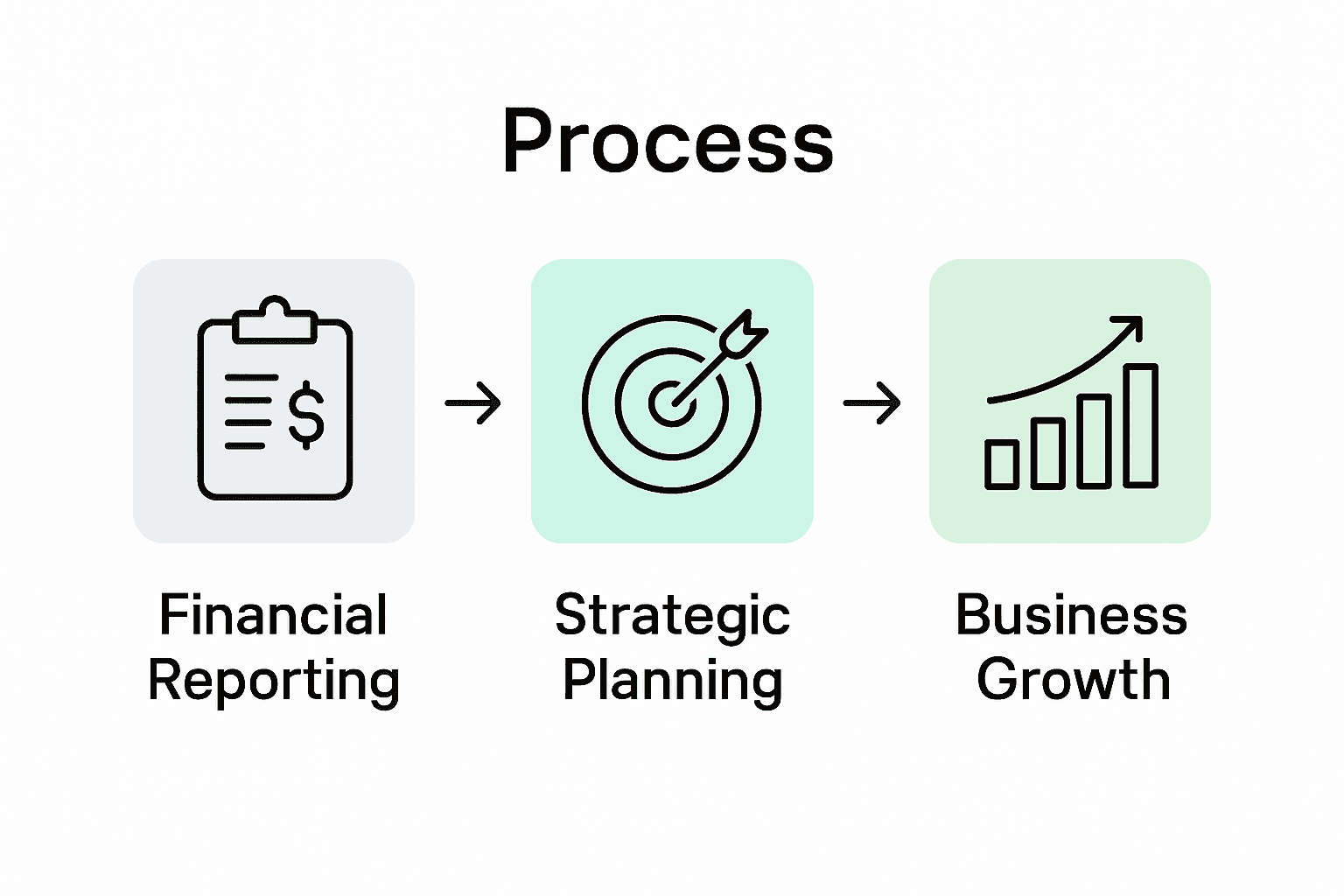
Moreover, strategic financial planning extends beyond mere number crunching. It encompasses a holistic approach to financial management that integrates multiple business dimensions. This includes evaluating capital investment strategies, optimising tax efficiency, managing cash flow dynamics, and aligning financial resources with broader business goals. Tax Return Tips demonstrate how strategic financial approaches can help businesses maintain financial flexibility while ensuring compliance and maximising potential financial advantages.
Pro Tip: Financial Vision Planning: Schedule bi-annual strategic financial planning sessions with your accountant to develop a dynamic, forward-looking financial roadmap that adapts to changing business landscapes and market conditions.
Unlock Your Business Growth with Expert Accountancy Support
The article highlights key challenges that many businesses face in leveraging accountancy beyond mere compliance. Common pain points include managing complex tax planning, maintaining cash flow during expansion, and harnessing strategic financial forecasting. At Concorde Company Solutions, we understand that your financial data is more than numbers. It is the foundation for informed decision making, risk reduction, and long-term success. Our tailored services, from statutory accounts to cash flow management and company tax returns, are designed to empower you with actionable insights that help your business thrive.

Take control of your growth journey today by partnering with an experienced team that treats your business ambitions as their own. Visit Concorde Company Solutions to explore how our personalised support can simplify compliance, optimise tax strategies, and strengthen your financial planning. Don’t wait to transform challenges into opportunities—connect with us now and build a resilient financial future tailored for success.
Frequently Asked Questions
What is the role of accountancy in business growth?
Accountancy goes beyond mere record-keeping; it serves as a strategic tool that provides insights and analysis, enabling informed decision-making, risk management, and sustainable growth for businesses.
How do accountants help with financial forecasting for businesses?
Accountants analyse financial data to create predictive models, helping businesses anticipate market trends and identify potential revenue streams, thereby guiding informed financial decisions for growth.
What are the key accountancy services that support SMEs?
Key services include financial reporting, tax planning, risk mitigation, and cash flow management, all aimed at optimising financial health and supporting strategic growth initiatives for small and medium-sized enterprises.
How can businesses ensure compliance with regulatory requirements?
Businesses can ensure compliance by engaging professional accountants who systematically track regulatory changes, manage tax implications, and maintain accurate financial records to mitigate legal risks.
Recommended


This was a very engaging and insightful post that made technical concepts feel much easier to understand. I really liked how the author explained ASP.NET topics in a clear and structured way. It’s not always easy to find content that simplifies coding concepts so effectively. As a student working on web development, I often read blogs like this to improve my skills. During challenging projects, many learners also look for ASP.NET Assignment Help to better understand coding logic and frameworks. Posts like this provide both learning support and motivation to keep improving.