
Why File Tax Returns – Compliance and Peace of Mind
- David Rawlinson
- Dec 11, 2025
- 8 min read

Nearly half of British adults feel anxious about tax season, yet understanding tax returns is vital for financial security in the United Kingdom. With millions navigating the Self Assessment process, the stakes are high whether you are a freelancer, small business owner, or earning more than just a basic salary. This concise guide explains what filing a tax return means for British taxpayers, including the key requirements, deadlines, and benefits of staying compliant.
Table of Contents
Key Takeaways
Point | Details |
Filing Responsibility | Taxpayers in the UK must report their income accurately through the Self Assessment system, particularly those who are self-employed or freelance. |
Understanding Tax Returns | Different tax return types exist based on income sources, including the SA100 for individuals and CT600 for limited companies. |
Compliance Deadlines | It is crucial to meet HM Revenue and Customs deadlines, with 31 January being the final date for online submissions and settling tax liabilities. |
Avoiding Penalties | Timely and accurate reporting reduces the risk of significant financial penalties and legal complications from missed deadlines or filing errors. |
What Filing Tax Returns Means in the UK
Filing tax returns is a crucial financial responsibility for individuals and businesses in the United Kingdom. The Self Assessment system used by HMRC requires taxpayers to report their income and calculate their tax liability accurately and transparently. Unlike standard employment where tax is automatically deducted, many professionals, freelancers, and business owners must proactively submit their financial information.
For most UK taxpayers, filing a tax return involves declaring all sources of income beyond standard wages or pension earnings. Self Assessment tax returns capture comprehensive financial details including earnings from self-employment, rental income, investments, and other revenue streams. The process ensures that individuals pay the correct amount of tax based on their total annual income. Failure to file returns or report income can result in significant financial penalties and potential legal complications.
The filing process varies depending on an individual’s specific circumstances. Self-employed individuals, limited company directors, and those with complex income structures typically need to submit detailed tax returns by specific deadlines. Tax return documentation for UK businesses requires meticulous record-keeping and understanding of current tax regulations. Keeping accurate financial records throughout the year simplifies the tax return process and helps prevent potential errors or omissions that could trigger investigations by tax authorities.
Navigating tax return requirements can feel overwhelming, but breaking down the process into manageable steps makes compliance more straightforward. Key considerations include identifying all income sources, maintaining precise financial documentation, understanding applicable tax rates, and submitting returns before established deadlines. Professional accounting support can provide valuable guidance, ensuring that taxpayers meet their legal obligations while potentially identifying legitimate opportunities for tax efficiency.
Different Tax Return Types and Who Must File
The United Kingdom has several distinct tax return types for different taxpayer categories, each designed to capture specific financial information. Self Assessment returns are the most common, with individuals, sole traders, and various business entities required to submit different documentation based on their income sources and business structures.
Individuals typically use the SA100 form, which covers personal income from employment, self-employment, investments, rental properties, and other revenue streams. Self-employed professionals and freelancers must provide comprehensive details about their business income, expenses, and net profits. Tax return documentation for UK businesses becomes more complex for limited companies, which are required to file the CT600 corporation tax return detailing their annual financial performance.
Beyond individual and corporate returns, the UK tax system accommodates specialised return types for unique financial scenarios. Partnerships use the SA800 form to declare their collective business income, while trusts and estates of deceased persons file the SA900 return. VAT-registered businesses must submit the VAT100 form quarterly or annually, depending on their turnover and registration status. Each return type has specific requirements, submission deadlines, and potential penalties for late or incorrect filing.
Understanding which tax return applies to your specific situation is crucial for maintaining compliance with HM Revenue and Customs (HMRC) regulations. Factors such as total annual income, business structure, investment portfolio, and additional revenue streams determine the type of return you must file. Professional accounting guidance can help navigate these complexities, ensuring accurate reporting and minimising the risk of potential financial penalties or legal complications.

Legal Duties and Key HMRC Deadlines
Navigating the legal responsibilities for tax returns requires a clear understanding of HMRC’s strict regulatory framework and critical submission timelines. Tax return filing obligations mandate that individuals and businesses proactively communicate their financial details and meet specific reporting deadlines to remain compliant with United Kingdom tax regulations.
The most crucial deadline for self-assessment taxpayers is 31 January, which serves as the final date for both online tax return submission and settling any outstanding tax liabilities. Limited company compliance requirements introduce additional complexity, with businesses needing to register their intent to file by specific dates and maintain meticulous financial documentation. Notification deadlines are particularly stringent - for instance, individuals must inform HMRC by 5 October if they need to complete a tax return for the previous fiscal year, especially if they have not previously submitted a return or experienced changes in their financial circumstances.
Penalties for missed deadlines can be substantial, making timely compliance critical for both individuals and businesses. Online submissions typically have a later deadline compared to paper returns, with digital filers granted until 31 January to complete their tax documentation. Different submission methods carry varying timeframes, underscoring the importance of understanding specific requirements based on one’s unique tax situation. Businesses and self-employed professionals must maintain comprehensive financial records throughout the year, ensuring they can accurately and promptly meet HMRC’s demanding reporting standards.
Successful tax return compliance extends beyond mere date tracking. It requires proactive financial management, thorough record-keeping, and a comprehensive understanding of one’s tax obligations. Professional accounting support can provide invaluable guidance in navigating these complex requirements, helping taxpayers understand their specific legal duties, anticipate potential challenges, and develop strategies to meet HMRC deadlines efficiently and accurately.
Penalties, Risks and Common Filing Mistakes
Late tax return submissions represent a significant financial risk for UK taxpayers, with over 600,000 individuals receiving penalties between 2018 and 2023, even when no actual tax was owed. These penalties can escalate quickly, transforming a simple administrative oversight into a costly financial burden.
Penalty structures are strategically designed to encourage timely compliance. An initial £100 fine is automatically applied for missing the submission deadline, with subsequent penalties becoming increasingly punitive. After three months, daily penalties of £10 can accumulate, potentially reaching £900, while six and twelve-month late submissions trigger additional charges of 5% of unpaid tax or £300 - whichever amount is greater. Annual accounts filing processes become significantly more complex when these penalties are factored into financial planning.
Common filing mistakes often stem from inadequate record-keeping, misunderstanding of tax categories, and failing to report all income streams. Self-employed individuals and limited company directors are particularly vulnerable to errors, such as incorrectly categorising expenses, overlooking supplementary income sources, or miscalculating tax liabilities. Computational errors, incomplete documentation, and missed supplementary forms can trigger intrusive HMRC investigations, potentially resulting in more substantial financial penalties and legal complications.
Preventing these costly mistakes requires a proactive approach to financial management. Maintaining comprehensive, organised financial records throughout the tax year, seeking professional accounting guidance, and understanding individual tax obligations can significantly reduce the risk of filing errors. Regular review of documentation, staying informed about changing tax regulations, and submitting returns well before deadlines are critical strategies for avoiding the financial and administrative challenges associated with tax return penalties.
Benefits of Timely and Accurate Tax Reporting
Early tax return filing offers multiple strategic advantages for UK taxpayers, extending far beyond mere regulatory compliance. By proactively managing tax documentation, individuals and businesses can transform a potentially stressful administrative task into an opportunity for financial optimisation and risk mitigation.
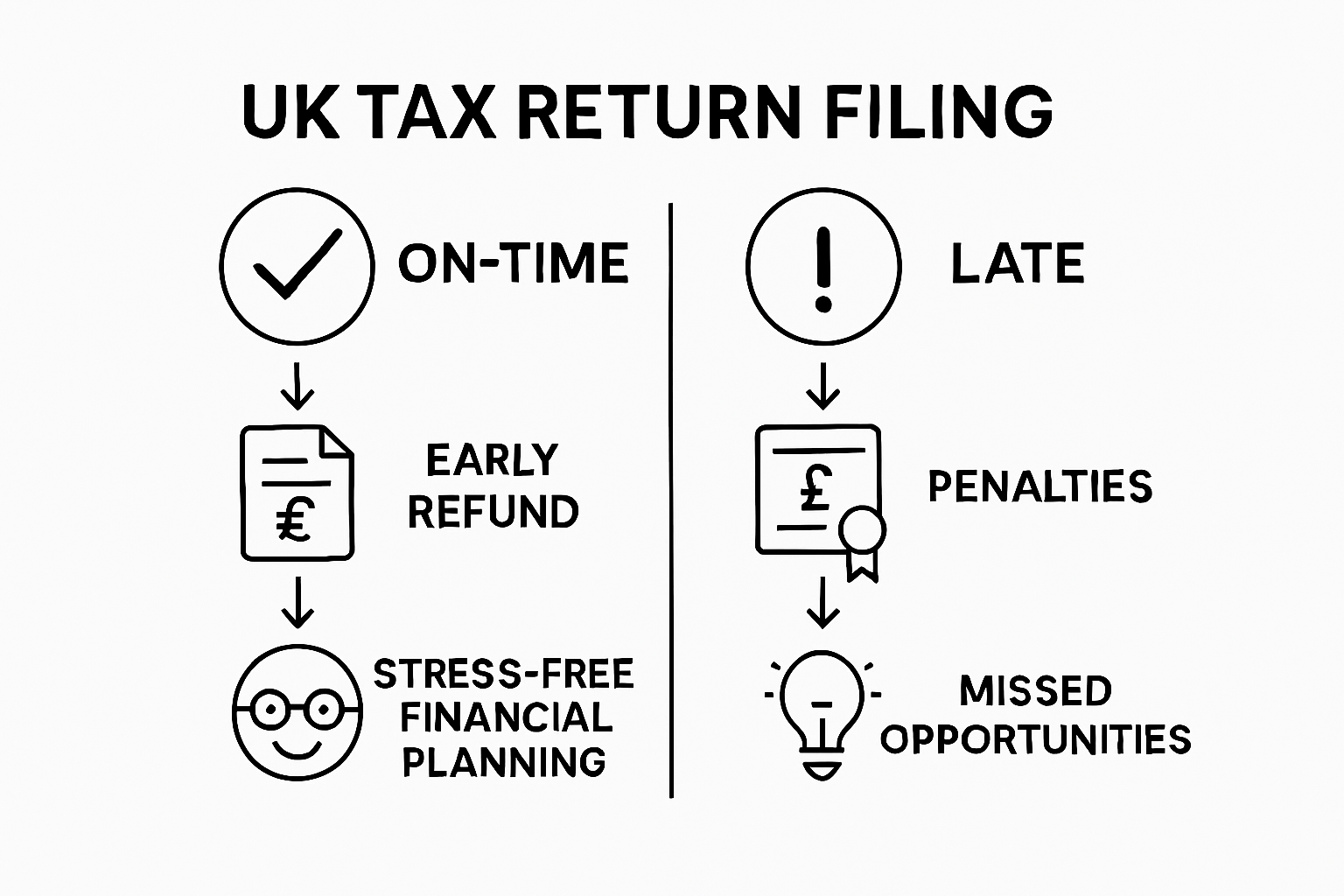
Financial planning benefits are particularly significant for those who file promptly. Tax return strategies enable taxpayers to identify potential refunds, including overlooked reliefs such as pension tax relief, and gain a comprehensive understanding of their financial landscape. Early filing provides ample time to address any complex tax calculations, seek professional advice, and make informed decisions about tax liabilities before critical deadlines approach.
Accurate reporting serves as a critical defence mechanism against potential HMRC investigations and financial complications. Comprehensive and precise tax returns demonstrate financial transparency, reducing the likelihood of triggering detailed scrutiny or potential penalties. Businesses and self-employed professionals who maintain meticulous records and submit precise documentation protect themselves from unexpected financial risks, establish credibility with tax authorities, and create a solid foundation for long-term financial planning.
Beyond immediate financial benefits, timely and accurate tax reporting contributes to broader personal and professional peace of mind. The process of carefully documenting financial activities encourages individuals to review their economic performance, identify potential areas of tax efficiency, and develop more strategic approaches to financial management. By treating tax reporting as an opportunity for financial reflection rather than a burdensome obligation, taxpayers can transform a potentially stressful experience into a valuable tool for financial growth and understanding.
Secure Your Financial Future With Expert Tax Return Support
Filing tax returns accurately and on time is a challenge many face in the United Kingdom. The complexities of Self Assessment, looming HMRC deadlines, and the risk of costly penalties create stress and uncertainty for individuals and business owners alike. You need clear, reliable help to navigate these demands, keep comprehensive records, and submit your tax returns with confidence.

Don’t let paperwork or headaches hold you back. At Concorde Company Solutions, we specialise in personalised accounting services designed to simplify tax return filing, ensure compliance, and deliver peace of mind. Whether you require assistance with statutory accounts, company tax returns, or bookkeeping support, our expert team in Garforth, Leeds is ready to help you meet HMRC’s requirements smoothly. Take control today by visiting our website and discovering how our tailored solutions can protect you from penalties and optimise your financial management.
Frequently Asked Questions
What does filing a tax return involve?
Filing a tax return involves reporting your income, calculating your tax liability, and submitting all relevant financial information to HMRC. This is particularly important for those who are self-employed or have additional sources of income beyond standard wages.
What are the main consequences of not filing a tax return?
Failure to file a tax return can lead to significant financial penalties, including automatic fines and interest on unpaid taxes. Serious violations may even result in legal complications.
How can I reduce the risk of making mistakes on my tax return?
To reduce the risk of errors, maintain organised financial records throughout the year, seek professional accounting advice, and carefully review your documentation before submission. Timely submission is also crucial for minimising mistakes.
Why is it beneficial to file my tax return early?
Filing your tax return early provides ample time to address complex calculations, explore potential tax refunds, and ensure compliance with statutory deadlines. It reduces stress and allows for proactive financial planning.
Recommended
Comments