
Why File Annual Returns Matters for UK Companies
- David Rawlinson
- Dec 12, 2025
- 6 min read

More than eight out of ten British companies face penalties each year for missing crucial filing deadlines. For every business owner, keeping up with annual returns is more than just a bureaucratic step. Accurate and timely returns are your company’s lifeline to transparency and legal standing—helping protect against costly mistakes and reputational hits. Discover how understanding these filings can mean the difference between a thriving enterprise and unexpected setbacks.
Table of Contents
Key Takeaways
Point | Details |
Annual Return Importance | An annual return is a statutory requirement for UK companies, ensuring transparency and accountability in corporate records. |
Filing Deadlines and Compliance | Companies must submit their annual returns within 28 days to avoid financial penalties and legal repercussions. |
Consequences of Non-Compliance | Missing deadlines can lead to severe penalties, reputational damage, and even company dissolution. |
Strategic Advantages | Timely filing enhances credibility, investor confidence, and operational clarity, contributing to long-term success. |
What Annual Returns Are
An annual return represents a critical statutory document that every UK company must submit each year, providing a comprehensive overview of the organisation’s key details. This mandatory filing serves as a crucial mechanism for maintaining transparent corporate records and ensuring accountability within the business landscape.
The primary purpose of an annual return is to update Companies House with current company information, including critical details such as:
Director information including current and recently changed leadership
Shareholder composition and ownership structure
Registered office address and official contact details
Share capital and corporate structure specifics
Think of an annual return like an official snapshot of your company at a specific point in time. Just as you might update your personal details with official registries, businesses must similarly refresh their corporate profile annually. This process helps regulatory bodies maintain accurate and up-to-date records about active companies operating within the United Kingdom.
Submitting an annual return is not merely a bureaucratic exercise but a fundamental legal requirement for limited companies. Maintaining transparency and accountability ensures that stakeholders - including potential investors, partners, and government agencies - can access reliable information about a company’s current status. Failing to file can result in significant penalties, including potential company dissolution, making it a critical compliance obligation for business owners.
Legal Basis And Filing Requirements
The legal foundation for annual returns in the United Kingdom is firmly established within the Companies Act, which mandates specific requirements for corporate documentation. This comprehensive legislation requires every registered company to submit an official annual return, ensuring transparency and maintaining accurate corporate records.
Key legal obligations for filing annual returns include:
Submitting documentation within 28 days of the return date
Ensuring all information is current and accurate
Signing the return with a director or company secretary’s authorisation
Providing comprehensive details about company structure and leadership
The official filing process with Companies House involves several critical compliance steps. Limited companies must meticulously prepare and submit their annual returns, understanding that these documents serve as official public records. Failure to comply can result in substantial financial penalties, potential legal complications, and in extreme cases, the compulsory striking off of the company from the official register.
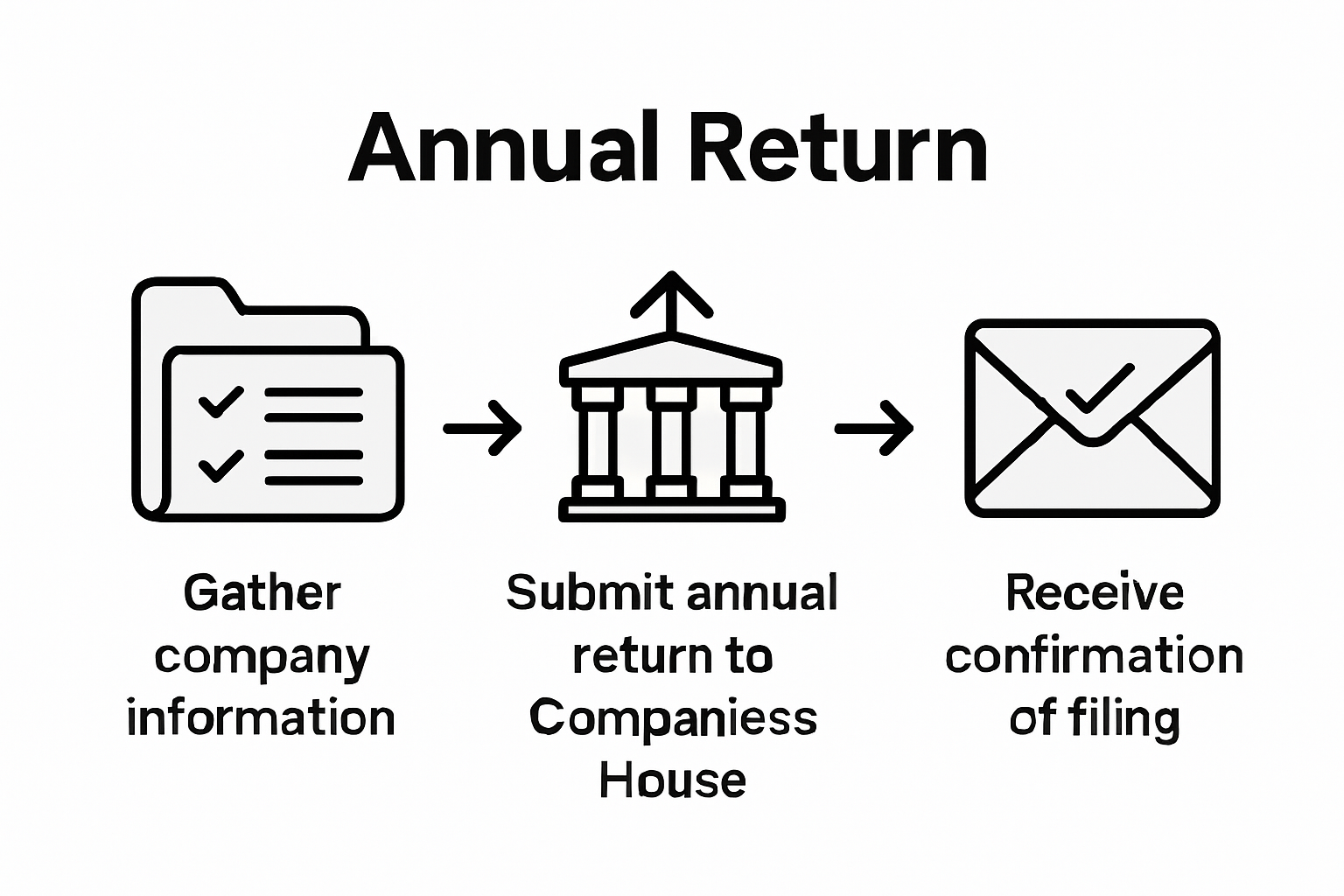
Penalties for non-compliance can be significant and escalating. Companies that miss filing deadlines may initially receive warning notices, followed by financial fines that increase with continued delay. Moreover, persistent non-compliance could lead to more severe consequences, including potential criminal prosecution and automatic company dissolution. This underscores the critical importance of understanding and meeting these statutory filing requirements as a fundamental aspect of responsible business management.
Consequences Of Missing Deadlines
Missing annual return filing deadlines can trigger a cascade of serious repercussions for UK businesses, extending far beyond simple administrative inconvenience. Failing to submit documents on time can lead to significant financial and legal challenges that could fundamentally compromise a company’s operational stability and reputation.
The immediate consequences of missed deadlines typically include:
Financial Penalties: Escalating fines from Companies House
Legal Risks: Potential prosecution of company directors
Reputational Damage: Negative perception among stakeholders and potential investors
Operational Restrictions: Potential limitations on business activities
Late filing can substantially impact a company’s financial credibility, creating ripple effects that extend well beyond initial penalties. Credit rating agencies track these compliance failures, which can make securing future financing significantly more challenging. Banks and investors often view repeated missed deadlines as a red flag, indicating potential mismanagement or financial instability.
The most severe consequence remains the potential for compulsory company strike-off. Persistent non-compliance can result in Companies House initiating proceedings to remove the company from the official register, effectively dissolving the business. This drastic measure underscores the critical importance of maintaining strict adherence to statutory filing requirements. For small and medium enterprises, such an outcome could mean complete business termination, highlighting why proactive compliance isn’t just recommended - it’s absolutely essential for long-term survival and success.
Benefits Beyond Compliance
Annual returns represent far more than a simple bureaucratic requirement, offering strategic advantages that extend well beyond basic legal obligations. Enhancing corporate transparency and building stakeholder trust are fundamental benefits that can significantly impact a company’s long-term success and reputation.
Key strategic advantages of meticulous annual return filing include:
Credibility Enhancement: Demonstrating organisational professionalism
Investor Confidence: Providing clear, current company information
Operational Clarity: Maintaining up-to-date public records
Strategic Planning: Creating a comprehensive historical documentation trail
Timely and accurate annual returns facilitate smoother business transactions by ensuring that critical company information remains current and accessible. This transparency becomes particularly valuable during complex legal processes, potential mergers, acquisitions, or when seeking new financial partnerships. Investors and financial institutions appreciate companies that maintain rigorous record-keeping, viewing such practices as indicators of sound management and strategic thinking.

Beyond immediate financial benefits, consistent annual return filing contributes to a company’s broader reputation ecosystem. It signals to regulators, potential partners, and the broader business community that an organisation is committed to accountability, ethical practices, and professional governance. This reputation can open doors to new opportunities, attract top talent, and position the company as a trustworthy and reliable enterprise in an increasingly competitive commercial landscape.
Recent Regulatory Changes Impacting Filing
The UK government’s ongoing efforts to modernise corporate reporting are transforming the landscape of annual returns and statutory documentation. These emerging regulatory changes represent a significant shift towards more streamlined, efficient, and transparent corporate reporting mechanisms that aim to reduce administrative burdens while maintaining robust information standards.
Key regulatory developments include:
Simplified Reporting Frameworks: Reducing unnecessary bureaucratic complexity
Digital Transformation: Enhanced electronic filing capabilities
Increased Transparency Requirements: More detailed disclosure expectations
Standardised Information Protocols: Consistent reporting guidelines across different business types
Companies House is implementing substantial reforms to enhance the accuracy and integrity of public company registers, signalling a comprehensive approach to modernising corporate information management. These changes will likely introduce more stringent verification processes, potentially requiring companies to provide more substantive evidence when submitting their annual returns.
The evolving regulatory environment demands that businesses stay proactively informed about these changes. Companies must anticipate and adapt to new reporting requirements, investing in robust compliance systems and potentially seeking professional guidance to navigate the increasingly complex landscape of corporate documentation. This proactive approach will not only ensure legal compliance but also position organisations to leverage these regulatory changes as opportunities for improved operational transparency and efficiency.
Stay Compliant and Empower Your Business with Expert Support
Understanding the critical importance of filing annual returns on time can feel overwhelming. Missed deadlines risk penalties, legal issues, and even company strike-off. If navigating complex statutory requirements like director information, shareholding updates, and filing within 28 days feels daunting, you are not alone. Many UK companies face these challenges while aiming to maintain transparency and build trust with investors and regulators.

Concorde Company Solutions in Garforth, Leeds, is here to help you confidently meet your filing obligations and avoid the costly consequences of non-compliance. Our expert team offers tailored support with company tax returns, statutory accounts, and bookkeeping to keep your records accurate and up to date. Don’t wait until penalties loom or reputational damage arises. Visit Concorde Company Solutions now and take the first step towards worry-free compliance and strengthened business credibility. Explore our trusted services and ensure your company stands strong today.
Frequently Asked Questions
What is an annual return?
An annual return is a statutory document that UK companies are required to submit annually, providing an overview of key details such as director information, shareholder composition, registered office address, and share capital.
Why is filing an annual return important for UK companies?
Filing an annual return is crucial for maintaining transparent corporate records and ensuring accountability. It helps stakeholders, potential investors, and regulatory bodies access accurate and up-to-date information about the company’s status.
What are the consequences of missing the annual return deadline?
Missing the annual return deadline can lead to financial penalties, legal risks, reputational damage, and operational restrictions. In severe cases, persistent non-compliance could result in the company being struck off the official register.
How can companies benefit from timely annual return filing?
Timely filing of annual returns enhances corporate credibility, builds investor confidence, ensures operational clarity, and supports strategic planning. It also fosters transparency, which can attract new opportunities and strengthen the organisation’s overall reputation.
Recommended
Comments