
Why Tax Compliance Matters for UK Businesses
- Richard Ellis
- Jan 31
- 7 min read


Running a business in Garforth, Leeds means more than just boosting sales and delivering top service. Proper tax compliance is a critical aspect that many business owners find confusing, yet ignoring it can quickly lead to stressful complications with HM Revenue and Customs. Understanding legal tax responsibilities helps you avoid unexpected penalties, maintain a strong financial reputation, and focus on growing your business with confidence.
Table of Contents
Key Takeaways
Point | Details |
Understanding Tax Compliance | UK businesses must adhere to legal requirements set by HMRC, including accurate reporting and timely tax payments to avoid severe penalties. |
Navigating Tax Obligations | Complex tax responsibilities require businesses to maintain precise records, submit returns on time, and respond to HMRC communications promptly. |
Consequences of Non-Compliance | Failing to comply can lead to significant financial and legal repercussions, including penalties, legal prosecution, and damage to business credibility. |
Benefits of Compliance | Proper tax compliance enhances organisational reputation, improves financial management, and strengthens stakeholder trust, contributing to sustainable growth. |
Tax Compliance Defined for UK Businesses
Tax compliance represents the systematic process by which businesses adhere to all legal requirements set by HM Revenue and Customs (HMRC) regarding financial reporting and tax payments. For UK businesses, this involves understanding and fulfilling obligations related to multiple tax types, including corporation tax and VAT.
At its core, tax compliance encompasses several critical responsibilities for businesses:
Accurately calculating taxable income
Maintaining precise financial records
Submitting tax returns within prescribed deadlines
Paying the correct amount of tax owed
Reporting all revenue streams transparently
The implications of non-compliance can be severe. HMRC imposes substantial penalties for businesses that fail to meet their tax obligations, which can range from financial fines to potential legal prosecution. These penalties are designed to ensure businesses contribute their fair share to national infrastructure and public services.
Businesses must recognise that tax compliance is not merely a legal requirement but a fundamental aspect of responsible commercial operation. Proper tax management demonstrates financial integrity, builds trust with regulatory bodies, and protects the business from potentially catastrophic financial consequences.
Pro tip: Invest in professional accounting support or robust accounting software to streamline your tax compliance processes and minimise the risk of unintentional errors.
Legal Framework and HMRC Requirements
The legal framework governing tax compliance in the United Kingdom establishes a comprehensive set of obligations for businesses, with HM Revenue and Customs (HMRC) serving as the primary regulatory body. This framework is designed to ensure transparent, accurate, and timely tax reporting across various business sectors. International tax compliance standards play a crucial role in shaping these regulatory requirements.
Businesses must navigate a complex landscape of tax responsibilities, which include:
Registering for appropriate tax schemes
Maintaining accurate financial records
Submitting detailed tax returns within specified timeframes
Calculating and paying correct tax amounts
Responding promptly to HMRC communications
Implementing robust internal financial controls
HMRC possesses extensive enforcement powers to ensure businesses meet their tax obligations. These powers include:
Conducting detailed financial audits
Issuing penalties for non-compliance
Adjusting tax codes to recover outstanding debts
Implementing debt collection procedures
Pursuing legal action for serious tax infractions
Compliance is not just about avoiding penalties, but about maintaining the financial integrity of your business and contributing responsibly to the national economy.
The consequences of failing to comply with HMRC requirements can be severe. HMRC’s enforcement mechanisms are designed to ensure businesses meet their tax obligations through a range of escalating actions, from initial contact and repayment plans to potential legal prosecution and asset seizure.
Pro tip: Develop a systematic approach to tax management by maintaining meticulous financial records and seeking professional accounting advice to navigate complex HMRC requirements.
Common Misconceptions About Tax Obligations
Tax obligations are fraught with misunderstandings that can lead businesses into costly errors. One prevalent misconception involves VAT registration requirements, where many businesses incorrectly assume they must register only when reaching the £90,000 turnover threshold. In reality, voluntary VAT registration can be strategic and beneficial for some businesses.
Common misconceptions about tax obligations include:
The following table highlights the differences between mandatory and voluntary VAT registration for UK businesses:
Aspect | Mandatory VAT Registration | Voluntary VAT Registration |
Threshold | Required above £90,000 turnover | Possible below threshold |
Cash Flow Impact | Increased reporting obligations | Can reclaim VAT on purchases |
Strategic Benefit | Legal compliance only | Can improve business image |
Complexity Level | Standard compliance requirements | May require more frequent filings |
Believing all business income is treated identically
Assuming small businesses are exempt from detailed reporting
Thinking personal and business finances can be mixed freely
Believing ignorance of tax rules constitutes a valid excuse
Assuming online accounting automatically ensures compliance
Businesses often misunderstand what constitutes a legitimate excuse for missing tax deadlines. HMRC’s reasonable excuse guidelines are far more restrictive than most entrepreneurs realise. Merely forgetting a deadline, experiencing financial difficulties, or claiming system errors will not typically be accepted as valid reasons for non-compliance.
Tax misconceptions can transform minor oversights into significant financial risks. Understanding the nuanced reality is crucial for responsible business management.
The landscape of tax obligations is complex and constantly evolving. Businesses must remain vigilant, continuously educating themselves about current regulations and seeking professional guidance to navigate the intricate requirements effectively.
Pro tip: Consult with a qualified accountant annually to review your tax strategy and ensure you’re not inadvertently falling prey to common misconceptions.
Financial and Legal Risks of Non-Compliance
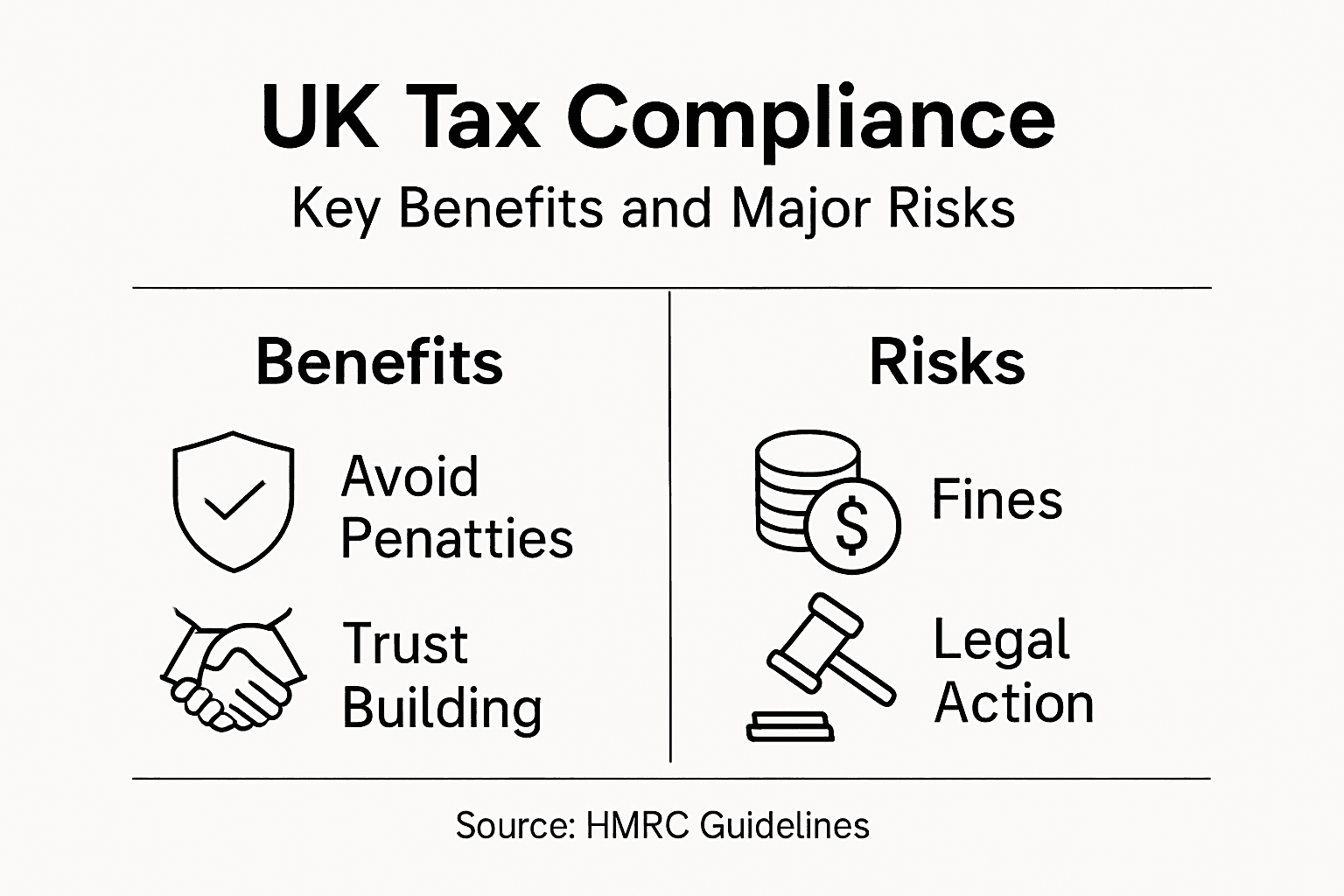
Non-compliance with tax obligations represents a significant threat to UK businesses, potentially causing catastrophic financial and legal consequences. Tax enforcement mechanisms deployed by HMRC are designed to ensure businesses meet their statutory responsibilities through progressively severe actions.
The primary financial and legal risks businesses face include:
Substantial monetary penalties
Potential legal prosecution
Damage to business credit ratings
Restriction of business operational capabilities
Potential asset seizure
Compulsory interest charges on outstanding tax
Businesses must understand that non-compliance extends beyond simple financial penalties. International tax compliance risks can undermine a company’s reputation, potentially creating long-term challenges in securing investments, establishing business partnerships, and maintaining credibility within their industry.
Financial non-compliance is not merely a bureaucratic issue, but a fundamental threat to a business’s survival and sustainable growth.
HMRC possesses comprehensive powers to recover unpaid taxes, including deploying debt collection agencies, initiating legal proceedings, and implementing international recovery agreements. These enforcement mechanisms can transform a minor tax oversight into a potentially business-ending scenario.

Here’s an overview of major HMRC enforcement mechanisms and their impact on UK businesses:
Enforcement Action | Business Impact | Typical Circumstances |
Financial Audits | Disruption to operations | Suspected inaccurate reporting |
Penalties and Fines | Immediate financial strain | Late or incorrect filings |
Legal Prosecution | Loss of business licences | Serious repeated breaches |
Asset Seizure | Removal of company property | Substantial unpaid tax debts |
Pro tip: Maintain a dedicated financial reserve specifically for tax obligations and establish robust internal reporting systems to track and manage potential compliance risks.
Benefits of Maintaining Proper Tax Compliance
Maintaining proper tax compliance offers UK businesses far more than simply avoiding penalties. Organisational reputation and stakeholder trust are significantly enhanced through consistent and transparent financial practices, creating substantial long-term strategic advantages.
The key benefits of robust tax compliance include:
Reduced risk of financial penalties
Enhanced credibility with financial institutions
Streamlined access to government services
Improved internal financial management
Greater investor confidence
Simplified audit processes
Protection against unexpected legal challenges
HMRC digital service accessibility represents another critical advantage of maintaining comprehensive tax compliance. Businesses that consistently meet their tax obligations enjoy smoother interactions with digital platforms, faster issue resolution, and more efficient administrative processes.
Tax compliance is not a burden, but a strategic investment in your business’s sustainable growth and operational excellence.
Beyond immediate financial considerations, proper tax compliance demonstrates professional integrity, signals responsible business management, and creates a foundation of trust with regulatory bodies, potential partners, and customers.
Pro tip: Implement a dedicated compliance management system that tracks tax obligations, automates reporting processes, and provides real-time insights into your financial compliance status.
Secure Your Business Future with Expert Tax Compliance Support
Navigating the complexities of HMRC requirements and maintaining full tax compliance can be overwhelming for many UK businesses. The article highlights how crucial it is to avoid costly penalties, legal risks, and reputational damage by managing tax obligations accurately and on time. Key challenges include understanding VAT registration nuances, meeting strict deadlines, and keeping detailed financial records — all essential for financial integrity and business sustainability.
At Concorde Company Solutions, we understand these pressures and offer personalised accounting services designed to keep you fully compliant with HMRC rules. From preparing your company tax returns to setting up effective bookkeeping systems and payroll management, our dedicated team supports small to medium-sized businesses every step of the way. Our transparent pricing and tailored solutions ensure you get reliable assistance without unexpected costs.
Take control of your tax compliance today and protect your business from unnecessary risks.

Discover how our expert accountancy services can simplify your tax processes and help you meet all legal obligations promptly. Visit Concorde Company Solutions to learn more and get personalised support. Don’t wait until issues arise – contact us now to build a strong financial foundation for your business with confidence.
Frequently Asked Questions
What is tax compliance for businesses?
Tax compliance refers to the process through which businesses ensure they meet all legal tax obligations, including accurate financial reporting and timely tax payments as set out by HM Revenue and Customs (HMRC).
Why is tax compliance important for UK businesses?
Tax compliance is crucial as it helps avoid substantial penalties, maintains business credibility, and demonstrates financial integrity, thus protecting the company’s reputation and operational capabilities.
What are the risks of non-compliance with tax obligations?
The risks of non-compliance include significant financial penalties, potential legal prosecution, damage to credit ratings, and even asset seizure, which can severely impact a business’s operations and sustainability.
How can businesses ensure they remain compliant with tax regulations?
Businesses can ensure compliance by maintaining accurate financial records, submitting tax returns on time, seeking professional accounting support, and regularly reviewing their tax strategy to adapt to regulatory changes.
Recommended


Comments