
Personal Tax Planning – Why It Matters in Leeds
- Richard Ellis
- Feb 1
- 9 min read


Every year, small business owners and sole traders in Leeds and Garforth face the challenge of making sense of their tax obligations while trying to avoid paying more than necessary. The truth is, understanding personal tax planning goes beyond simply working out your bill—it’s about making the most of opportunities like the Personal Allowance, which is currently set at £12,570 for the 2025/26 tax year. This overview will break down key tax concepts and clear up common myths, helping you manage both your savings and your compliance with HMRC rules.
Table of Contents
Key Takeaways
Point | Details |
Understanding Personal Allowance | Familiarise yourself with the current Personal Allowance of £12,570 to maximise your tax-free income. |
Awareness of Tax Types | Recognise the difference between direct and indirect taxes to better understand your tax obligations and planning opportunities. |
Strategic Tax Planning | Employ strategies such as optimising pension contributions and utilising ISAs to minimise tax liabilities. |
Professional Guidance Essential | Engage a qualified accountant to navigate complex tax regulations and enhance your tax efficiency. |
Personal tax planning: core concepts and myths
Personal tax planning is a strategic financial approach that helps individuals understand and manage their tax liabilities effectively. By comprehending the fundamental principles and dispelling common misconceptions, you can make informed decisions about your income and potential tax savings. The landscape of personal taxation in the UK involves several key components that every taxpayer should understand.
At the heart of personal tax planning is understanding the Personal Allowance - the amount of income you can earn tax-free each year. Current tax legislation indicates that the Personal Allowance is currently set at £12,570 for the 2025/26 tax year. This means you can earn this amount before paying any income tax, which makes it a crucial element of tax planning.
Several myths and misunderstandings often complicate personal tax planning. Here are some common misconceptions:
Myth 1: Personal Allowance automatically increases with inflation
Myth 2: All income is taxed at the same rate
Myth 3: Tax planning is only for high-income earners
Myth 4: Personal Allowance is a fixed entitlement
In reality, recent policy changes have effectively frozen Personal Allowance, creating what experts call a ‘fiscal drag’. This means that while your income might increase, your tax-free allowance remains static, potentially pushing you into higher tax brackets.
Pro-Tipp: Always review your tax code annually and understand how changes in Personal Allowance might impact your overall tax liability.
Types of UK taxes impacting individuals
Navigating the complex world of taxation requires a comprehensive understanding of the various types of taxes that impact individuals in the United Kingdom. Government tax revenue sources demonstrate the intricate ways in which individuals contribute to national finances through different tax mechanisms.
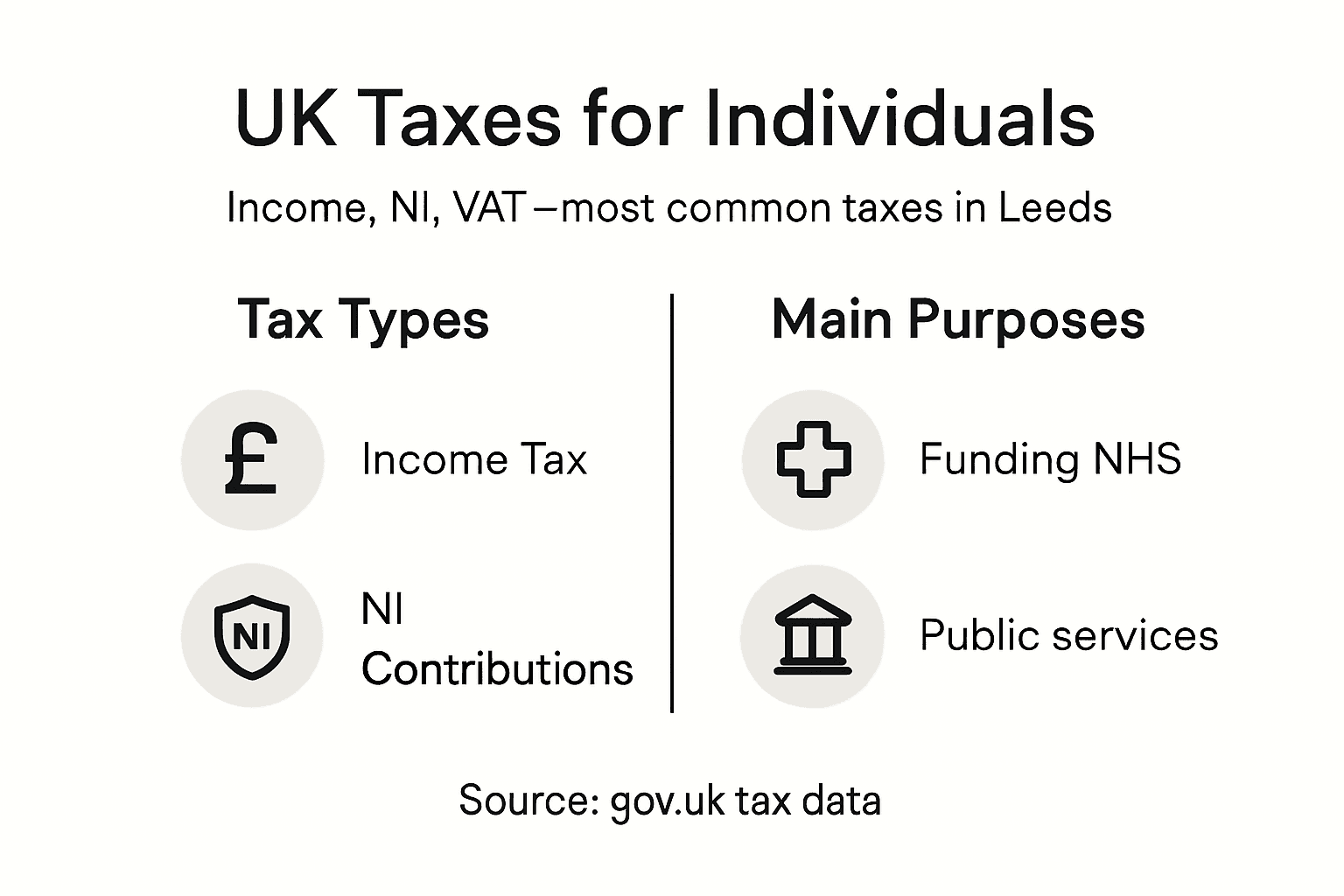
UK taxes can be broadly categorised into two primary types: direct taxes and indirect taxes. Direct taxes are levied directly on an individual’s income and wealth, while indirect taxes are applied to goods and services. Here’s a breakdown of the key taxes affecting individuals:
Direct Taxes:
Income Tax: The primary source of individual tax contribution
National Insurance Contributions: Mandatory payments for social security
Capital Gains Tax: Levied on profits from selling assets
Inheritance Tax: Applied to estates passed on after death
Indirect Taxes:
Value Added Tax (VAT): Charged on most goods and services
Excise Duties: Special taxes on specific products like alcohol and tobacco
Stamp Duty: Tax on property and certain financial transactions
Government funding sources reveal that Income Tax, National Insurance, and VAT are the most significant contributors to government revenue. Each tax serves a specific purpose, from funding public services to redistributing wealth across different income groups.
Below is a comparative overview of UK direct and indirect taxes impacting individuals:
Tax Type | Main Purpose | Typical Payee | Example Impact |
Income Tax | Fund public services | Employed/self-employed | Reduces net salary |
National Insurance | Social security funding | Working adults | Determines state pension eligibility |
Capital Gains Tax | Asset profit taxation | Investors/sellers | Affects profit from shares/property |
Inheritance Tax | Estate value redistribution | Beneficiaries | May reduce inheritances |
VAT | Public revenue via spending | Consumers | Raises prices on most purchases |
Excise Duties | Regulate consumption | Buyers of specific goods | Increases costs of tobacco, alcohol |
Stamp Duty | Transaction oversight | Property buyers | Adds cost to property purchases |
The complexity of these tax systems means that individuals must stay informed and proactive about their tax obligations. Understanding the nuances of each tax type can help you make more informed financial decisions and potentially identify opportunities for tax efficiency.
Pro-Tipp: Consult with a professional tax advisor annually to ensure you’re navigating the UK tax landscape effectively and taking advantage of all available allowances and deductions.
Key planning strategies and reliefs
Effective personal tax planning requires a strategic approach to understanding and leveraging available tax reliefs and planning strategies. Tax relief statistics demonstrate the critical importance of proactively managing your tax obligations to minimise liabilities and maximise potential savings.
Tax planning strategies can be categorised into several key approaches that individuals can utilise to optimise their financial position:
Income Tax Planning Strategies:
Personal Allowance Utilisation: Maximising tax-free income bands
Pension Contributions: Reducing taxable income through strategic pension investments
Salary Sacrifice Schemes: Minimising tax liability through employer-supported programmes
Spousal Transfer of Assets: Efficiently splitting income and allowances between partners
Investment-Related Reliefs:
Individual Savings Accounts (ISAs): Tax-efficient investment vehicles
Capital Gains Tax Allowances: Strategically managing asset disposals
Dividend Allowance: Optimising investment income taxation
Enterprise Investment Scheme (EIS): Tax relief for investments in smaller companies
Tax measures for economic growth highlight the government’s intention to provide targeted reliefs that encourage both individual financial planning and broader economic development. These strategies are not just about reducing tax bills, but also about making informed financial decisions that align with long-term personal and economic objectives.
Understanding the nuanced landscape of tax reliefs requires careful consideration and often professional guidance. Each strategy involves specific rules, limitations, and potential interactions with other aspects of your financial profile that could impact your overall tax position.
Pro-Tipp: Keep detailed records of all potential tax-deductible expenses and consult with a professional tax advisor to ensure you’re maximising available reliefs and maintaining compliance.
Here is a summary of popular UK personal tax planning strategies and their potential benefits:
Strategy | How It Works | Typical Benefit | Potential Limitation |
Maximising Personal Allowance | Structure income below tax-free threshold | Pay less income tax | Allowance may be frozen |
Pension Contributions | Contribute to pension schemes | Reduces taxable income | Funds locked until retirement |
ISA Investments | Place savings in ISAs | Tax-free interest & gains | Annual contribution limits |
Spousal Transfers | Share assets with partner | Use partner’s allowances | May require legal ownership change |
Salary Sacrifice | Redirect earnings to benefits | Lowers income tax & NICs | Affects future benefits, like pension |
EIS/SEIS Investments | Invest in qualifying companies | Tax relief and growth potential | High risk—companies may fail |
HMRC regulations and compliance duties
Navigating the complex landscape of Her Majesty’s Revenue and Customs (HMRC) regulations requires a thorough understanding of legal obligations and compliance requirements for individuals and businesses. Guidelines for compliance provide a comprehensive framework that outlines the essential duties and expectations for UK taxpayers.

HMRC compliance duties encompass several critical areas that individuals must carefully manage:
Key Compliance Requirements:
Record Keeping: Maintaining accurate and detailed financial documentation
Timely Reporting: Submitting tax returns and financial statements within prescribed deadlines
Accurate Declaration: Providing complete and truthful information about income and assets
Payment Obligations: Ensuring timely tax payments and managing potential liabilities
Potential Consequences of Non-Compliance:
Financial penalties and fines
Interest charges on unpaid tax
Potential legal proceedings
Risk of criminal prosecution for serious infractions
Damage to professional reputation
Compliance is not merely about avoiding penalties, but about establishing a transparent and responsible financial approach. Each taxpayer has a legal responsibility to understand their specific obligations, which can vary depending on individual circumstances such as employment status, income sources, and investment portfolios.
The complexity of HMRC regulations means that many individuals benefit from professional guidance to ensure they meet all necessary requirements while optimising their tax position. Professional tax advisors can provide invaluable support in interpreting complex rules and maintaining compliance.
Pro-Tipp: Maintain a dedicated folder with all financial documents and set calendar reminders for key tax submission deadlines to ensure consistent HMRC compliance.
Risk management and common mistakes
Effective personal tax planning requires a proactive approach to identifying and mitigating potential risks associated with tax submissions and financial reporting. Professional conduct standards emphasise the critical importance of understanding and avoiding common taxation pitfalls.
Most frequent tax planning mistakes can be categorised into several key areas:
Recordkeeping Errors:
Incomplete or missing financial documentation
Inconsistent record maintenance
Failure to track all income streams
Mixing personal and business expenses
Submission and Reporting Risks:
Missed filing deadlines
Incorrect income declarations
Overlooking relevant tax reliefs
Misunderstanding personal allowance thresholds
Inadequate documentation for claims
Compliance Vulnerabilities represent significant risks for individuals navigating the complex UK tax landscape. Tax return error management highlights the potential consequences of incorrect submissions, which can range from financial penalties to extended HMRC investigations.
Navigating these risks requires a systematic approach, combining meticulous record-keeping, continuous learning about tax regulations, and potentially seeking professional guidance. Understanding the nuanced differences between lawful tax planning and potentially risky tax avoidance strategies is crucial for maintaining financial integrity.
Pro-Tipp: Create a dedicated digital folder with clearly labelled subfolders for each tax year, scanning and storing all financial documents immediately upon receipt to minimise record-keeping errors.
Engaging accountants for tailored solutions
Personal tax planning requires specialised expertise that goes beyond basic number crunching. Making Tax Digital guidance emphasises the critical role professional accountants play in navigating complex tax landscapes and delivering personalised financial strategies.
When seeking an accountant for tailored tax solutions, consider these essential selection criteria:
Key Professional Capabilities:
Strategic Tax Planning: Proactive approaches to minimising tax liabilities
Compliance Expertise: In-depth understanding of current HMRC regulations
Technological Proficiency: Familiarity with digital tax reporting systems
Industry-Specific Knowledge: Understanding unique tax challenges in different sectors
Critical Selection Factors:
Professional qualifications and accreditations
Track record of successful client outcomes
Responsiveness and communication skills
Fee structures and transparency
Local knowledge of Leeds and Yorkshire tax environments
Professional accountants provide far more than routine tax filing. Professional accounting services offer comprehensive support including financial forecasting, VAT management, payroll services, and strategic tax planning tailored to individual circumstances.
The right accountant transforms tax compliance from a bureaucratic exercise into a strategic financial planning opportunity. They can identify potential savings, mitigate risks, and provide insights that extend well beyond basic tax calculations.
Pro-Tipp: Schedule an initial consultation with potential accountants, bringing comprehensive financial documentation to ensure a meaningful and productive discussion about your specific tax planning needs.
Take Control of Personal Tax Planning in Leeds with Expert Support
Managing personal tax liabilities effectively in Leeds can feel overwhelming given complex HMRC regulations and the risk of costly mistakes. Whether you are concerned about maximising your Personal Allowance, navigating income tax brackets influenced by fiscal drag, or leveraging reliefs like pension contributions and ISAs, having trusted guidance is essential. With clear record-keeping and compliance demands, it is easy to miss critical opportunities to reduce tax and avoid penalties.
At Concorde Company Solutions, based in Garforth, Leeds, we specialise in providing personalised accounting and tax services designed to simplify your financial management. From company tax returns to tailored bookkeeping and payroll management, our experienced professionals offer transparent pricing and responsive support that empower you to make informed tax planning decisions. We understand the unique challenges faced by individuals and small businesses in Leeds and help you navigate the tax landscape confidently.

Ready to optimise your personal tax planning and stay fully compliant this tax year Take the first step by contacting Concorde Company Solutions today at https://concordecompanysolutions.co.uk to schedule your personalised consultation and start maximising your tax efficiency with expert advice and proven strategies.
Frequently Asked Questions
What is personal tax planning and why is it important?
Personal tax planning is a strategic approach to managing your tax liabilities effectively. It helps individuals understand their potential tax savings and make informed financial decisions, which is crucial for financial stability and growth.
How does the Personal Allowance impact my tax liabilities?
The Personal Allowance is the amount of income you can earn tax-free each year. Currently set at £12,570, understanding how this impacts your income is essential for minimising tax liabilities and making the most of available allowances.
What are the common misconceptions about personal tax planning?
Common misconceptions include the beliefs that personal allowance automatically increases with inflation, all income is taxed at the same rate, and that tax planning is only for high earners. These myths can lead to poor financial decisions without proper understanding.
What are some effective strategies for minimising tax liabilities?
Effective strategies include maximising the use of your Personal Allowance, making pension contributions, using ISAs for savings, and engaging in salary sacrifice schemes. Consulting with a professional tax advisor can also help identify tailored solutions for your situation.
Recommended


Comments