
Why Bookkeeping Matters for Small Businesses
- Richard Ellis
- Jan 30
- 6 min read


Trying to keep up with your business finances in Leeds or Garforth can feel overwhelming when every invoice and receipt must be accounted for. Accurate bookkeeping is essential for UK companies to stay compliant with HMRC and protect their financial future. By focusing on clear and organised accounting systems, small business owners and sole traders can simplify year-end reporting, track cash flow, and avoid costly penalties. This guide explains practical bookkeeping essentials to help you take control of your records and make confident financial decisions.
Table of Contents
Key Takeaways
Point | Details |
Accurate Record-Keeping is Essential | Maintaining meticulous financial records is crucial for legal compliance and financial transparency in UK businesses. |
Choose the Right Bookkeeping System | Selecting a bookkeeping system (single-entry, double-entry, or computerised) is vital based on the business size and complexity. |
Understand Legal Obligations | UK companies must adhere to strict legal requirements for record-keeping, including documenting all transactions and maintaining records for at least six years. |
Avoid Common Pitfalls | Regular reviews and proper organisation can help prevent frequent bookkeeping errors that can lead to compliance issues and financial mismanagement. |
Bookkeeping essentials for UK businesses
Managing financial records is crucial for the success of any small business in the United Kingdom. Business accounting records must be maintained meticulously to ensure legal compliance and financial transparency. Limited companies, in particular, have specific obligations regarding their financial documentation.
Key bookkeeping essentials for UK businesses include:
Maintaining accurate records of all financial transactions
Tracking income and expenditure systematically
Separating personal and business finances
Preserving documentation for at least six years
Understanding VAT reporting requirements
Professional bookkeeping goes beyond simple record-keeping. Accounting systems require careful management to provide meaningful insights into your business’s financial health. Comprehensive bookkeeping training can help businesses develop robust financial management skills.
Effective bookkeeping involves several critical processes, such as:
Recording all financial transactions accurately
Reconciling bank statements monthly
Tracking expenses and income streams
Preparing financial reports
Ensuring compliance with HMRC regulations
By implementing structured bookkeeping practices, small businesses can make informed financial decisions, understand their cash flow, and prepare for tax obligations effectively.

Pro tip: Invest in reliable accounting software or consult a professional bookkeeper to streamline your financial record-keeping and minimise errors.
Types of bookkeeping systems explained
Bookkeeping systems form the financial backbone of any UK business, with multiple approaches designed to suit different organisational needs. UK accounting standards provide crucial frameworks that guide how businesses record and manage their financial transactions.
Three primary types of bookkeeping systems exist for small businesses:
Single-entry bookkeeping: Simple system tracking income and expenses in a single ledger
Double-entry bookkeeping: More complex method recording each transaction in two accounts
Computerised bookkeeping: Digital systems using specialised accounting software
The double-entry bookkeeping method remains the most comprehensive approach, ensuring every financial transaction is recorded in at least two different accounts. This system provides a more detailed and accurate representation of a business’s financial position.
Here’s a comparative overview of the main bookkeeping systems used by UK businesses:
System Type | Key Characteristics | Ideal For | Business Impact |
Single-entry | Records transactions in one ledger | Sole traders and micro-businesses | Simple, low-cost, limited insight |
Double-entry | Two-account recording per transaction | Growing SMEs or limited companies | Comprehensive, supports auditing |
Computerised | Digital automation and cloud storage | All sizes, tech-savvy firms | Real-time data, improved accuracy |
Modern businesses increasingly prefer digital bookkeeping systems that offer real-time financial insights and reduce human error. These systems typically include features like:
Automated transaction recording
Real-time financial reporting
Easy bank reconciliation
Integrated tax calculation
Secure cloud-based storage
Choosing the right bookkeeping system depends on factors such as business size, complexity of financial transactions, and specific industry requirements. Small businesses might start with simpler systems and transition to more sophisticated approaches as they grow.
Pro tip: Consult with a professional accountant to select the most appropriate bookkeeping system for your specific business needs and scale.
How bookkeeping supports financial health
Effective financial management is crucial for small businesses to maintain stability and growth. Bookkeeping serves as the foundation for understanding a company’s financial position, providing critical insights into income, expenses, and overall economic performance.
The key ways bookkeeping supports financial health include:
Tracking cash flow accurately
Identifying potential financial risks
Providing clear financial documentation
Supporting strategic business planning
Ensuring regulatory compliance
Precise bookkeeping enables businesses to make informed decisions by offering a comprehensive view of financial performance. Financial analysis becomes significantly more effective when businesses maintain detailed and accurate records, allowing for:
Comprehensive budget planning
Performance trend identification
Investment opportunity assessment
Tax preparation efficiency
Stakeholder confidence building
By maintaining robust accounting practices, small businesses can create a solid financial framework that supports long-term sustainability. This approach helps organisations navigate economic challenges, understand their financial strengths and weaknesses, and make proactive strategic decisions.
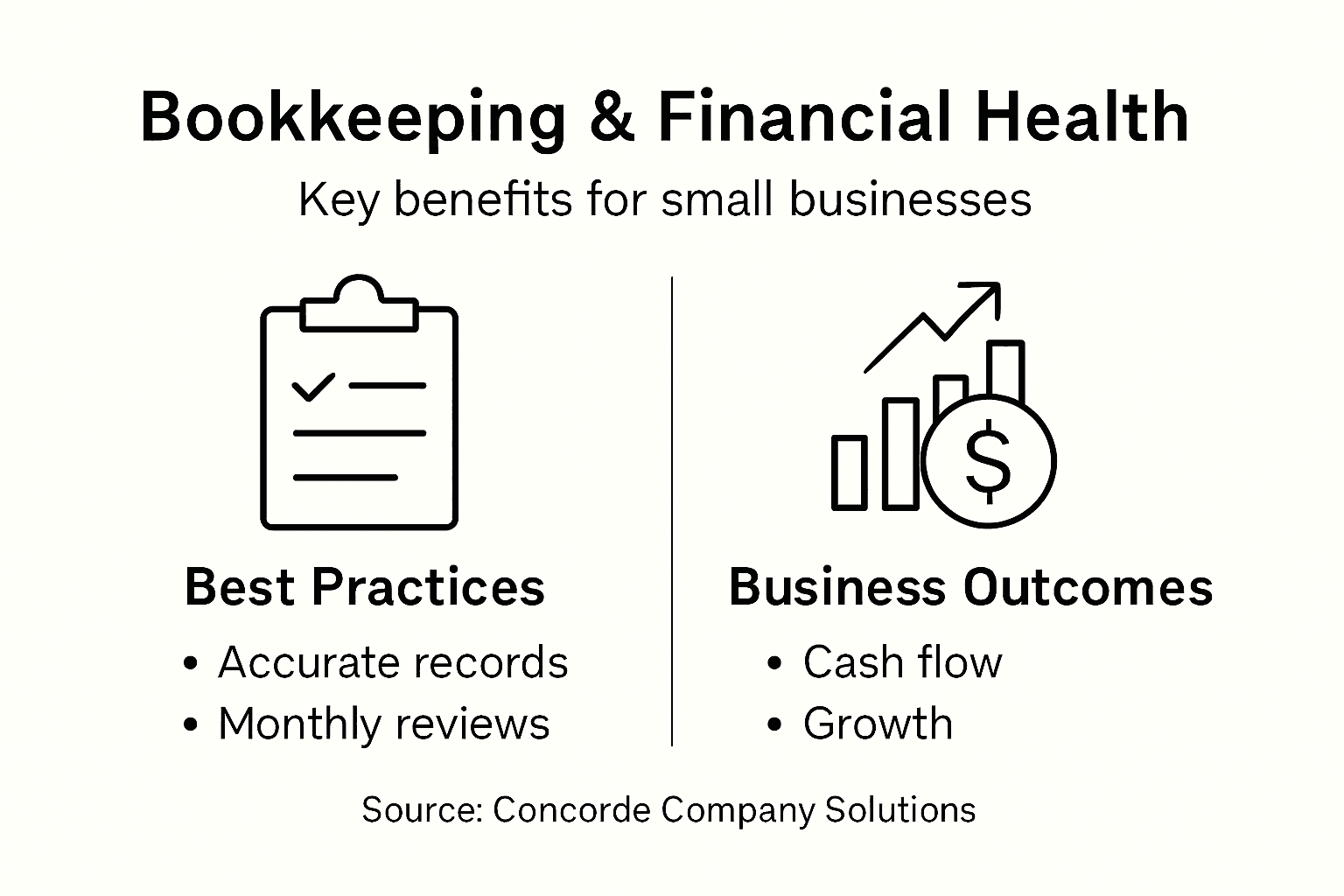
Pro tip: Implement a consistent monthly review of your financial records to catch potential issues early and maintain ongoing financial health.
Legal obligations for accurate records
UK companies must maintain comprehensive accounting records to comply with legal requirements and demonstrate financial transparency. Limited companies have specific statutory obligations that go beyond simple record-keeping, ensuring accountability and proper financial management.
The key legal requirements for maintaining accurate business records include:
Documenting all financial transactions
Keeping records for a minimum of six years
Recording income and expenditure details
Maintaining asset and liability registers
Preserving supporting financial documentation
Accounting documentation must provide a clear and accurate representation of the company’s financial position. This includes detailed records that explain every financial transaction, allowing for comprehensive tracking and potential audit review. The legal framework requires businesses to demonstrate:
Daily monetary transactions
Asset ownership details
Stock and inventory levels
Liability and debt information
Contracts and financial agreements
Under Companies Act 2006 legal standards, company directors bear direct responsibility for maintaining accurate records. Failure to comply can result in significant financial penalties, potential legal action, and potential disqualification of company leadership.
Pro tip: Establish a systematic record-keeping process and consider professional accounting support to ensure full compliance with legal documentation requirements.
Common pitfalls and how to avoid them
Bookkeepers must maintain vigilant financial record management to prevent costly mistakes that can compromise a business’s financial health. Small businesses often encounter numerous challenges that can derail their financial accuracy and compliance.
Common bookkeeping pitfalls include:
Inconsistent transaction recording
Poor document organization
Neglecting regular account reconciliation
Misclassifying financial transactions
Overlooking VAT reporting requirements
Failing to separate personal and business expenses
Accurate financial documentation requires a systematic approach to avoid errors. The most frequent mistakes typically stem from:
Inadequate record-keeping practices
Lack of proper accounting software
Infrequent financial reviews
Insufficient staff training
Ignoring minor discrepancies
Professional bookkeeping training can significantly reduce the risk of critical financial errors. By understanding fundamental accounting principles and implementing robust systems, businesses can minimise the likelihood of costly mistakes that could lead to compliance issues or financial mismanagement.
This summary highlights common pitfalls and recommended solutions for effective UK bookkeeping:
Pitfall | Risk to Business | Preventive Solution |
Incomplete transaction records | HMRC penalties | Monthly reconciliation |
Confused classifications | Financial misstatements | Staff training and software checks |
Poor document management | Audit problems | Secure, organised cloud storage |
Pro tip: Implement a monthly review process and invest in reliable accounting software to catch and correct potential errors before they become significant problems.
Elevate Your Small Business with Expert Bookkeeping Support
Accurate bookkeeping is a vital step for small businesses striving to achieve financial clarity and compliance. If you find yourself juggling complex transactions or seeking to avoid common pitfalls such as inconsistent records or missed VAT requirements, professional guidance can make all the difference. Understanding systems like double-entry bookkeeping and maintaining compliant accounting records is easier when you have a trusted partner by your side.

Take control of your finances today with personalised support from Concorde Company Solutions. Our expert team in Garforth, Leeds, specialises in helping small to medium-sized businesses streamline their bookkeeping, payroll management, and statutory accounting. Don’t wait for errors to affect your business — get comprehensive assistance tailored to your unique needs and ensure you meet all HMRC and legal obligations. Visit our website now to discover how we can support your financial health and growth journey.
Frequently Asked Questions
Why is bookkeeping essential for small businesses?
Bookkeeping is essential for small businesses as it ensures accurate financial record-keeping, aids in compliance with legal requirements, and provides valuable insights into the company’s financial health, facilitating informed decision-making.
What are the basic principles of effective bookkeeping?
The basic principles of effective bookkeeping include maintaining accurate records of all financial transactions, regularly reconciling bank statements, tracking income and expenditures, and preserving financial documentation for at least six years.
How can bookkeeping impact business growth?
Effective bookkeeping helps businesses identify financial trends, manage cash flow, and prepare for tax obligations, ultimately supporting strategic planning and fostering growth opportunities.
What are some common mistakes to avoid in bookkeeping?
Common mistakes in bookkeeping include inconsistent transaction recording, poor document organisation, neglecting regular reconciliations, misclassifying transactions, and failing to separate personal and business finances.
Recommended
Comments