
Role of Payroll Services – Ensuring Compliance for SMEs
- David Rawlinson
- Dec 27, 2025
- 9 min read

More than 80 percent of british small and medium businesses report payroll as one of their biggest administrative headaches every year. Keeping up with complex HMRC rules can feel overwhelming, especially for business owners in Garforth and Leeds juggling day-to-day demands. This guide explains how reliable payroll services protect your company from costly errors and lets you focus on growth by removing payroll worries from your to-do list.
Table of Contents
Key Takeaways
Point | Details |
Importance of Payroll Services | Payroll services are crucial for businesses in the UK, ensuring accurate employee payments and compliance with HMRC regulations. |
Options for Payroll Management | SMEs can choose between in-house, managed, outsourced, or hybrid payroll services based on their specific needs and resources. |
Compliance and Risk Mitigation | Professional payroll services help SMEs navigate complex legal obligations, reducing risks of penalties and ensuring adherence to HMRC requirements. |
Cost-Effectiveness and Efficiency | Evaluating payroll solutions involves considering costs beyond fees, focusing on automation, compliance features, and potential long-term savings. |
Defining Payroll Services in the UK Context
Payroll services in the United Kingdom represent a comprehensive financial management function essential for businesses of all sizes. At their core, these services involve the systematic processing of employee compensation, ensuring workers receive accurate payments while maintaining strict compliance with Her Majesty’s Revenue and Customs (HMRC) regulations. The Chartered Institute of Payroll Professionals (CIPP) defines payroll services as intricate processes encompassing wage calculation, statutory deductions, and comprehensive reporting mechanisms.
The fundamental responsibilities of UK payroll services extend far beyond simple wage disbursement. These services meticulously manage critical financial elements such as National Insurance contributions, pension schemes, income tax calculations, and statutory payment provisions like sick pay and parental leave benefits. Payroll professionals must navigate a complex landscape of employment legislation, ensuring each transaction adheres to current legal frameworks and maintains precise financial records for potential governmental audits.
Businesses relying on professional payroll services gain significant advantages in risk management and operational efficiency. By outsourcing these technical responsibilities, small to medium enterprises can mitigate potential errors in tax calculations, avoid potential penalties from HMRC, and allocate internal resources more strategically. Comprehensive payroll management involves not just payment processing, but also maintaining robust data security protocols, managing employee classifications, and generating accurate financial reporting.
Pro tip: Consider conducting a quarterly internal audit of your payroll processes to identify potential discrepancies and ensure ongoing compliance with the latest HMRC regulations.
Types of Payroll Services Available to SMEs
Small and medium enterprises in the United Kingdom have several strategic options for managing payroll, each offering unique advantages tailored to different business needs. Payroll service configurations range from fully in-house systems to completely outsourced solutions, with hybrid models providing flexible alternatives for businesses seeking customised approaches to financial management.
The primary types of payroll services include standalone software solutions, managed payroll services, and comprehensive outsourced payroll bureaus. Standalone software offers businesses direct control and allows for internal management, typically featuring automated calculation tools, reporting capabilities, and built-in compliance features. Managed payroll services provide a middle ground, where businesses retain some administrative oversight while leveraging external expertise for complex calculations and statutory reporting. Fully outsourced payroll bureaus represent the most hands-off approach, where specialist providers handle every aspect of payroll processing, from wage calculations to tax submissions and employee documentation.
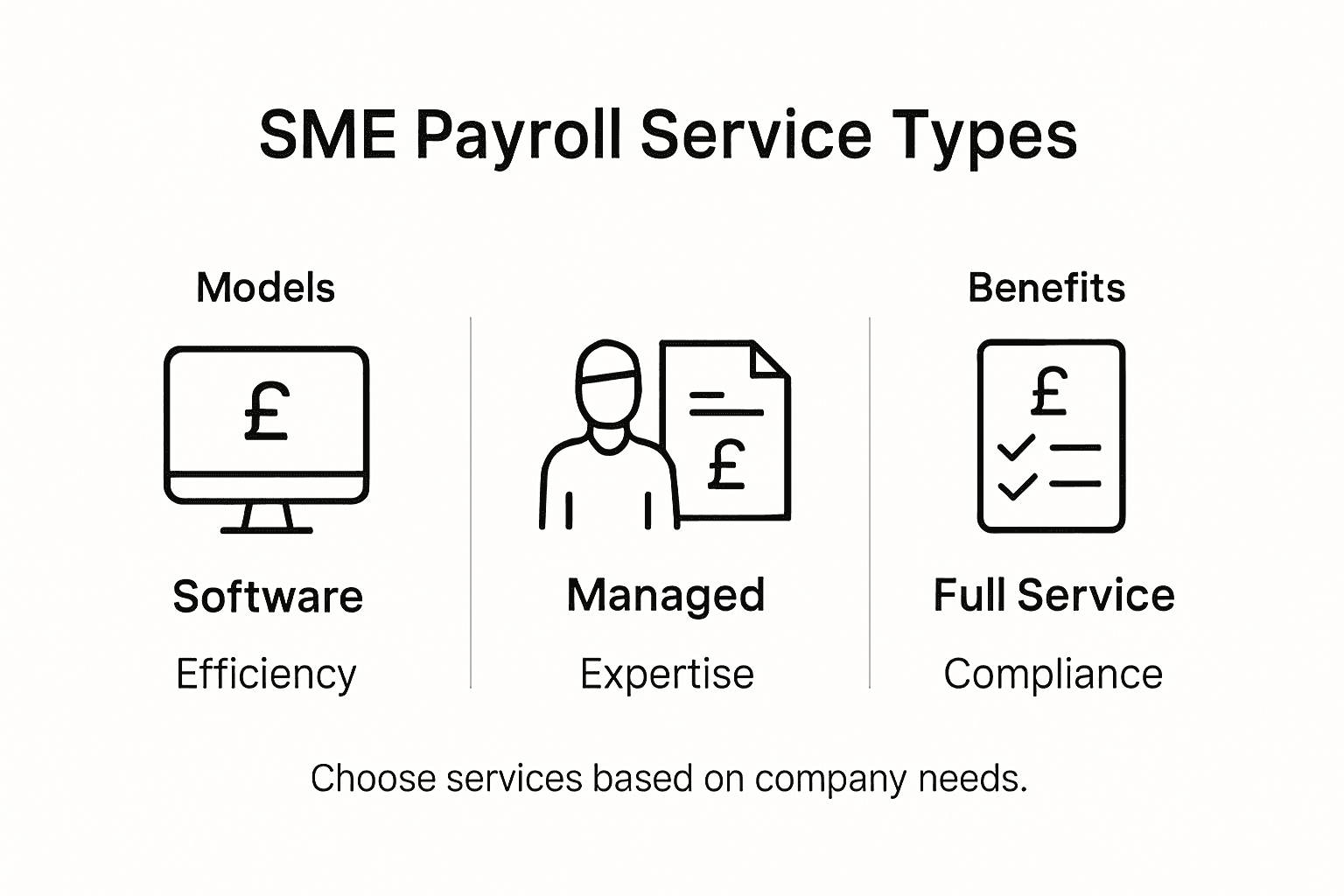
Choosing the appropriate payroll service depends on several critical factors, including company size, internal resources, complexity of wage structures, and specific industry requirements. Smaller SMEs might benefit from comprehensive accountancy support that integrates payroll management, while larger organisations may require more sophisticated, scalable solutions that can handle complex payroll scenarios and multiple employee classifications.
Here is a comparison of payroll service models and their strategic business impact:
Payroll Model | Level of Control | Typical Business Size | Key Benefit |
Standalone Software | High | Micro to small SME | Full autonomy, direct oversight |
Managed Payroll Service | Moderate | Small to medium SME | Expert support, reduced errors |
Outsourced Payroll Bureau | Low | Medium to large SME | No internal overhead, compliance expertise |
Hybrid Approach | Customisable | Growing or complex SME | Flexibility, tailored functions |
Pro tip: Conduct a thorough audit of your current payroll processes and workforce complexity before selecting a service model to ensure maximum efficiency and compliance.
How Payroll Services Streamline Compliance
Payroll services play a critical role in helping small and medium enterprises navigate the complex landscape of UK employment regulations and tax requirements. Payroll compliance mechanisms are designed to systematically reduce errors, minimise financial risks, and ensure businesses meet their statutory obligations to Her Majesty’s Revenue and Customs (HMRC).
These services excel in automating intricate compliance processes that would typically overwhelm in-house finance teams. Modern payroll solutions integrate real-time tax code adjustments, handle statutory reporting, and maintain comprehensive digital records that align precisely with HMRC guidelines. By leveraging sophisticated software and expert knowledge, payroll services can automatically process complex calculations such as National Insurance contributions, pension auto-enrolment requirements, and variable tax treatments for different employee benefits.
The strategic value of professional payroll services extends beyond mere number-crunching. Limited company compliance strategies demonstrate how these services provide a proactive approach to regulatory adherence. They continuously monitor legislative changes, update systems to reflect new regulations, and generate detailed audit trails that protect businesses from potential penalties. This comprehensive approach transforms compliance from a potential administrative burden into a streamlined, manageable process that allows business owners to focus on core operational objectives.
Pro tip: Implement a quarterly compliance review with your payroll service provider to stay ahead of regulatory changes and maintain robust financial governance.
The table below summarises major compliance features provided by professional payroll services:
Compliance Feature | Purpose | How It Assists SMEs |
Real-time Tax Code Updates | Ensures accurate deductions | Minimises HMRC penalties |
Automated Statutory Reporting | Meets regulatory submission deadlines | Reduces manual workload |
Digital Audit Trails | Tracks all payroll changes | Eases audits and inspections |
Pension Auto-Enrolment | Fulfils legal pension requirements | Avoids statutory breaches |
Legal Duties and HMRC Reporting Requirements
Small and medium enterprises in the United Kingdom face complex legal obligations when managing payroll, with stringent reporting requirements set by Her Majesty’s Revenue and Customs (HMRC). Employer reporting responsibilities mandate that businesses submit comprehensive payroll information on or before each pay date through Full Payment Submissions (FPS), which capture critical details including employee wages, tax deductions, and National Insurance contributions.
The legal framework surrounding payroll reporting is multifaceted, requiring businesses to maintain meticulous digital records and adhere to precise statutory deadlines. Employers must provide accurate real-time information about employee earnings, implement correct tax code adjustments, and ensure timely submission of Pay As You Earn (PAYE) remittances. Failure to comply can result in substantial financial penalties, potential legal challenges, and disruptions to employee benefit entitlements. These requirements demand a systematic approach that goes beyond simple record-keeping, necessitating ongoing vigilance and proactive management.
Annual reporting obligations represent another crucial aspect of HMRC compliance. Limited company compliance strategies highlight the importance of preparing comprehensive end-of-year reports, updating employee data, and anticipating potential legislative changes. These annual submissions require businesses to reconcile their payroll records, validate employee information, and ensure all tax calculations align precisely with current HMRC regulations. The complexity of these requirements underscores the value of professional payroll services in navigating the intricate landscape of UK employment and tax legislation.
Pro tip: Establish a dedicated digital filing system for payroll documentation and set automated reminders for key HMRC reporting deadlines to maintain consistent compliance.
Risks of In-House Payroll Versus Outsourcing
Small and medium enterprises face a critical decision when managing payroll: maintaining an in-house team or outsourcing to professional services. Comprehensive payroll risk analysis reveals significant trade-offs that can substantially impact a business’s financial and operational stability. In-house payroll offers direct control but demands considerable internal resources, requiring continuous staff training, investment in specialised software, and constant monitoring of complex legislative changes.

Outsourcing payroll introduces an alternative approach with its own set of advantages and potential vulnerabilities. Professional payroll services bring specialised expertise, reducing the risk of legislative non-compliance and minimising errors in tax calculations. However, businesses must carefully evaluate potential third-party dependencies. Operational resilience strategies emphasise that while external providers can enhance efficiency, the ultimate responsibility for accurate reporting and compliance remains with the organisation. This necessitates robust governance frameworks and clear communication channels with the selected payroll service provider.
The decision between in-house and outsourced payroll is not binary but requires nuanced consideration of organisational capacity, complexity of wage structures, and available technological infrastructure. Smaller enterprises might find outsourcing more cost-effective, eliminating the need for dedicated internal payroll staff and reducing the risk of errors. Larger organisations with sophisticated payroll requirements might prefer a hybrid model, retaining some internal control while leveraging external expertise for complex calculations and regulatory compliance. Regardless of the chosen approach, continuous monitoring, regular audits, and adaptability remain crucial to maintaining accurate and compliant payroll processes.
Pro tip: Conduct a comprehensive internal audit of your current payroll capabilities before deciding between in-house management and outsourcing to identify potential risks and optimisation opportunities.
Cost, Efficiency, and Choosing the Right Solution
Navigating the complex landscape of payroll management requires small and medium enterprises to make strategic decisions about cost-effectiveness and operational efficiency. Comprehensive payroll software evaluation demands careful consideration of multiple factors beyond simple pricing, including compliance capabilities, automation potential, and scalability of technological solutions. Businesses must weigh the direct financial investment against potential long-term savings achieved through reduced manual processing and minimised compliance risks.
The true cost of payroll management extends far beyond initial software or service expenses. Modern payroll solutions offer sophisticated features that can significantly reduce administrative overhead, automate complex calculations, and provide real-time insights into financial data. Payroll technology comparisons reveal that the most effective solutions integrate seamlessly with existing accounting systems, offer robust reporting capabilities, and provide ongoing legislative updates that protect businesses from potential regulatory penalties.
Choosing the right payroll solution requires a nuanced approach that considers the unique characteristics of each organisation. Smaller businesses might prioritise cost-effective, user-friendly platforms with essential compliance features, while larger enterprises may require more complex systems capable of handling sophisticated wage structures, multiple payment schedules, and intricate benefit calculations. The key is to select a solution that not only meets current operational needs but also provides flexibility for future growth and technological advancements.
Pro tip: Request detailed demonstrations and free trials from multiple payroll service providers to conduct a comprehensive, hands-on comparison of their features and compatibility with your specific business requirements.
Secure Your SME’s Payroll Compliance with Expert Support
Navigating the complex legal duties and ever-changing HMRC reporting requirements discussed in the article can be overwhelming for many small and medium enterprises. At the heart of these challenges lie critical pain points such as avoiding costly penalties, maintaining accurate digital audit trails, and staying up to date with real-time tax code adjustments. Understanding the risks of in-house payroll management versus outsourcing is essential to safeguarding your business’s financial stability and regulatory compliance.
Concorde Company Solutions in Garforth, Leeds, offers specialised payroll management tailored to SMEs, helping you streamline compliance and reduce the burden of statutory reporting. With expert knowledge of UK employment regulations, our personalised services ensure your payroll remains accurate, secure, and fully compliant. From pension auto-enrolment administration to timely HMRC submissions, we act as a trusted partner so you can focus on growing your business with peace of mind.

Take control of your payroll compliance today. Visit Concorde Company Solutions to explore our comprehensive payroll management services and learn how our dedicated team can protect your SME from costly errors. Contact us now for tailored advice and transparent pricing designed to meet your unique needs.
Frequently Asked Questions
What are the key responsibilities of payroll services for SMEs?
Payroll services for SMEs encompass the systematic processing of employee compensation, including wage calculations, statutory deductions, compliance with tax regulations, and maintaining accurate financial records. They also manage contributions like National Insurance and pensions, as well as statutory payments such as sick pay and parental leave benefits.
How do payroll services help ensure compliance with HMRC regulations?
Payroll services automate complex compliance processes, ensuring timely and accurate submissions of payroll information to HMRC, such as Full Payment Submissions (FPS) and Pay As You Earn (PAYE) remittances. They also maintain digital records and monitor legislative changes, reducing errors and potential penalties.
What are the benefits of outsourcing payroll services for small businesses?
Outsourcing payroll services allows small businesses to gain expertise in handling complicated tax calculations and compliance issues while mitigating risks of errors and penalties. This enables business owners to focus on core operations rather than administrative tasks, thereby enhancing operational efficiency.
How can SMEs choose the right payroll service model for their needs?
SMEs should assess factors such as company size, complexity of payroll structures, and available internal resources when choosing a payroll service model. Options include standalone software for direct control, managed payroll services for a mix of oversight and external support, or fully outsourced services for complete management of payroll tasks.
Recommended

Comments