
Role Of Accountants In Compliance: Why It Matters In UK
- David Rawlinson
- Dec 20, 2025
- 7 min read

Nearly half of all British businesses face compliance concerns each year, yet understanding what accountant compliance truly means remains confusing for many. Navigating regulations is not just a matter of ticking boxes. With legal standards growing more complex, the right compliance approach safeguards financial health and shields companies from costly errors. This guide breaks down accountant compliance so British professionals can act with clarity, confidence, and integrity.
Table of Contents
Key Takeaways
Point | Details |
Accountant Compliance is Essential | Accountants must ensure businesses adhere to legal, financial, and regulatory standards, protecting financial ecosystems. |
Proactive Compliance Strategies | Implementing systematic approaches for documentation and risk management enhances organisational financial integrity and reduces penalties. |
Role of Accountants in Governance | Accountants should establish robust governance frameworks that support transparency and control financial risks effectively. |
Client Communication is Key | Clear, proactive communication empowers clients to understand compliance obligations, fostering trust and effective financial strategies. |
What Does Accountant Compliance Mean
Accountant compliance represents a comprehensive framework of professional responsibilities designed to ensure businesses meet all legal, financial, and regulatory standards set by governmental authorities. At its core, this concept involves systematically managing financial processes, reporting requirements, and tax obligations with precision and integrity. Understanding compliance means recognising that accountants serve as critical gatekeepers who protect both organisational and national financial ecosystems.
The essence of accountant compliance involves meticulously managing tax accounting arrangements that encompass responsibilities, policies, appropriate personnel, and procedural systems. These arrangements cover the entire financial lifecycle - from initial data input into accounting systems through to final figures used in tax returns. Accountants must establish robust frameworks that track every financial transaction, ensuring accuracy, transparency, and adherence to regulatory guidelines.
Compliance extends beyond mere number-crunching. It requires accountants to navigate complex regulatory landscapes, anticipate potential risks, and implement strategic controls that protect businesses from potential legal and financial penalties. Businesses are legally obligated to submit accurate and complete tax returns, which means their accounting systems must be thoroughly designed to capture, process, and report financial information with absolute precision.
Pro Tip: Proactive Documentation Strategy: Maintain a comprehensive, chronological record of all financial transactions and decisions, creating an audit trail that demonstrates your commitment to transparency and regulatory compliance.
By embracing robust compliance practices, accountants transform from traditional number managers into strategic partners who safeguard organisational financial health and integrity.
Accountant Responsibilities For HMRC Compliance
Accountants play a pivotal role in ensuring businesses meet their statutory obligations to Her Majesty’s Revenue and Customs (HMRC). Their responsibilities extend far beyond simple number-crunching, encompassing a comprehensive range of critical financial governance tasks that protect both businesses and the broader economic ecosystem.
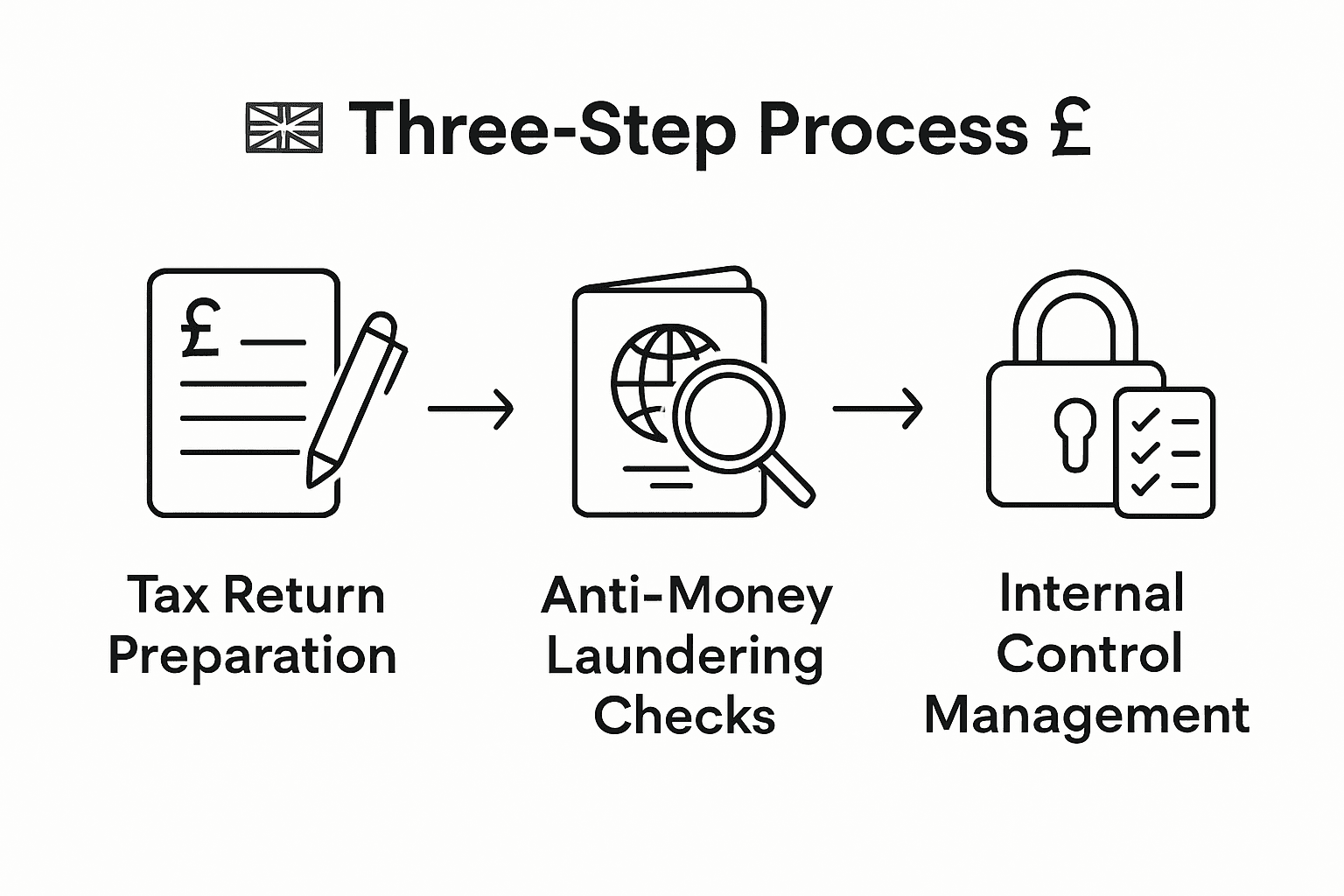
Primarily, accountants are tasked with preparing and submitting accurate tax returns that comprehensively reflect a company’s financial activities. This involves meticulously documenting financial statements, calculating precise tax liabilities, and ensuring all reporting meets HMRC’s stringent regulatory standards. Senior Accounting Officers (SAOs) bear an especially significant burden, being legally responsible for establishing robust tax accounting arrangements that guarantee compliance and transparency.
Moreover, accountants must navigate complex regulatory landscapes by providing specialised advice on diverse financial matters. Their responsibilities include inheritance planning, estate tax strategies, and developing comprehensive systems that track financial transactions with absolute precision. When working with Senior Accounting Officers’ guidance, they must take reasonable steps to implement control mechanisms that mitigate potential risks and ensure complete adherence to HMRC requirements.
Pro Tip: Systematic Compliance Preparation: Develop a proactive compliance calendar that anticipates key HMRC reporting deadlines, allowing ample time for thorough review and minimising the risk of last-minute errors or potential penalties.
By embracing these multifaceted responsibilities, accountants transform from mere financial record-keepers into strategic guardians of organisational financial integrity and regulatory compliance.
Accountants And Anti‑Money Laundering Duties
Accountants serve as critical guardians in the fight against financial crime, bearing significant responsibilities in detecting and preventing money laundering activities. Their role extends far beyond traditional financial record-keeping, transforming them into essential frontline defenders of financial integrity within the United Kingdom’s regulatory framework.

Under the Money Laundering Regulations 2017, accountants are legally mandated to assist businesses in understanding their compliance obligations. This involves implementing robust due diligence processes, conducting thorough client risk assessments, and maintaining meticulous documentation that tracks financial transactions. Compliance officers play a crucial role in evaluating the effectiveness of these preventative measures, ensuring that businesses develop comprehensive policies and procedures designed to mitigate potential money laundering risks.
The responsibilities of accountants in anti-money laundering duties are multifaceted and demanding. They must develop sophisticated screening mechanisms, report suspicious activities to relevant authorities, and maintain ongoing monitoring of client financial behaviour. Compliance interventions involve rigorous assessment of existing controls, with the ultimate goal of preventing financial criminals from exploiting business financial systems.
Pro Tip: Risk Assessment Protocol: Develop a systematic, documented approach to client risk evaluation that includes comprehensive background checks, transaction pattern analysis, and regular review cycles to stay ahead of potential financial criminal strategies.
By embracing these critical responsibilities, accountants not only protect individual businesses but contribute significantly to maintaining the integrity of the entire financial ecosystem.
Compare the main responsibilities of Senior Accounting Officers and Compliance Officers:
Role | Key Responsibility | Typical Activities |
Senior Accounting Officer | Overseeing tax accounting arrangements | Ensures HMRC reporting accuracy |
Compliance Officer | Monitoring anti-money laundering controls | Reviews due diligence, reports suspicions |
Accountants’ Role In Governance And Internal Controls
Accountants play a pivotal role in establishing and maintaining robust governance structures that safeguard organisational financial integrity. Their responsibilities extend far beyond traditional number-crunching, positioning them as critical architects of comprehensive internal control systems that protect businesses from financial risks and regulatory vulnerabilities.
At the heart of their governance responsibilities, accountants are charged with designing and implementing comprehensive tax accounting arrangements that manage compliance risks effectively. Senior Accounting Officers bear particular responsibility for creating frameworks that ensure transparent, accurate financial reporting. These arrangements involve developing sophisticated policies, establishing clear procedural guidelines, and creating systematic approaches to tracking and managing financial transactions.
The governance role of accountants encompasses multiple critical dimensions. Internal control oversight requires them to develop risk management strategies, implement robust monitoring mechanisms, and create hierarchical accountability structures. They must critically evaluate existing financial processes, identify potential vulnerabilities, and design preventative and detective controls that protect organisational assets and ensure regulatory compliance.
Pro Tip: Control Framework Development: Create a dynamic, adaptable internal control matrix that includes regular risk assessments, clear escalation protocols, and periodic review mechanisms to maintain ongoing governance effectiveness.
By embracing these comprehensive governance responsibilities, accountants transform from financial technicians into strategic guardians of organisational financial health and regulatory adherence.
Managing Compliance Expectations With Clients
Effective client management in compliance requires a delicate balance of professional expertise, clear communication, and strategic guidance. Accountants must navigate complex regulatory landscapes while maintaining transparent, collaborative relationships that empower clients to understand and meet their financial obligations.
Accountants are formally authorized representatives who guide clients through complex compliance processes on behalf of HMRC. Client communication becomes paramount in this context, involving comprehensive explanations of regulatory requirements, potential risks, and proactive strategies for maintaining financial integrity. This approach transforms accountants from mere number-crunchers into strategic advisers who help clients anticipate and navigate potential compliance challenges.
During HMRC compliance checks, accountants play a crucial role in preparing documentation, representing client interests, and ensuring accurate information is presented. Their responsibilities extend beyond technical compliance, requiring them to develop tailored communication strategies that demystify complex regulatory frameworks, reduce client anxiety, and build trust through consistent, clear guidance.
Pro Tip: Expectation Management Protocol: Develop a comprehensive onboarding document that clearly outlines compliance responsibilities, potential challenges, and your strategic approach to supporting clients through regulatory processes.
By adopting a proactive, educational approach to compliance management, accountants can transform potentially stressful interactions into collaborative partnerships focused on financial success and regulatory adherence.
Here is a summary of the key areas of accountant compliance and their business impact:
Compliance Area | Core Focus | Primary Business Impact |
HMRC Tax Compliance | Accurate tax returns and reporting | Avoids penalties and supports legal standing |
Anti-Money Laundering | Client verification and monitoring | Protects against financial crime and fines |
Governance & Internal Controls | Risk management frameworks | Enhances transparency and controls risks |
Client Compliance Management | Communication and representation | Builds trust and eases regulatory processes |
Ensure Your Business Stays Compliant with Expert Accountant Support
Navigating the complex landscape of HMRC compliance, anti-money laundering duties, and robust governance can feel overwhelming. This article highlights how accountants serve as vital guardians in meeting these statutory responsibilities while protecting your business from costly risks and penalties. Whether you are a small to medium-sized business or a sole trader, understanding and managing tax accounting arrangements alongside internal controls is essential to avoid surprises and maintain financial integrity.

Take control of your compliance journey today with tailored support from Concorde Company Solutions. Our team based in Garforth, Leeds, specialises in transparent, personalised accounting services including company tax returns and bookkeeping. We empower you to meet HMRC requirements confidently while streamlining your financial operations. Visit our homepage to discover how our dedicated experts can help you build trust through effective compliance management. Don’t wait for a regulatory check to take action–connect with us now and safeguard your business future.
Frequently Asked Questions
What is accountant compliance?
Accountant compliance is a framework of professional obligations ensuring businesses meet legal, financial, and regulatory standards. It involves managing financial processes, reporting, and tax obligations with accuracy and integrity.
How do accountants ensure HMRC compliance?
Accountants ensure HMRC compliance by preparing and submitting accurate tax returns, documenting financial statements, and advising on financial governance, which involves establishing robust tax accounting arrangements.
What are the anti-money laundering duties of accountants?
Accountants have a critical role in preventing money laundering by conducting client risk assessments, maintaining detailed documentation, and reporting suspicious activities to authorities, in accordance with relevant regulations.
Why are internal controls important for accountants?
Internal controls are essential for accountants as they help manage compliance risks by ensuring accurate financial reporting, protecting organisational assets, and maintaining compliance with regulations through robust monitoring mechanisms.
Recommended


Comments