
Digital Tax Submission: Impact on UK Businesses
- David Rawlinson
- Jan 2
- 8 min read

Switching to digital tax submission has become a reality for british businesses, with over 1.2 million companies now using online systems to meet official requirements. For small business owners and sole traders in Garforth, Leeds, this shift means keeping pace with new HM Revenue and Customs rules. Understanding what digital tax truly involves will help you avoid fines, reduce paperwork, and take control of your company’s finances as regulations evolve.
Table of Contents
Key Takeaways
Point | Details |
Digital Tax Submission | The Making Tax Digital initiative requires UK businesses to maintain digital records and submit quarterly updates to HMRC. |
Compliance Timeline | Businesses with gross income over £50,000 must comply by April 2026, with thresholds gradually decreasing. |
Software Requirement | Businesses must use HMRC-approved software for accurate record-keeping and submission, ensuring seamless integration with HMRC systems. |
Potential Penalties | Non-compliance with digital reporting requirements may result in financial penalties, making it crucial to understand and adhere to new regulations. |
What Digital Tax Submission Means Today
Digital tax submission represents a fundamental transformation in how UK businesses report financial information to Her Majesty’s Revenue and Customs (HMRC). The Making Tax Digital initiative signals the most significant overhaul of tax reporting in over three decades, moving away from traditional annual tax returns towards a more dynamic, technology-driven approach.
Under this new system, businesses and sole traders are required to maintain digital records using HMRC-approved software, submitting quarterly updates instead of single annual returns. This approach enables more frequent and accurate tax reporting, allowing businesses to track their tax liabilities in near real-time and avoid unexpected financial surprises at year-end. Specifically, qualifying sole traders and landlords with gross income over £50,000 will be mandated to adopt these digital reporting methods from April 2026, with thresholds gradually lowering in subsequent years.
The core objectives of digital tax submission include reducing human error, improving transparency, and streamlining tax administration. Businesses will need compatible accounting software that integrates directly with HMRC’s systems, ensuring seamless digital record-keeping and submission processes. This transformation demands that business owners invest time in understanding digital reporting requirements and selecting appropriate technological solutions.
Pro Tip: Start exploring HMRC-compatible accounting software now and begin digitising your financial records to ensure a smooth transition to digital tax reporting.
Types of Digital Tax Submissions in the UK
The United Kingdom’s digital tax submission landscape encompasses multiple types of reporting, each designed to capture different aspects of business and individual financial activities. Digital tax submissions now require businesses to maintain comprehensive digital records and submit regular updates across various income streams, fundamentally changing traditional tax reporting methods.
Primary types of digital tax submissions include quarterly updates for self-employment income, property income, dividend earnings, and pension contributions. Sole traders and landlords must use compatible software to record income and expenses, submitting detailed quarterly summaries that provide HMRC with near real-time insights into financial activities. These digital submissions differ from traditional annual tax returns by offering more frequent, granular financial reporting that helps businesses maintain accurate tax records and anticipate potential tax liabilities.
Businesses must navigate different submission requirements based on their specific income sources and total annual earnings. For instance, businesses with gross income over £50,000 will be mandated to adopt digital reporting from April 2026, with thresholds expected to decrease in subsequent years. This means entrepreneurs must invest in HMRC-compatible accounting software and develop robust digital record-keeping processes to ensure compliance with evolving tax regulations.
Pro Tip: Invest in cloud-based accounting software that automatically categorises transactions and generates quarterly digital tax reports to streamline your submission process.
How the Making Tax Digital Process Works
The Making Tax Digital process represents a comprehensive redesign of tax reporting for UK businesses, fundamentally transforming how financial information is recorded and submitted to HMRC. Quarterly digital updates have replaced the traditional annual tax return system, requiring businesses to maintain meticulous digital records and provide regular financial insights throughout the tax year.

The process involves several key stages that businesses must follow. First, entrepreneurs must invest in HMRC-recognised accounting software capable of generating digital records and quarterly summaries. These quarterly updates are not final tax returns but comprehensive snapshots of business income and expenses, enabling HMRC to receive near real-time financial information. Each quarter, businesses will submit detailed digital reports capturing their financial activities, allowing for more accurate and transparent tax tracking.
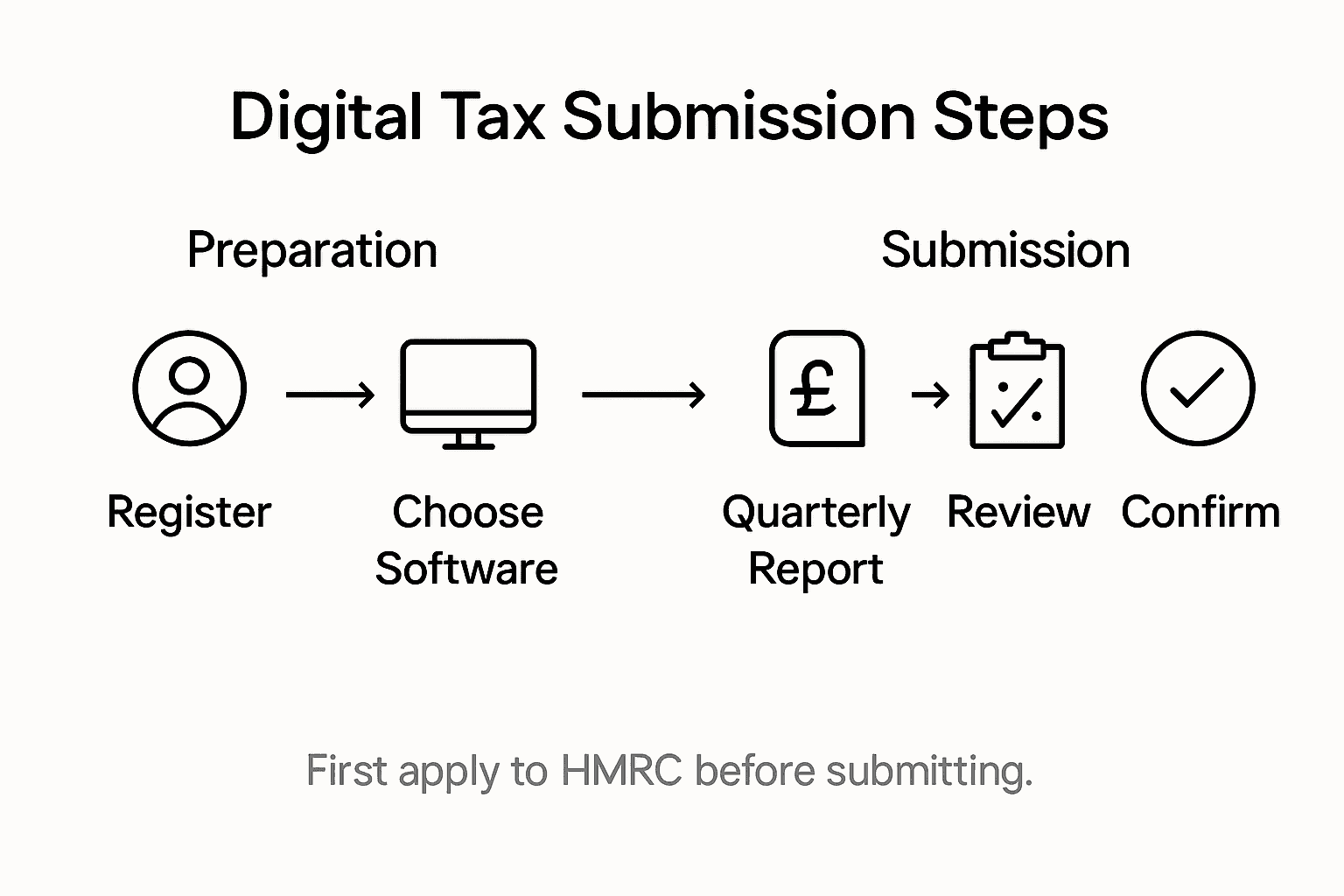
Under the new regulations, businesses with gross income over £50,000 will be the first to implement these digital reporting requirements from April 2026, with lower thresholds expected in subsequent years. The digital submission process does not alter existing tax payment deadlines, meaning businesses must still comply with traditional payment schedules while adapting to this new reporting mechanism. This approach aims to reduce errors, improve tax compliance, and provide businesses with better visibility into their potential tax liabilities throughout the financial year.
Pro Tip: Conduct a thorough audit of your current accounting systems and invest in cloud-based software that seamlessly integrates with HMRC’s digital reporting requirements.
Who Must Comply and Key Deadlines
The Making Tax Digital initiative introduces specific compliance requirements that will progressively impact different segments of UK businesses and self-employed individuals. Compliance thresholds are determined by gross annual income, creating a phased approach that will eventually encompass most sole traders and landlords registered for Self Assessment.
The rollout of digital tax submission follows a structured timeline targeting businesses based on their annual income levels. From April 2026, businesses with gross income exceeding £50,000 will be the first group required to adopt digital reporting methods. Subsequently, the threshold will lower to £30,000 in April 2027 and £20,000 in April 2028, gradually expanding the number of businesses subject to these new digital reporting requirements. Quarterly submission deadlines will be consistently set on 7 August, 7 November, 7 February, and 7 May, with a final annual tax return due by 31 January each year.
Here is a summary of key deadlines and compliance thresholds for Making Tax Digital:
Compliance Group | Threshold Amount | Digital Reporting Start | Quarterly Deadlines |
First phase | Over £50,000 | April 2026 | 7 Aug, 7 Nov, 7 Feb, 7 May |
Second phase | Over £30,000 | April 2027 | 7 Aug, 7 Nov, 7 Feb, 7 May |
Third phase | Over £20,000 | April 2028 | 7 Aug, 7 Nov, 7 Feb, 7 May |
Final annual submission | All compliant | Each year | Due by 31 January following tax year |
While most businesses will need to comply, certain exemptions exist for those facing digital exclusion or experiencing specific hardships. Businesses must maintain detailed digital records using HMRC-recognised software, submit quarterly updates, and ensure accurate reporting of income from various sources including self-employment, property rentals, and other taxable revenues. Failure to meet these new digital reporting requirements can result in potential penalties, making it crucial for businesses to prepare and adapt to the changing tax landscape.
Pro Tip: Conduct a comprehensive review of your current income streams and begin transitioning to digital accounting systems well before your specific compliance deadline.
Legal Obligations and Common Pitfalls
The Making Tax Digital initiative introduces stringent legal requirements that demand careful navigation from UK businesses and sole traders. Legal frameworks established in primary legislation underpinning these new tax reporting regulations create complex obligations that can lead to significant financial penalties for non-compliance.
Businesses must understand that digital record-keeping involves more than simply storing financial documents electronically. The requirements mandate using HMRC-approved software capable of generating precise quarterly reports, maintaining comprehensive digital records of all income and expense transactions, and submitting updates within specified timeframes. Common pitfalls include inconsistent record-keeping, using non-compatible software, missing quarterly submission deadlines, and failing to accurately report all taxable income streams. Each of these errors can trigger financial penalties ranging from initial warning notices to substantial monetary fines.
The legal landscape surrounding digital tax submission is not uniformly rigid. While most businesses will be required to comply, HMRC recognises that certain circumstances might warrant exemptions. Businesses facing genuine digital exclusion, experiencing technological challenges, or encountering specific hardship can apply for temporary relief. However, these exemptions are not automatically granted and require formal documentation and evidence demonstrating why standard digital reporting mechanisms cannot be reasonably implemented.
Pro Tip: Consult with a professional accountant to conduct a comprehensive audit of your current digital record-keeping systems and identify potential compliance gaps before your mandatory submission deadline.
Software Choices and Preparing Your Business
Navigating the technological requirements of Making Tax Digital demands strategic software selection and comprehensive preparation. Compatible software solutions are crucial for businesses to meet HMRC’s digital reporting mandates, requiring more than just basic digital record-keeping capabilities.
Businesses have two primary software approaches to consider: full accounting software and bridging software. Full accounting packages offer comprehensive financial management features, enabling direct digital record creation, quarterly update generation, and annual tax return submission. Bridging software provides a more targeted solution, connecting existing financial records to HMRC’s digital systems. When selecting software, businesses must ensure the solution can create, store, and correct digital records, generate precise quarterly updates, and facilitate seamless electronic tax return submissions.
This table compares full accounting software with bridging software for digital tax submission:
Feature | Full Accounting Software | Bridging Software |
Record Keeping | Direct, automated entries | Imports existing records |
Update Generation | Built-in quarterly reports | Converts spreadsheets to HMRC |
HMRC Integration | Seamless, direct transfer | Intermediary, links data |
Training Required | Moderate for new software | Minimal for add-on usage |
Preparing for digital tax submission involves more than software selection. Businesses must conduct thorough internal audits of their current financial record-keeping processes, migrate historical financial data into digital formats, and train staff on new reporting requirements. This transition requires a holistic approach, considering not just technological compatibility but also staff training, data migration strategies, and potential workflow restructuring to ensure smooth compliance with HMRC’s digital reporting standards.
Pro Tip: Schedule a comprehensive digital readiness assessment with an accountancy professional to identify potential software integration challenges and develop a strategic implementation plan.
Simplify Your Digital Tax Submission Journey with Expert Support
The transition to digital tax submission presents undeniable challenges for UK businesses, especially for sole traders and landlords adapting to quarterly reporting and HMRC-compatible software demands. If you find yourself overwhelmed by compliance deadlines or uncertain about selecting the right accounting software, you are not alone. Key pain points such as managing detailed digital records, avoiding common pitfalls, and preparing for new legal obligations require tailored, expert guidance.
Concorde Company Solutions specialises in helping small to medium-sized businesses and sole traders navigate these complexities with confidence. Our comprehensive services—from bookkeeping to software setup and company tax returns—ensure your records are accurately maintained and submissions are timely. We understand the urgency of starting early to avoid penalties and deliver personalised support designed to make Making Tax Digital work for you.

Take control of your digital tax submission today by partnering with professionals who prioritise your compliance and peace of mind. Visit our bookkeeping services and software setup pages to discover how we can streamline your financial processes. Contact us now at Concorde Company Solutions to secure a smooth transition before your next quarterly deadline.
Frequently Asked Questions
What is digital tax submission?
Digital tax submission is the process where businesses and sole traders report financial information to Her Majesty’s Revenue and Customs (HMRC) using digital records and approved software, instead of traditional annual tax returns.
Who is required to comply with Making Tax Digital regulations?
Businesses with gross income exceeding £50,000 must comply with Making Tax Digital and adopt digital reporting methods starting April 2026. The compliance threshold will gradually decrease over subsequent years.
How often do businesses need to submit digital tax updates?
Businesses are required to submit digital tax updates quarterly, allowing HMRC to access near real-time insights into their financial activities, unlike the traditional annual reporting model.
What types of software are compatible with the Making Tax Digital requirements?
There are two main types of compatible software: full accounting software, which directly handles record-keeping and reporting, and bridging software, which connects existing financial records to HMRC’s systems for submission.
Recommended


Comments