
Why Budget for Tax – Key Benefits for SMEs
- David Rawlinson
- Dec 31, 2025
- 7 min read

Unexpected tax bills catch more than 45 percent of british small businesses off guard each year. For business owners in Garforth and Leeds, preparing for tax expenses is vital not just for avoiding stress but also for keeping daily operations running smoothly. Whether you are struggling with complex HMRC rules or aiming to protect your cash flow, practical tax budgeting strategies bring clarity and peace of mind while reducing your chance of financial penalties.
Table of Contents
Key Takeaways
Point | Details |
Importance of Tax Budgeting | Tax budgeting is essential for SMEs to effectively manage tax liabilities and maintain healthy cash flow throughout the financial year. |
Types of Taxes | SMEs must be aware of various tax obligations including corporation tax, income tax, National Insurance contributions, and VAT, each requiring careful management. |
Legal Responsibilities | Ensuring compliance with HMRC is crucial; businesses must maintain accurate records and meet specific reporting requirements based on their structure. |
Risks of Poor Planning | Inadequate tax budgeting can lead to severe financial consequences, including penalties, legal issues, and potential damage to business reputations. |
Understanding Tax Budgeting in the UK
Tax budgeting for small and medium enterprises (SMEs) is a critical financial strategy that involves systematically planning for and managing tax obligations within the United Kingdom. Taxation in the UK involves complex payments to central government agencies like HM Revenue and Customs, requiring businesses to develop comprehensive approaches to financial management.
At its core, tax budgeting helps SMEs anticipate and prepare for their annual tax liabilities by tracking potential tax expenses throughout the financial year. This proactive approach allows businesses to set aside appropriate funds, avoid unexpected financial strain, and maintain healthy cash flow. The primary tax types SMEs must consider include corporation tax, income tax, National Insurance contributions, and value-added tax (VAT), each with specific rules and potential implications for business finances.
The annual budget set by HM Treasury plays a crucial role in determining taxation policies that directly impact small businesses. By understanding these policies and planning accordingly, SMEs can develop strategic financial approaches that minimise tax burdens while ensuring full compliance with UK regulations. This involves careful record-keeping, strategic expense management, and potentially seeking professional guidance to navigate the complexities of the UK tax system.
Pro tip: Maintain a dedicated business savings account specifically for tax funds to ensure you always have sufficient resources when tax payments become due.
Types of Taxes Affecting Small Businesses
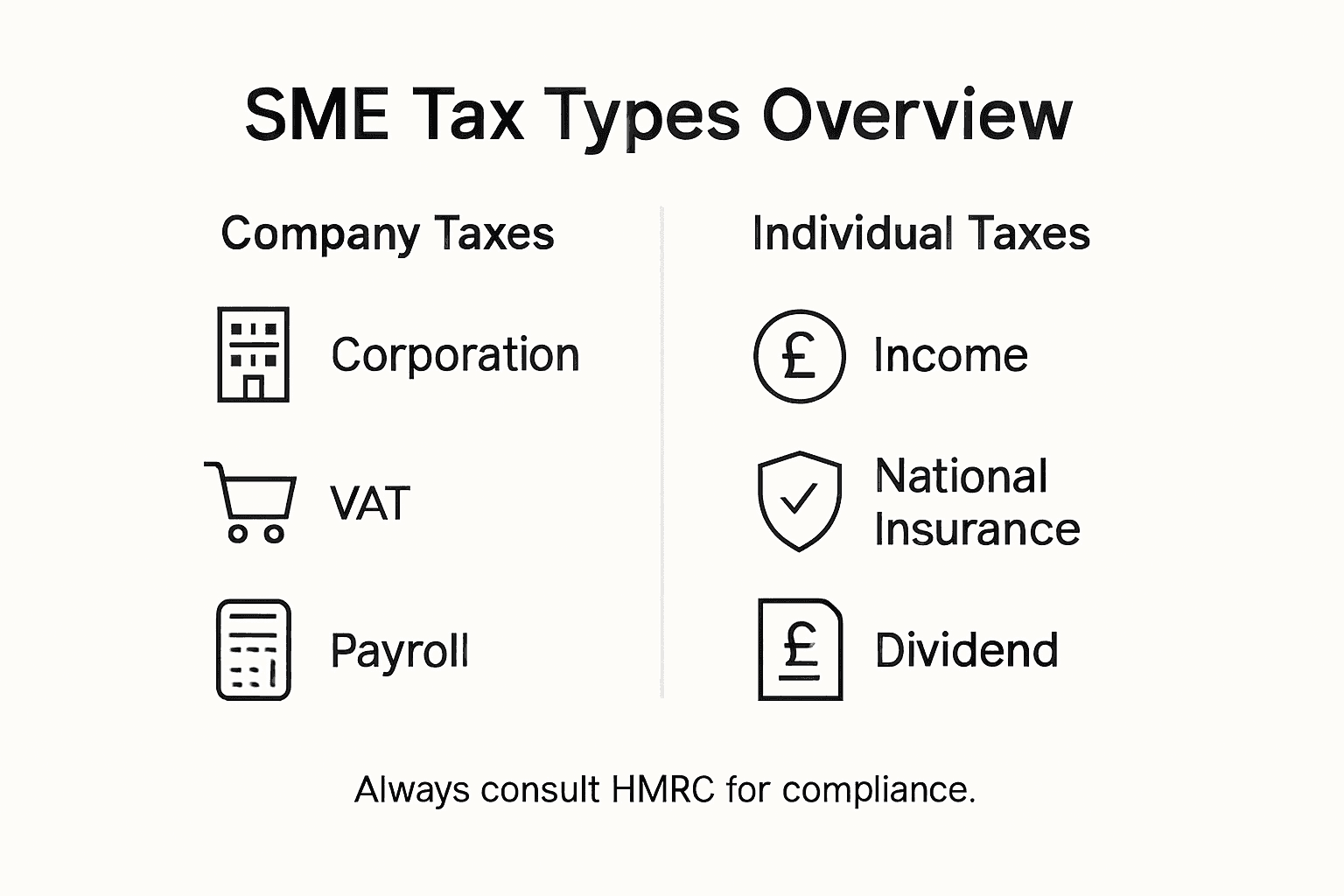
Small businesses in the United Kingdom face a complex landscape of tax obligations that require careful understanding and strategic planning. Corporation tax represents a critical financial consideration for UK companies, with rates varying based on annual profits, ranging from 19% for smaller enterprises to higher rates for more profitable businesses.
Beyond corporation tax, small businesses must navigate multiple tax types including income tax, National Insurance contributions, VAT, and local business rates. Income tax applies to profits for sole traders and partnerships, while limited companies pay corporation tax. VAT registration becomes mandatory for businesses with an annual turnover exceeding £85,000, requiring meticulous record-keeping and periodic submissions to HM Revenue and Customs.
Each tax type presents unique challenges and compliance requirements. Corporation tax demands precise profit calculations, income tax necessitates accurate personal earnings reporting, and VAT requires businesses to track and collect additional funds on behalf of the government. Business owners must also consider National Insurance contributions for themselves and any employees, which contribute to state pension and welfare systems.
Pro tip: Maintain separate business bank accounts and use digital accounting software to automatically track and categorise different tax-related expenses for more accurate financial reporting.
How Tax Budgeting Supports Cash Flow
Tax budgeting plays a crucial role in maintaining healthy cash flow for small businesses, by enabling precise financial forecasting and strategic resource allocation. Understanding the intricate relationship between tax planning and cash management allows businesses to anticipate potential financial challenges and create robust financial strategies that protect their operational liquidity.
The process involves careful analysis of potential tax liabilities, including income tax, corporation tax, and VAT, which directly impact a company’s available working capital. By proactively estimating and setting aside funds for tax obligations, businesses can prevent unexpected financial strain and maintain consistent cash reserves for critical operational expenses. This approach helps organisations avoid last-minute financial scrambling and potential penalties associated with late or incomplete tax payments.

Budget control mechanisms are essential for monitoring and managing tax-related expenditures, ensuring that businesses maintain a balanced financial approach. Effective tax budgeting allows companies to strategically time tax payments, leverage available tax deductions, and create financial buffers that support ongoing business growth and investment opportunities. By understanding potential tax impacts in advance, businesses can make more informed decisions about resource allocation and financial planning.
The following table summarises key differences between tax budgeting and standard expense budgeting for SMEs:
Aspect | Tax Budgeting | Expense Budgeting |
Primary Focus | Planning for tax payments | Day-to-day operational costs |
Timing | Based on statutory deadlines | Regular business cycles |
Impact | Direct cash flow effect | Influences profitability |
Compliance Risks | Legal penalties, fines | Supplier relations |
Pro tip: Create a dedicated tax savings account and automatically transfer a predetermined percentage of monthly revenue to ensure consistent tax payment readiness.
Legal Responsibilities and HMRC Compliance
Small businesses in the United Kingdom must carefully navigate their legal responsibilities and HMRC compliance requirements based on their specific business structure, which fundamentally determines their tax reporting obligations. Whether operating as a sole trader, partnership, or limited company, business owners carry critical legal responsibilities for accurate financial reporting, timely tax submissions, and maintaining comprehensive financial records.
The compliance landscape involves multiple critical elements, including mandatory registration with HMRC, precise record-keeping, and submission of accurate tax returns within specified deadlines. Each business structure carries unique reporting requirements, with limited companies facing more extensive documentation and transparency expectations. Failure to meet these obligations can result in significant financial penalties, potential legal challenges, and damage to the business’s professional reputation.
Here is a concise overview of how different UK business structures affect tax budgeting responsibilities:
Business Structure | Main Tax Reporting Duties | Typical HMRC Registration | Record Keeping Requirements |
Sole Trader | Personal income tax, NI | Register as self-employed | Maintain profit/loss records |
Partnership | Income tax for all partners | Register partnership | Document joint finances |
Limited Company | Corporation tax, VAT, NI | Register with Companies House | Detailed accounts, annual returns |
HMRC compliance extends beyond simple tax filing, encompassing comprehensive financial transparency and adherence to complex regulatory frameworks. Large organisations must provide detailed payment practice reports, while smaller businesses must maintain meticulous financial documentation. This rigorous approach ensures that businesses contribute appropriately to national tax revenues and operate with integrity within the UK’s regulatory environment.
Pro tip: Establish a dedicated digital filing system for all financial documents and set calendar reminders at least one month before each tax submission deadline to ensure consistent HMRC compliance.
Risks of Poor Tax Budgeting and Common Pitfalls
Poor tax budgeting can create significant economic instability for small businesses, potentially leading to devastating financial consequences, extending far beyond simple accounting errors. Small and medium enterprises face substantial risks when they fail to implement robust tax planning strategies, which can rapidly escalate from minor miscalculations to major financial challenges that threaten the entire business operation.
The most critical risks include unexpected financial penalties, legal complications, and potential operational disruptions. Missed tax deadlines, incorrect calculations, or inadequate record-keeping can trigger significant HMRC penalties that drain critical financial resources. These consequences often compound quickly, transforming what might initially seem like a minor administrative oversight into a substantial financial burden that can compromise a business’s liquidity and long-term sustainability.
Regulatory non-compliance represents another profound risk for SMEs, with potential impacts extending well beyond immediate financial penalties. Beyond direct monetary costs, businesses may experience severe reputational damage, loss of business opportunities, and diminished credibility with financial institutions. The cumulative effect of poor tax budgeting can create a cascading series of challenges that make future financial recovery increasingly difficult, potentially pushing vulnerable businesses towards insolvency.
Pro tip: Invest in professional accounting software or consult with a tax professional quarterly to conduct comprehensive tax health checks and identify potential compliance risks before they become critical issues.
Take Control of Your Tax Budgeting Today
Facing the challenges of tax budgeting can feel overwhelming, especially when striving to avoid unexpected financial penalties and maintain healthy cash flow. This article highlights how precise tax planning, including tracking corporation tax, VAT, and National Insurance contributions, is essential for keeping your small or medium business compliant and financially secure in the UK. If managing complex HMRC obligations and legal responsibilities takes up too much of your time, expert support is vital.

Partner with professional accountants who understand your unique tax requirements. At Concorde Company Solutions, we offer personalised services such as company tax returns, bookkeeping, and payroll management tailored to SMEs and sole traders in Garforth, Leeds. Don’t wait until tax deadlines or HMRC penalties become a problem. Visit our accounting services page now to secure peace of mind and streamline your tax budgeting with trusted expertise. Take the next step towards financial clarity today.
Frequently Asked Questions
What are the main benefits of budgeting for tax for SMEs?
Budgeting for tax helps SMEs anticipate their tax liabilities, maintain healthy cash flow, avoid unexpected financial strain, and ensure compliance with tax regulations. This proactive approach allows businesses to effectively allocate resources and make informed financial decisions.
How does tax budgeting impact cash flow management?
Tax budgeting supports cash flow management by enabling businesses to set aside funds for tax payments in advance, preventing last-minute financial pressures. By accurately forecasting tax obligations, businesses can maintain liquidity for essential operational expenses and avoid penalties associated with late payments.
What types of taxes should SMEs consider when budgeting?
SMEs should be aware of several key taxes, including corporation tax, income tax, National Insurance contributions, and value-added tax (VAT). Each type has specific requirements, and businesses must account for these when creating their tax budget to ensure compliance and financial stability.
What are the risks of not budgeting for tax?
Failing to budget for tax can result in significant financial penalties, legal complications, and reputational damage. Poor tax budgeting may lead to missed deadlines, incorrect calculations, and the potential for operational disruptions, ultimately jeopardising the long-term sustainability of the business.
Recommended


Comments