
The Essential Guide to Accountants for Sole Traders
- David Rawlinson
- Dec 1, 2025
- 6 min read

Most british sole traders face more than just the daily hustle of growing their business. Complex tax rules, constant changes in compliance, and pressure to keep accurate records all add to the weight. Around 60 percent of new business owners struggle to meet even basic financial responsibilities according to national surveys. Understanding the true impact of professional accounting support can be the difference between constant stress and lasting business confidence.
Table of Contents
Key Takeaways
Point | Details |
Accountants are essential partners | Accountants provide critical financial guidance to sole traders, improving compliance and identifying opportunities for growth. |
Comprehensive services are necessary | Sole traders require a full suite of accounting services, including tax management and strategic planning, to maintain financial health. |
Legal responsibilities must be met | Sole traders must navigate complex legal and tax obligations, making accurate record-keeping and compliance essential for success. |
Avoid common financial mistakes | Entrepreneurs should steer clear of mixing personal and business finances and ensure thorough documentation to prevent costly errors. |
Defining the Role of Accountants for Sole Traders
Accountants serve as mission-critical financial partners for sole traders, providing strategic guidance that transcends basic number crunching. Their role encompasses a comprehensive range of services designed to support business financial health and regulatory compliance. By offering trusted advisory services, professional accountants help sole traders navigate complex financial landscapes.
The core responsibilities of an accountant for sole traders include managing intricate tax requirements, preparing accurate financial statements, and providing strategic business insights. Sole traders benefit from professional accountants who understand the nuanced financial challenges of small business operations. According to government research, accountants influence financial decisions by ensuring businesses remain compliant with evolving tax regulations and identifying potential financial opportunities.
Key services provided by accountants for sole traders typically involve:
Comprehensive tax return preparation
Financial statement compilation
Bookkeeping and record maintenance
Strategic financial planning
HMRC compliance management
Ongoing business financial advice
Beyond technical number management, successful accountants act as strategic partners who help sole traders make informed decisions. Their expertise transforms complex financial data into actionable insights, enabling business owners to focus on growth and operational excellence.
Essential Accounting Services Sole Traders Need
Sole traders require a comprehensive suite of accounting services to maintain financial health and ensure regulatory compliance. Effective financial management goes beyond simple bookkeeping, encompassing strategic planning and proactive financial guidance. These services help sole traders navigate complex financial landscapes while minimising tax liabilities and maximising business potential.

The core accounting services that sole traders critically need include comprehensive financial reporting and tax management. According to research, sole traders benefit from specialised services such as annual accounts preparation, VAT filing, and dedicated professional support. Tax return preparation represents a particularly crucial service, helping businesses remain compliant with HMRC requirements and avoid potential penalties.
Key accounting services for sole traders typically encompass:
Detailed bookkeeping and financial record maintenance
Annual accounts compilation and submission
VAT registration and quarterly filing
Self-assessment tax return preparation
Payroll management (if applicable)
Financial forecasting and business planning
Tax efficiency and strategy consulting
Beyond technical compliance, these services provide sole traders with strategic insights that transform raw financial data into actionable business intelligence. Professional accountants help entrepreneurs make informed decisions, identify potential growth opportunities, and maintain robust financial health throughout their business journey.
Legal and Tax Responsibilities for Sole Traders
Sole traders face a complex landscape of legal and tax responsibilities that require meticulous attention and strategic planning. Tax return preparation represents one of the most critical obligations, demanding precise financial documentation and timely submission to HMRC.
The fundamental legal requirements for sole traders involve maintaining comprehensive financial records and complying with specific accounting standards. Government guidelines mandate that sole traders must record transactions using double-entry bookkeeping methods, prepare accurate financial statements, and ensure full transparency in their financial reporting. The upcoming Making Tax Digital initiative introduces additional requirements for digital record-keeping and real-time tax information reporting.
Key legal and tax responsibilities include:
Registering as a sole trader with HMRC
Maintaining detailed financial records
Completing annual self-assessment tax returns
Tracking business income and expenses
Paying income tax and national insurance contributions
Retaining financial documents for at least 6 years
Reporting all business-related income accurately
Navigating these responsibilities requires proactive financial management and a thorough understanding of tax regulations. Professional accountants can provide crucial guidance, helping sole traders interpret complex tax laws, maximise potential deductions, and maintain full compliance with HMRC requirements while minimising potential financial risks.
Financial Benefits and Cost-Effectiveness
Sole traders often underestimate the profound financial advantages of professional accounting support. Strategic financial management can transform business economics, helping entrepreneurs maximise profitability while minimising unnecessary expenditure. Contrary to popular belief, investing in professional accounting services represents a strategic financial decision rather than an additional cost.
The financial benefits of professional accounting extend far beyond simple number crunching. Research indicates that accountants offer expert financial management with transparent pricing, enabling sole traders to avoid costly penalties and optimise their financial strategies. By providing precise tax planning, identifying potential deductions, and ensuring regulatory compliance, accountants help businesses retain more of their hard-earned revenue.
Key financial advantages include:
Minimising tax liabilities through strategic planning
Identifying potential business expense deductions
Preventing costly compliance errors
Reducing administrative time spent on financial management
Improving overall financial decision making
Generating accurate cash flow projections
Providing expert financial advisory services
Ultimately, the cost-effectiveness of professional accounting services becomes evident through reduced financial risks, enhanced business performance, and the opportunity to focus on core business activities. By investing in expert financial guidance, sole traders can transform accounting from a mandatory administrative task into a powerful strategic tool for business growth and financial success.
Common Mistakes Sole Traders Should Avoid
Sole traders frequently encounter financial pitfalls that can significantly undermine their business success. Tax return preparation represents one area where critical errors can lead to substantial financial consequences and potential HMRC penalties.
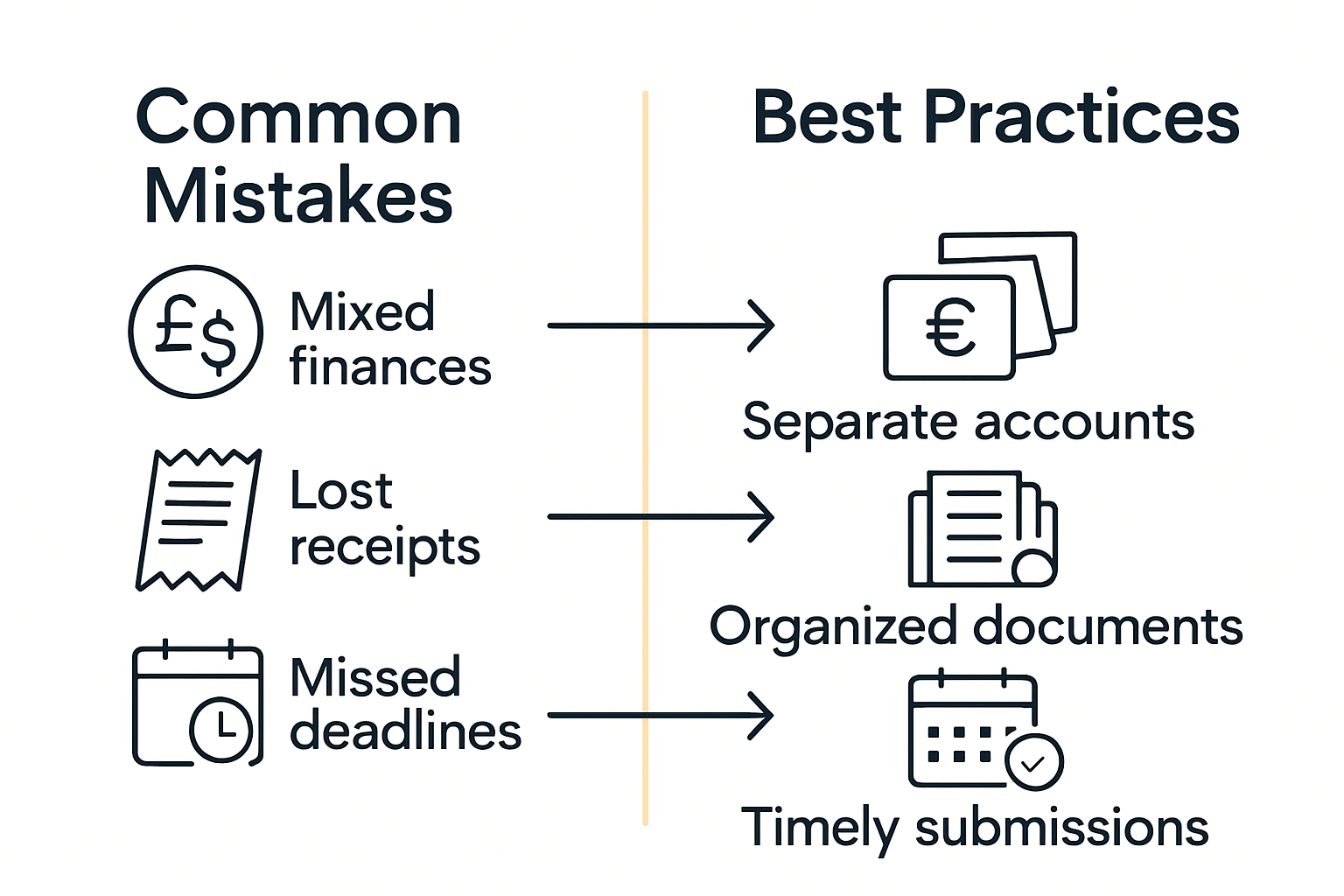
The most fundamental mistakes in sole trader financial management stem from inadequate record-keeping and poor financial planning. Research highlights that neglecting accurate documentation and failing to comply with tax regulations can result in severe financial repercussions. These errors often arise from a lack of systematic approach to financial management, which can quickly transform minor oversights into significant challenges.
Common mistakes sole traders must vigilantly avoid include:
Mixing personal and business finances
Failing to track all business expenses
Inadequate record-keeping and documentation
Overlooking potential tax deductions
Improper estimation of tax liabilities
Neglecting to set aside funds for tax payments
Ignoring upcoming Making Tax Digital requirements
Not maintaining separate business bank accounts
Underestimating the complexity of tax regulations
Attempting to manage complex financial tasks without professional guidance
Navigating the complex landscape of sole trader financial responsibilities requires meticulous attention and proactive management. By understanding and avoiding these common pitfalls, entrepreneurs can protect their financial health, maintain compliance, and create a solid foundation for sustainable business growth.
Get Expert Accounting Support Tailored for Sole Traders
Managing the complex legal and tax responsibilities outlined in “The Essential Guide to Accountants for Sole Traders” can quickly become overwhelming. Frequent challenges such as accurate tax return preparation, bookkeeping, and staying compliant with HMRC demands leave many sole traders uncertain about their financial future. If you are seeking clarity, peace of mind, and strategic financial advice, professional support is crucial.
At Concorde Company Solutions, we specialise in delivering personalised accounting services designed to meet the unique needs of sole traders. From precise tax return preparation to effective bookkeeping and payroll management, we help you avoid common pitfalls and maximise the financial benefits outlined in the guide. Discover how our transparent pricing and dedicated service can transform your financial management by visiting Concorde Company Solutions.

Take control of your sole trader finances today by connecting with a trusted partner who understands your business. Explore our comprehensive service offerings at Concorde Company Solutions and learn more about how professional accounting can safeguard your compliance and enhance your business growth. Do not wait to turn complex accounting challenges into opportunities for success. Contact us now to get started.
Frequently Asked Questions
What services do accountants provide for sole traders?
Accountants offer a range of services, including tax return preparation, financial statement compilation, bookkeeping, strategic financial planning, HMRC compliance management, and ongoing business financial advice.
How can accountants help sole traders manage their tax responsibilities?
Accountants help sole traders by ensuring compliance with tax regulations, preparing accurate financial documentation, maximising tax deductions, and assisting with timely submission of self-assessment tax returns to HMRC.
What are the common mistakes sole traders should avoid in financial management?
Common mistakes include mixing personal and business finances, failing to track all business expenses, inadequate record-keeping, overlooking tax deductions, and neglecting to set aside funds for tax payments.
Why is it important for sole traders to maintain accurate financial records?
Maintaining accurate financial records is crucial for compliance with legal requirements, effective financial management, and the ability to identify potential areas for growth, minimising tax liabilities, and avoiding costly penalties.
Recommended


Upon reflection, the core claims are consistently tied to observable outcomes. Measured language is applied consistently throughout. The website provides additional informative sources on the subject. Digital adoption curves are reflected in platform activity patterns.