
Why Use Professional Bookkeeping for SMEs
- David Rawlinson
- Jan 20
- 7 min read

Managing day-to-day finances can quickly become a source of stress for small business owners in Garforth and the surrounding Leeds area. Reliable bookkeeping is much more than keeping basic records—it is the foundation for accurate financial documentation and regulatory compliance. If you want to avoid costly mistakes and keep your operations running smoothly, understanding what sets professional bookkeeping apart will help you make informed choices for your business.
Table of Contents
Key Takeaways
Point | Details |
Importance of Professional Bookkeeping | Professional bookkeeping is essential for SMEs to ensure accurate financial management and compliance with regulations, transforming financial data into strategic assets. |
Distinction from DIY Methods | Professional bookkeepers offer high accuracy and regulatory compliance, mitigating errors that often occur in DIY bookkeeping. |
Legal and Compliance Requirements | Operating in 2026 necessitates rigorous adherence to evolving legal standards, including anti-money laundering and data protection laws. |
Risks of Inaccurate Bookkeeping | Poor bookkeeping can lead to cash flow problems, regulatory penalties, and hinder informed decision-making, threatening business growth and stability. |
Defining Professional Bookkeeping Services
Professional bookkeeping services represent a comprehensive financial management approach designed specifically for small and medium enterprises (SMEs) seeking structured, compliant record-keeping. These services go far beyond simple transaction logging, encompassing a strategic framework that helps businesses maintain accurate financial documentation and meet regulatory requirements.
At its core, professional bookkeeping involves systematic financial transaction recording which includes tracking income, expenses, payroll, and generating essential financial statements like trial balance reports. Professional bookkeepers are trained specialists who understand the intricate legal frameworks surrounding financial reporting, ensuring businesses remain compliant with current regulations such as Money Laundering Regulations and GDPR standards.
Key components of professional bookkeeping services typically include detailed transaction recording, VAT management, payroll processing, and leveraging computerised accountancy systems to streamline financial operations. Unlike amateur bookkeeping, professional services require licensed membership with recognised professional bodies, demonstrating a commitment to maintaining high standards of practice and continuous professional development.
Expert Tip: When selecting a bookkeeping service, always verify their professional credentials and ask about their specific experience working with businesses in your industry sector.
How Bookkeeping Differs From DIY Methods
The fundamental distinction between professional bookkeeping and do-it-yourself (DIY) financial management lies in the depth, precision, and strategic approach professional services bring to financial record-keeping. While many small business owners initially attempt to manage their own financial records, systematic financial tracking requires far more than basic spreadsheet entries or manual calculations.
Professional bookkeepers employ sophisticated accounting software and possess in-depth knowledge of complex financial regulations that most business owners lack. Their expertise goes beyond simple transaction recording, encompassing comprehensive financial analysis, compliance monitoring, and strategic insights. DIY methods often result in inconsistent record-keeping, potential regulatory violations, and missed financial opportunities that could significantly impact business performance.
The key differentiators include professional bookkeepers’ ability to provide structured processes, error mitigation, and detailed financial reporting. Unlike amateur approaches, professional services ensure accurate documentation for tax purposes, implement robust internal control mechanisms, and offer actionable financial intelligence that supports informed business decision-making. By maintaining meticulous records and understanding intricate financial frameworks, professional bookkeepers transform financial data from mere numbers into strategic business assets.
Expert Tip: Consider conducting an initial audit of your current DIY bookkeeping to identify potential gaps and understand the specific professional support your business requires.
Here’s a concise comparison of professional bookkeeping versus DIY methods for SMEs:
Aspect | Professional Bookkeeping | DIY Methods |
Accuracy | High, due to expert oversight | Often inconsistent |
Regulatory Compliance | Fully compliant with regulations | Risk of non-compliance |
Error Mitigation | Robust checks and controls | Prone to mistakes |
Strategic Insights | Detailed, actionable reporting | Limited business analysis |
Time Commitment | Frees business owners’ time | Significant effort needed |
Common Tasks: What Professionals Cover
Professional bookkeepers handle a comprehensive range of financial management tasks that extend far beyond simple record-keeping. Day-to-day financial transactions require meticulous attention to detail and systematic processing that most small business owners cannot consistently maintain. These professionals ensure every financial interaction is accurately documented, categorised, and analysed to provide meaningful business insights.
The core responsibilities encompass critical financial activities such as recording income and expenses, reconciling bank statements, managing payroll processing, and preparing precise VAT returns. Professional bookkeepers leverage sophisticated accounting software to maintain real-time financial records, implementing robust internal control mechanisms that protect businesses from potential errors, discrepancies, and regulatory compliance risks. Their expertise extends to creating detailed financial reports that transform raw numerical data into strategic business intelligence.

Beyond routine financial tasks, professional bookkeepers provide invaluable support in navigating complex regulatory landscapes. They stay current with evolving legislative requirements, ensuring businesses remain compliant with anti-money laundering regulations, data protection standards, and taxation laws. This proactive approach minimises legal risks and provides businesses with a comprehensive financial management framework that goes well beyond basic record-keeping.
Expert Tip: Request a sample financial report from potential bookkeeping services to assess their depth of analysis and reporting capabilities.
Legal and Compliance Requirements in 2026
Bookkeeping professionals in 2026 must navigate an increasingly complex regulatory landscape that demands rigorous adherence to legal standards. Money Laundering Regulations compliance represents a critical legal obligation that goes far beyond simple paperwork, requiring comprehensive risk assessment and proactive monitoring of financial transactions.
To legally operate, bookkeeping professionals must obtain specific credentials and documentation. This includes holding a valid Practice Licence, maintaining Professional Indemnity Insurance, registering with the Information Commissioner’s Office for data protection, and ensuring continuous compliance with Professional Conduct Regulations. The legal framework demands meticulous documentation, with professionals required to promptly notify relevant authorities about any changes in business entity details or operational structures.
The evolving regulatory environment in 2026 emphasises heightened scrutiny of financial practices. Bookkeeping professionals must implement robust internal controls to mitigate risks associated with money laundering and terrorist financing. This involves conducting regular risk assessments, maintaining detailed audit trails, and developing comprehensive procedural frameworks that demonstrate ongoing vigilance and commitment to legal compliance. Failure to meet these stringent requirements can result in significant financial penalties and potential loss of professional licensing.
Expert Tip: Conduct an annual comprehensive compliance review to ensure all regulatory requirements are current and fully implemented.
For reference, here are central compliance requirements for bookkeepers operating in 2026:
Requirement | Purpose | Who Enforces |
Valid Practice Licence | Legal operation verification | Professional bodies |
Professional Indemnity Insurance | Financial risk protection | Insurance regulators |
ICO Data Protection Registration | GDPR and privacy compliance | Information Commissioner’s Office |
Regular Risk Assessments | Anti-money laundering vigilance | HMRC, industry regulators |
Benefits for SME Growth and Decision-Making
Professional bookkeeping offers transformative advantages for small and medium enterprises, providing strategic financial insights that drive sustainable business growth. Accurate financial records enable business owners to make data-driven decisions, monitor cash flow effectively, and develop robust financial strategies that support long-term organisational objectives.
By maintaining meticulous financial documentation, professional bookkeepers help SMEs enhance their credibility with potential investors and financial institutions. This precise financial tracking creates a transparent financial narrative that demonstrates business stability, potentially unlocking opportunities for funding, investment, and strategic partnerships. The ability to generate comprehensive financial reports allows business leaders to identify emerging trends, potential risks, and unexplored growth opportunities with unprecedented clarity.
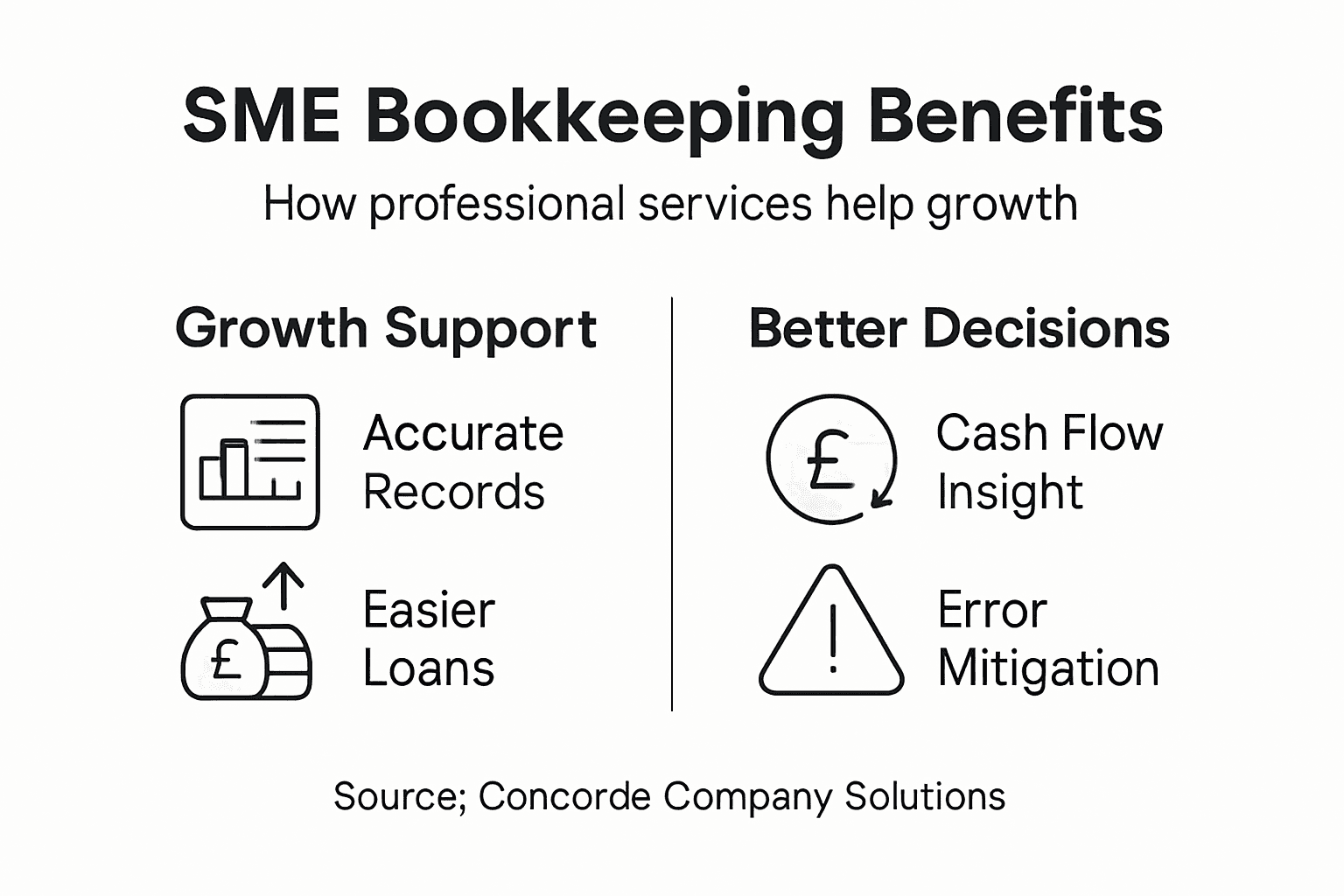
Moreover, professional bookkeeping liberates SME leadership from complex administrative tasks, allowing them to redirect valuable time and energy towards core business development activities. By outsourcing financial management to qualified professionals, businesses can leverage expert insights, reduce the likelihood of costly errors, and create a structured approach to financial planning that supports scalable, sustainable growth. The strategic value extends beyond mere number-crunching, transforming financial data into a powerful tool for strategic decision-making and competitive positioning.
Expert Tip: Schedule quarterly financial strategy sessions with your bookkeeping professional to review performance metrics and align financial practices with your business growth objectives.
Risks of Poor or Inaccurate Bookkeeping
Inaccurate bookkeeping poses significant risks that can critically undermine a small business’s financial health and operational stability. Cash flow problems emerge as a primary consequence, where mismanaged financial records create dangerous blind spots in understanding the true financial position of the business.
Beyond immediate financial uncertainty, poor bookkeeping dramatically increases the potential for regulatory non-compliance. Small businesses become vulnerable to substantial penalties from HMRC, potential legal sanctions, and increased scrutiny that can damage long-term business reputation. The risks extend beyond administrative errors, potentially creating environments where financial irregularities might be inadvertently overlooked, increasing exposure to accusations of financial misconduct.
The most insidious impacts of inaccurate bookkeeping manifest in strategic decision-making limitations. Without precise financial documentation, business leaders cannot accurately assess performance, forecast growth, or identify potential investment opportunities. This lack of financial transparency can prevent accessing crucial funding, deter potential investors, and ultimately restrict the business’s ability to scale and compete effectively in increasingly complex market environments.
Expert Tip: Implement a monthly financial review process that cross-checks your bookkeeping records against bank statements to catch potential discrepancies early.
Transform Your SME Finances with Expert Bookkeeping Support
Struggling with inconsistent financial records or worried about regulatory compliance and cash flow? The article highlights how professional bookkeeping not only ensures accuracy but also frees your time and supports strategic growth by turning complex financial data into clear, actionable insights. At Concorde Company Solutions, we understand these challenges and offer comprehensive bookkeeping services tailored specifically for small and medium enterprises in Garforth and beyond.
Gain peace of mind today by partnering with professionals committed to:
Precise transaction recording and VAT management
Maintaining full compliance with HMRC and data protection laws
Delivering detailed financial reports that empower smarter decisions

Discover how our personalised approach can transform your financial management. Visit Concorde Company Solutions to learn about our bookkeeping and payroll services and how we can help protect your business from costly errors. Don’t wait until problems arise; take control of your SME’s future finances today by contacting us for a tailored solution.
Frequently Asked Questions
What are the benefits of using professional bookkeeping services for SMEs?
Professional bookkeeping services provide accurate financial records, ensure compliance with regulations, and offer strategic insights that support growth and informed decision-making for SMEs.
How does professional bookkeeping differ from DIY bookkeeping?
Professional bookkeeping involves expertise, systematic approaches, and use of advanced accounting software to maintain accuracy and compliance, whereas DIY bookkeeping often results in inconsistencies and potential regulatory risks.
What key tasks do professional bookkeepers handle for SMEs?
Professional bookkeepers manage recording income and expenses, payroll processing, VAT returns, and generating detailed financial reports, ensuring robust internal controls and compliance with regulations.
What legal and compliance requirements must bookkeeping professionals adhere to?
Bookkeeping professionals must comply with Money Laundering Regulations, maintain a valid Practice Licence, have Professional Indemnity Insurance, and stay updated with data protection standards to ensure comprehensive regulatory compliance.
Recommended
This post is clear and easy to follow. I’ve been comparing different resources, including Companies999, for Birmingham online accountants and posts like this really help.