
Why Use Management Accounts: Key Benefits for UK SMEs
- Richard Ellis
- Feb 2
- 8 min read


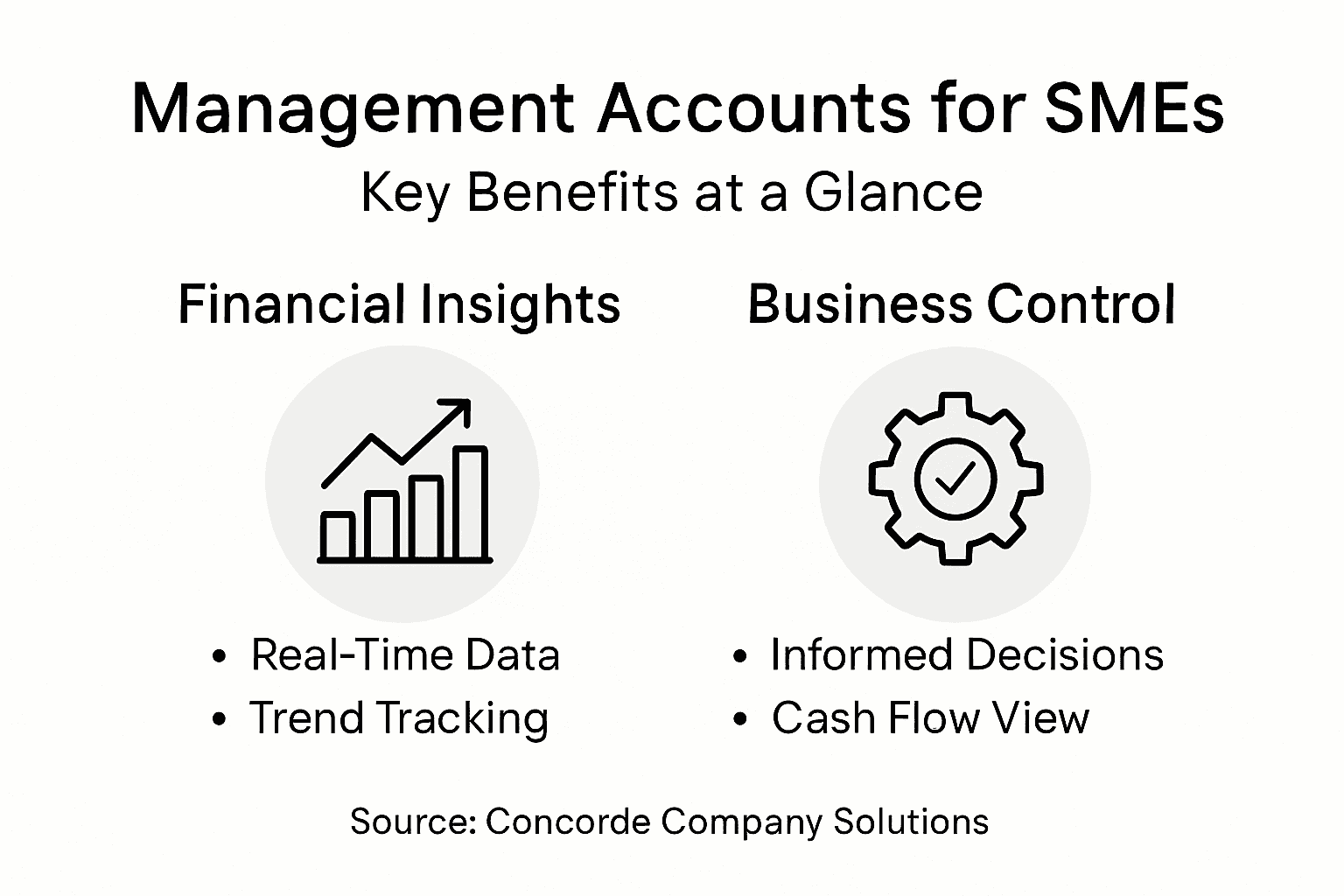
Running a small or medium business in Leeds often means making complex financial decisions with limited information. For many owners and managers, the difference between success and uncertainty comes down to having dynamic financial insights that are clear, timely, and relevant to daily operations. Management accounts deliver this edge, giving you real-time data tailored to your needs and supporting confident choices about cash flow, profitability, and strategy.
Table of Contents
Key Takeaways
Point | Details |
Management Accounts Are Essential | These accounts provide real-time financial insights crucial for internal decision-making and are valuable for businesses of all sizes. |
Customisation is Key | Management accounts can be tailored to fit specific business needs, offering flexibility beyond statutory reporting. |
Avoid Common Myths | Many SMEs mistakenly believe management accounts are complex or only for large businesses, which can hinder their strategic use. |
Proactive Financial Management | Regular updates and timely reporting from management accounts help identify issues early and support compliance with legal obligations. |
What Are Management Accounts and Common Myths
Management accounts represent a powerful financial tool designed specifically for internal business decision-making, providing dynamic financial insights beyond traditional statutory reporting. Unlike annual financial statements, these accounts offer real-time snapshots of a company’s financial performance, enabling SMEs to track operational profitability and cash flow with remarkable precision.
These strategic documents differ significantly from statutory accounts in several crucial ways:
Prepared more frequently (monthly or quarterly)
Focused on operational details and future projections
Tailored specifically to management’s information needs
Flexible in format and presentation
Not required for external regulatory submissions
Many UK business owners misunderstand management accounts, believing they are complex, unnecessary, or only relevant for large corporations. However, management accounting practices demonstrate their critical value for businesses of all sizes. Small enterprises can leverage these accounts to gain strategic advantages, making informed decisions about resource allocation, potential investments, and operational improvements.
Common myths about management accounts often prevent SMEs from adopting this powerful financial tool. Let’s debunk some prevalent misconceptions:
Myth 1: Management accounts are too complicated
Myth 2: They’re only useful for large businesses
Myth 3: Creating them requires expensive software
Myth 4: They provide no real actionable insights
In reality, management accounts are adaptable tools that can be customised to suit each business’s unique requirements. They transform raw financial data into meaningful insights, helping entrepreneurs understand their financial health and make proactive strategic choices.

Pro tip: Start by requesting simple monthly management account reports from your accountant, focusing on key performance indicators relevant to your specific business goals.
Main Types of Management Accounts Reports
Management accounts encompass several distinct report types, each serving unique strategic purposes for UK small and medium enterprises. Detailed financial reporting structures help businesses track performance, analyse trends, and make informed financial decisions with precision and clarity.
The primary types of management accounts reports include:
Summary Level Reports: Provide holistic financial overviews
Detailed Project Reports: Track income and expenditure by specific activities
Cash Flow Reports: Monitor money movement and liquidity
Profit and Loss Reports: Analyse revenue, expenses, and net income
Budget Comparison Reports: Compare actual performance against projected targets
Each report type offers distinct insights that enable business leaders to understand their financial landscape from different perspectives. Summary level reports consolidate overall financial performance, offering a bird’s-eye view of the organisation’s economic health. These reports are particularly useful for quick strategic assessments and high-level decision-making.
Detailed project reports, by contrast, provide granular insights into specific business activities. These reports break down income and expenditure by individual projects or programmes, allowing managers to understand the profitability and resource allocation of distinct business streams. This level of detailed analysis helps identify which initiatives are generating the most value and where potential improvements can be made.
Management accounts are not one-size-fits-all documents, but flexible tools that can be tailored to each business’s unique financial monitoring needs.
Pro tip: Request a combination of report types from your accountant to gain comprehensive financial visibility across different organisational levels.
Essential Features and How They Work
Management accounts are sophisticated financial tools designed to provide UK SMEs with comprehensive insights into their business performance. Periodic financial reporting forms the backbone of these dynamic documents, enabling businesses to track and analyse their financial health with remarkable precision.
The key features of management accounts typically include:
Real-time Financial Data: Capturing up-to-the-moment financial information
Budget Variance Analysis: Comparing actual performance against projected targets
Cashflow Forecasting: Predicting future financial scenarios
Customisable Reporting: Tailored insights specific to business needs
Automated Calculations: Reducing human error in financial computations
These accounts work by systematically collecting and presenting financial data in a structured, meaningful way. Variance analysis plays a crucial role, allowing business leaders to understand the differences between planned and actual financial performance. This feature helps identify potential issues early, enabling proactive financial management and strategic decision-making.
Management accounts transform raw financial data into actionable intelligence, providing businesses with a powerful tool for strategic planning and financial control.
The computational process involves several sophisticated mechanisms. Management account templates typically automate complex calculations, tracking year-to-date actuals, generating future projections, and presenting data in clear, comprehensible formats. These automated systems ensure accuracy while providing the flexibility to drill down into specific financial details that matter most to individual businesses.
Pro tip: Invest time in understanding your management account reports’ unique features, and don’t hesitate to ask your accountant to explain any complex sections or calculations.
Here’s how management accounts empower UK SMEs in practical ways:
Feature | How It Works in Practice | Business Advantage |
Real-time Financial Data | Immediate insight into key metrics | Swift response to financial challenges |
Budget Variance Analysis | Highlights differences from forecasts | Enables corrective action and cost control |
Customisable Reporting | Tailored to sector or business needs | Informs relevant, strategic decisions |
Automated Calculations | Reduces error risk in computations | Ensures reliable data for planning |
Management Accounts Versus Statutory Accounts
Statutory accounts and management accounts serve distinctly different purposes in the financial landscape of UK small and medium enterprises. Mandatory reporting requirements create a clear distinction between these two critical financial documents, each playing a unique role in business financial management.
Key differences between management and statutory accounts include:
Preparation Frequency
Statutory Accounts: Prepared annually
Management Accounts: Can be prepared monthly or quarterly
Primary Purpose
Statutory Accounts: External reporting and compliance
Management Accounts: Internal decision-making and strategic planning
Legal Requirements
Statutory Accounts: Mandatory submission to HMRC and Companies House
Management Accounts: No legal submission requirements
Audience
Statutory Accounts: External stakeholders (investors, regulators)
Management Accounts: Internal management and business owners
Statutory accounts follow strict UK accounting standards and must comply with specific recognition, measurement, and disclosure rules. These formal documents provide a standardised snapshot of a company’s financial position, typically prepared once a year and designed to offer transparency to external parties such as shareholders, potential investors, and regulatory bodies.
Management accounts offer flexibility where statutory accounts provide structure, giving businesses a dynamic tool for real-time financial insights.
In contrast, management accounts are flexible, internally focused documents that can be tailored to a business’s specific needs. They provide frequent, detailed insights that help business leaders make proactive financial decisions, track performance, and identify potential challenges or opportunities well before they would be visible in annual statutory reports.
Pro tip: Work with your accountant to develop management accounts that complement your statutory reporting, ensuring you gain maximum financial insight while maintaining regulatory compliance.
Below is a quick comparison highlighting management versus statutory accounts roles for UK SMEs:
Aspect | Management Accounts | Statutory Accounts |
Focus | Internal analysis & planning | Legal compliance & disclosure |
Preparation | Monthly or quarterly updates | Annual, statutory submission |
Audience | Managers and business owners | Regulators and investors |
Customisation | Fully adaptable structure | Standardised format required |
Legal, Tax and Compliance Implications
Navigating the complex landscape of legal and tax compliance requires UK SMEs to develop robust financial management strategies. Recent legislative changes have significantly impacted how businesses must approach their financial reporting and documentation.
Key compliance considerations for SMEs include:
Statutory Filing Requirements
Timely submission of annual accounts
Digital filing through approved software
Adherence to Companies House deadlines
Tax Compliance
Accurate corporation tax calculations
Proper documentation of income and expenses
Understanding tax allowances and deductions
Regulatory Obligations
Maintaining transparent financial records
Preparing for potential audits
Demonstrating financial accountability
The UK government guidance emphasises the critical nature of precise financial documentation. Non-compliance can result in significant penalties, making it essential for businesses to develop comprehensive financial tracking mechanisms that support both internal decision-making and external reporting requirements.
Proactive financial management is the key to navigating complex regulatory landscapes and avoiding potential legal complications.
Management accounts play a crucial role in supporting legal and tax compliance by providing detailed, up-to-date financial information. They help businesses identify potential issues before they become problematic, ensure accurate tax reporting, and maintain the level of financial transparency required by regulatory bodies.
Pro tip: Consult with a professional accountant annually to review your compliance strategy and ensure your management accounts align with the latest regulatory requirements.
Mistakes to Avoid When Using Management Accounts
Management accounts can become ineffective or even counterproductive if not prepared with careful consideration. Good practice guidelines highlight several critical mistakes that UK SMEs must actively avoid when developing and utilising these financial documents.
Common pitfalls in management account preparation include:
Information Overload
Presenting excessive, complex financial details
Overwhelming readers with unnecessary data
Obscuring key performance insights
Insufficient Detail
Providing superficial financial snapshots
Failing to explain significant variances
Lacking actionable context
Data Governance Issues
Poor record management
Inadequate data protection protocols
Inconsistent reporting standards
Timeliness represents another crucial factor in management account effectiveness. Reports produced too late lose their strategic value, rendering the financial insights obsolete before they can influence decision-making. Businesses must establish consistent reporting schedules that provide real-time or near-real-time financial perspectives.
Effective management accounts transform raw numbers into strategic insights, not just compile data.
Data protection considerations are equally critical when managing financial documentation. SMEs must implement robust protocols to prevent potential data breaches, ensuring that sensitive financial information remains secure and compliant with regulatory standards.
Pro tip: Regularly review and update your management account processes, focusing on clarity, timeliness, and comprehensive yet concise financial reporting.
Maximise Your Business Potential with Tailored Management Accounts
Understanding the importance of management accounts is the first step to overcoming challenges such as information overload and ineffective financial analysis that many UK SMEs face. This article highlights how dynamic, real-time financial insights can empower you to make confident decisions and avoid costly mistakes. If you want clear, customisable reports that transform complex data into actionable intelligence, it is crucial to partner with experts who understand your unique needs.

Take control of your financial future today with professional support from Concorde Company Solutions. Our team specialises in creating management accounts designed to provide precise, timely information tailored for your business goals. Whether you require assistance with statutory accounts, tax returns, or bookkeeping, we are committed to delivering transparent, personalised service that ensures compliance and boosts confidence. Visit our website to learn more or contact us for a consultation and start turning your financial data into a powerful asset.
Frequently Asked Questions
What are management accounts?
Management accounts are internal financial reports prepared more frequently than statutory accounts, providing dynamic insights into business performance and operational profitability.
How often should management accounts be prepared?
Management accounts are typically prepared monthly or quarterly, allowing businesses to track their financial performance in real-time.
What are the benefits of using management accounts for SMEs?
Using management accounts helps SMEs make informed decisions, track cash flow, analyse trends, and identify potential areas for improvement in their operations.
How do management accounts differ from statutory accounts?
Management accounts provide internal insights and are tailored for management needs, while statutory accounts are prepared annually for external compliance and reporting to regulators.
Recommended


Comments