
Business Incorporation – Why It Matters in the UK
- Richard Ellis
- Feb 4
- 7 min read


Setting up a company can feel daunting for small business owners in Leeds and Garforth, especially when trying to navigate legal obligations. Proper incorporation in the United Kingdom offers much more than a paperwork exercise by transforming your venture into a separate legal entity with protection and credibility. This overview clarifies how business incorporation works, highlighting its benefits, core steps, and the practical impact on day-to-day operations for local entrepreneurs.
Table of Contents
Key Takeaways
Point | Details |
Business Incorporation | Incorporation provides significant legal protection and operational advantages by creating a separate legal entity for businesses in the UK. |
Types of Companies | Understanding the different types of incorporated companies, such as Private Limited and Community Interest Companies, is vital for selecting the suitable structure for your business needs. |
Compliance Obligations | Company directors have enhanced legal responsibilities, including accurate financial reporting and adherence to ethical business practices, to maintain compliance and avoid penalties. |
Financial Considerations | Careful budgeting for incorporation and ongoing costs, alongside understanding corporation tax obligations, is critical for sustainable financial management in incorporated businesses. |
What Is Business Incorporation in the UK?
Business incorporation represents a critical legal process that transforms a business venture from an informal entity into a formally recognised company with distinct legal standing. Registering a private company with Companies House establishes a structured business framework that provides significant legal and operational advantages for entrepreneurs across the United Kingdom.
The incorporation process involves several fundamental steps that create a clear legal separation between the business and its owners. Under the Companies Act 2006, businesses must complete specific requirements to achieve official incorporation:
Submit a detailed IN01 registration form
Provide verified identification for company directors
Establish a registered office address
Draft official articles of association
Select a unique company name
Specify initial share capital arrangements
By formally incorporating, businesses gain substantial benefits that extend far beyond simple registration. The company becomes a separate legal entity capable of entering contracts, owning property, and managing financial liabilities independently of its shareholders. This legal distinction provides crucial protection, limiting personal financial risk for business owners.
Business incorporation transforms a simple trading arrangement into a robust, legally recognised commercial entity with clear governance structures.
Companies registered in the UK must also comply with ongoing regulatory requirements, including annual financial reporting, maintaining proper accounting records, and submitting corporation tax returns. Corporation tax regulations will apply once the business becomes operational, making it essential to understand the full legal implications of incorporation.

Pro tip: Before incorporating, consult an accountancy professional to understand the specific tax and legal implications for your unique business circumstances.
Types of Incorporated Companies Explained
The United Kingdom offers several distinct types of incorporated companies, each designed to meet different business needs and organisational objectives. Incorporated organisations in the UK possess unique legal characteristics that provide flexibility for entrepreneurs and social enterprises across various sectors.
The primary types of incorporated companies include:
Private Companies Limited by Shares
Most common business structure
Shareholders’ liability limited to their investment
Suitable for commercial enterprises
Minimum one director required
Public Limited Companies (PLCs)
Can offer shares to public through stock market
Require minimum share capital of £50,000
More complex regulatory requirements
Minimum two directors needed
Companies Limited by Guarantee
Typically used by non-profit organisations
No shareholders, but members who act as guarantors
Members’ financial liability is limited
Common for charities and social enterprises
Community Interest Companies (CICs)
Designed for social enterprises
Asset lock prevents profit distribution
Must demonstrate community benefit
Regulated by specific legal framework
Each company type offers distinct advantages, balancing operational flexibility with legal protection for business owners.
Understanding the nuanced differences between these incorporated structures is crucial for selecting the most appropriate legal framework. Company formation requirements vary significantly depending on the chosen structure, impacting taxation, governance, and operational capabilities.
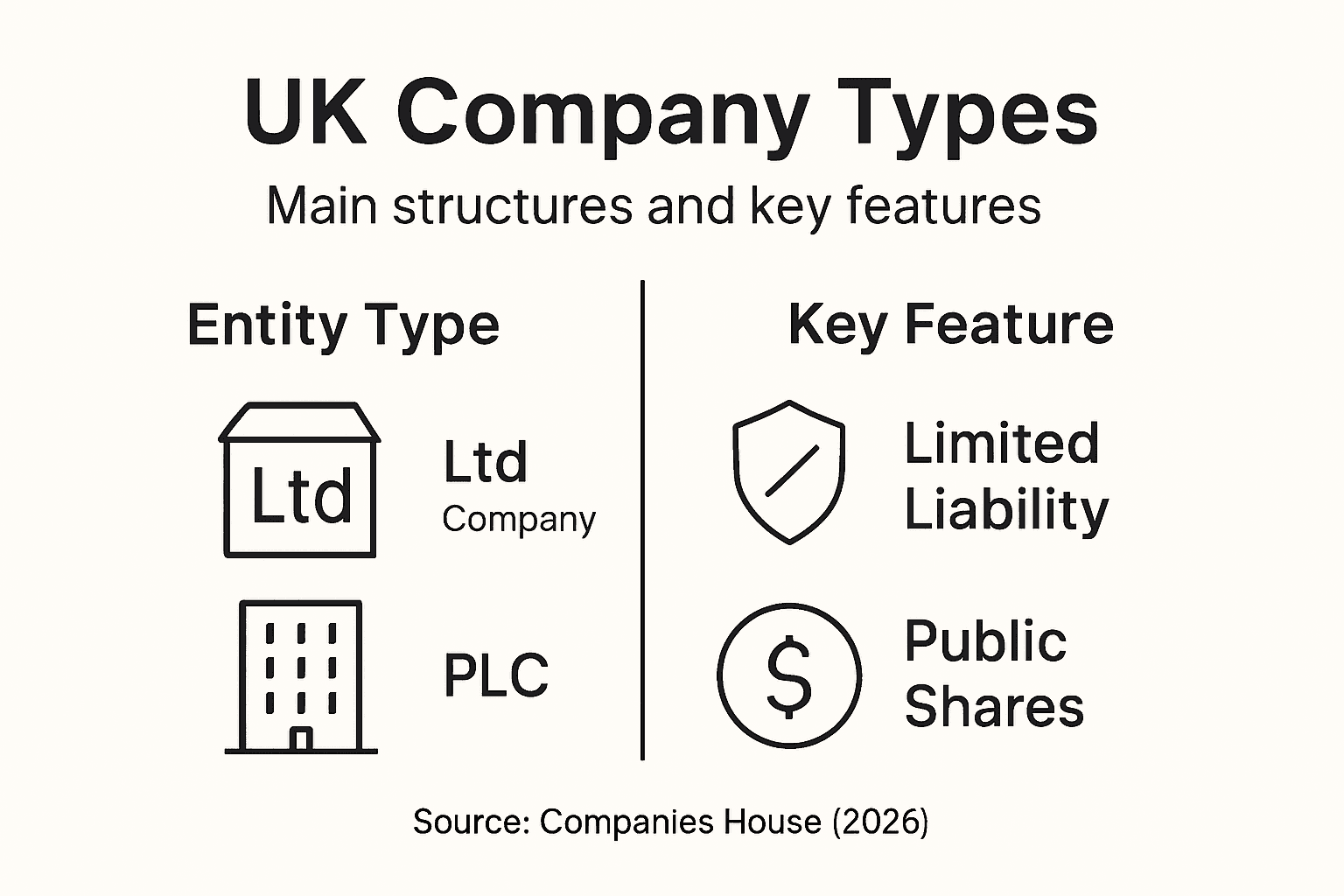
Here is a comparison of the main types of incorporated companies in the UK to help you choose the most appropriate structure:
Company Type | Ideal For | Ownership Structure | Notable Legal Requirement |
Private Limited by Shares | Commercial businesses | Shareholders hold equity | One director minimum |
Public Limited Company (PLC) | Large businesses, investment | Shares traded publicly | £50,000 minimum share capital |
Limited by Guarantee | Charities, non-profits | Members as guarantors | Cannot distribute profits |
Community Interest Company | Social enterprises | Asset locked for community | Must prove community benefit |
Pro tip: Consult a professional accountant to determine the most suitable incorporation type for your specific business goals and operational requirements.
The Process of Company Incorporation in 2026
Incorporating a company in 2026 involves navigating an increasingly digital and regulated landscape. Company incorporation requirements have evolved to enhance transparency and prevent economic crime, creating a more rigorous but streamlined registration process for UK businesses.
The key steps for company incorporation in 2026 include:
Preparation of Company Details
Select a unique company name
Identify all company directors
Determine registered office address
Prepare company articles of association
Identity Verification
Complete mandatory identity checks
Provide official identification documents
Verify personal and professional backgrounds
Submit digital verification through Companies House portal
Registration Submission
Complete IN01 application form
Choose online or paper submission
Pay appropriate registration fees
Include all required supporting documentation
The 2026 incorporation process prioritises data accuracy and prevents fraudulent company registrations through enhanced verification mechanisms.
Company formation regulations under the Economic Crime and Corporate Transparency Act have significantly transformed the incorporation landscape. Digital applications are now strongly encouraged, with streamlined processes designed to reduce administrative burden while maintaining robust compliance standards.
Pro tip: Prepare all identification and company documents digitally in advance to expedite the incorporation process and avoid potential delays.
Legal Duties and Compliance Obligations
Company directors in the United Kingdom face increasingly complex legal responsibilities under new regulations, with enhanced accountability and transparency requirements reshaping corporate governance expectations. These evolving obligations demand meticulous attention to detail and proactive compliance management.
Key legal duties for company directors encompass several critical areas:
Statutory Reporting Obligations
Submit accurate annual accounts
File confirmation statements
Maintain updated company registers
Disclose significant corporate changes
Regulatory Compliance Requirements
Adhere to Companies Act provisions
Implement robust internal control systems
Manage potential conflict of interests
Ensure ethical business conduct
Financial Transparency Responsibilities
Provide truthful financial representations
Maintain comprehensive accounting records
Report financial activities accurately
Demonstrate financial prudence
Directors bear personal responsibility for ensuring their company’s legal and ethical compliance, with potential penalties for deliberate or negligent misconduct.
Compliance standards in the UK have become increasingly stringent, with the Corporate Governance Code introducing more rigorous expectations for transparency, accountability, and ethical business practices. Companies must now operate with unprecedented levels of disclosure and regulatory alignment.
Below is a summary of common post-incorporation compliance obligations and their business impact:
Compliance Duty | Required Action | Impact on Business |
Statutory Reporting | File accounts, statements | Maintains transparency |
Regulatory Adherence | Follow Companies Act | Avoids legal penalties |
Financial Prudence | Keep accurate records | Protects from tax issues |
Ethical Conduct | Disclose conflicts, act fairly | Builds public trust |
Pro tip: Establish a comprehensive compliance calendar to track all statutory deadlines and regulatory reporting requirements, reducing the risk of inadvertent breaches.
Costs, Taxes, and Common Pitfalls
Navigating the financial landscape of business incorporation requires a strategic understanding of corporation tax obligations. UK companies must carefully budget for incorporation expenses and ongoing compliance costs to ensure sustainable financial management.
Key financial considerations for incorporated businesses include:
Incorporation Fees
Online registration: £100
Paper application: £124
Same-day digital incorporation: £156
Confirmation statement filing: £50-£110
Corporation Tax Obligations
Tax payable on company profits
Large companies (profits over £1.5 million) must pay electronically
Specific payment schedules for different profit thresholds
Quarterly instalment payments for eligible companies
Common Financial Pitfalls
Missing statutory filing deadlines
Incorrect tax calculations
Inadequate financial record-keeping
Failing to segregate personal and business expenses
Financial discipline and proactive planning are essential for maintaining a company’s fiscal health and regulatory compliance.
Small business tax strategies play a crucial role in minimising financial risks and optimising tax efficiency. Businesses must remain vigilant about changing regulatory requirements and potential financial implications.
Pro tip: Create a dedicated business bank account and maintain meticulous financial records to simplify tax reporting and reduce potential compliance challenges.
Simplify Your Business Incorporation Journey with Expert Support
Incorporating your company in the United Kingdom comes with important legal duties, complex compliance obligations, and critical tax requirements as outlined in the article. Many entrepreneurs face challenges such as understanding the company formation requirements, navigating statutory reporting duties, and managing corporation tax obligations effectively. Without clear guidance, this can lead to costly mistakes or missed deadlines that jeopardise your financial security and business reputation.

Concorde Company Solutions provides tailored accountancy services designed to ease these burdens. From handling company tax returns to setting up bookkeeping systems and ensuring ongoing compliance, our expert financial team in Garforth, Leeds, acts as your dedicated partner in securing smooth incorporation and sustained success. Get in touch today to build a trusted relationship that safeguards your company’s future and helps you focus on what you do best.
Frequently Asked Questions
What is business incorporation?
Business incorporation is the legal process of officially establishing a business as a separate legal entity, providing it with distinct legal standing, operational advantages, and protection against personal financial risk for its owners.
Why is business incorporation important in the UK?
Incorporating a business in the UK offers key benefits such as limited liability for shareholders, legal recognition, the ability to enter into contracts, and enhanced credibility with clients and suppliers.
What are the requirements for incorporating a business in the UK?
To incorporate a business in the UK, you must submit an IN01 registration form, provide verified identification for directors, establish a registered office address, draft articles of association, choose a unique company name, and specify initial share capital arrangements.
What types of incorporated companies are available in the UK?
The main types of incorporated companies in the UK include Private Companies Limited by Shares, Public Limited Companies (PLCs), Companies Limited by Guarantee, and Community Interest Companies (CICs), each serving different business needs and governance structures.
Recommended


Comments