
Role of Directors in Accounting: UK Compliance Impact
- Richard Ellis
- Feb 19
- 6 min read


Managing finances in a fast-paced Leeds business offers its own set of pressures, especially when the responsibility for compliance rests squarely on your shoulders. As a finance director, you are expected to maintain accurate records, ensure timely filing, and navigate the ever-changing requirements set out by the United Kingdom’s Companies Act 2006. Understanding the ultimate legal responsibility company directors face for financial management can help you strengthen oversight and reduce the risk of costly errors or penalties.
Table of Contents
Key Takeaways
Point | Details |
Director Accountability | Directors are legally responsible for financial management and compliance, necessitating active engagement with financial documentation. |
Types of Directors | Different director types have distinct roles in financial oversight, enhancing governance through diverse expertise. |
Legal Obligations | Compliance with the Companies Act 2006 is crucial, with significant personal liabilities for failing to meet statutory duties. |
Risk Management | Proactive management of financial records and compliance is essential to mitigate legal and personal risks for directors. |
Understanding the Director’s Role in Accounting
Directors in the United Kingdom have substantial legal responsibilities when it comes to financial management and accounting compliance. According to government guidance for company directors, they are ultimately accountable for ensuring their organisation’s financial records are accurate, timely, and submitted correctly to regulatory bodies.
The core accounting responsibilities for directors encompass several critical areas:
Maintaining precise financial records
Preparing and submitting annual company accounts
Ensuring accurate tax documentation and filings
Managing financial reporting obligations
Overseeing the organisation’s financial performance
Ultimately, while professional accountants can provide support, company directors retain ultimate legal responsibility for financial management. This means they must actively engage with financial documentation, understand key accounting principles, and make informed decisions about the company’s fiscal health.
Directors must also stay current with changing regulatory requirements. This involves understanding complex financial reporting standards, tax legislation, and compliance protocols specific to their business sector. Proactively managing these responsibilities helps protect the organisation from potential legal and financial risks.
Pro tip: Consider scheduling quarterly financial review sessions with your accountant to stay ahead of compliance requirements and maintain robust financial oversight.
Types of Directors and Their Accounting Functions
In the United Kingdom, company boards typically comprise different types of directors, each with unique accounting and governance responsibilities. Accounting responsibilities vary based on director type, creating a complex landscape of financial oversight and management.
The primary types of directors include:
Executive Directors
Directly involved in day-to-day management
Responsible for operational financial decisions
Typically full-time employees of the company
Non-Executive Directors
Provide independent oversight
Monitor financial performance and strategy
Offer external perspective on company finances
Managing Directors
Overall strategic financial leadership
Accountable for company’s financial performance
Final decision-maker on major financial matters
Financial and statutory obligations are consistent across director types, regardless of their specific role. According to the ICAEW guide to directors’ responsibilities, all directors must ensure proper financial administration, maintain accounting records, and comply with regulatory requirements.
Understanding these distinct roles helps organisations create robust financial governance structures that balance operational efficiency with strategic oversight. Different director types bring complementary skills and perspectives to financial management, ensuring comprehensive monitoring and strategic decision-making.
Here’s a summary of director types and their distinctive accounting roles:
Director Type | Main Financial Role | Typical Involvement |
Executive Director | Daily financial decisions | Operational oversight |
Non-Executive Director | Strategic financial monitoring | Independent advice |
Managing Director | Final financial authority | Leadership and strategy |
Pro tip: Regularly review your board’s composition to ensure a balanced mix of executive and non-executive directors with complementary financial expertise.
Legal Duties under Companies Act 2006
The Companies Act 2006 establishes a comprehensive framework of legal responsibilities for company directors in the United Kingdom. Directors have critical statutory duties that encompass a wide range of financial and governance obligations, designed to protect both the company and its stakeholders.
Key legal duties for directors include:
Act within Powers
Operate strictly according to company’s constitutional documents
Exercise powers for intended purposes only
Avoid exceeding legal authority
Promote Company Success
Consider long-term consequences of decisions
Balance interests of shareholders and employees
Make decisions that support sustainable growth
Exercise Independent Judgment
Make autonomous decisions
Avoid undue external influence
Maintain personal accountability
Compliance Obligations are particularly stringent, requiring directors to maintain meticulous financial records, file accurate accounts, and meet all statutory reporting requirements. This includes preparing annual financial statements, submitting tax returns, and ensuring transparency in all financial communications.

The legal framework imposes significant personal responsibility on directors. Failure to comply with these statutory duties can result in severe consequences, including potential personal liability, financial penalties, and disqualification from directorship.
Pro tip: Consult a legal professional annually to review your compliance with Companies Act 2006 requirements and update your governance practices.
Accounting Records, Reporting, and Filing Obligations
Directors in the United Kingdom face stringent requirements for maintaining and filing accounting records, with specific obligations under Companies Act 2006 that ensure financial transparency and regulatory compliance.
Key accounting record and reporting obligations include:
Accounting Record Requirements
Maintain detailed financial transactions
Record all company income and expenditure
Keep comprehensive asset and liability documentation
Retain records for minimum six-year period
Reporting Frameworks
Prepare annual financial statements
Follow UK GAAP or IFRS standards
Include directors’ strategic reports
Ensure ‘true and fair’ financial representation
Filing Responsibilities
Submit annual accounts to Companies House
File confirmation statements timely
Notify of significant company changes
Meet prescribed submission deadlines
Compliance Complexity varies significantly depending on company size. Smaller enterprises face simpler reporting requirements, while larger organisations must provide more comprehensive financial disclosures. Failure to meet these obligations can result in substantial financial penalties and potential legal consequences.
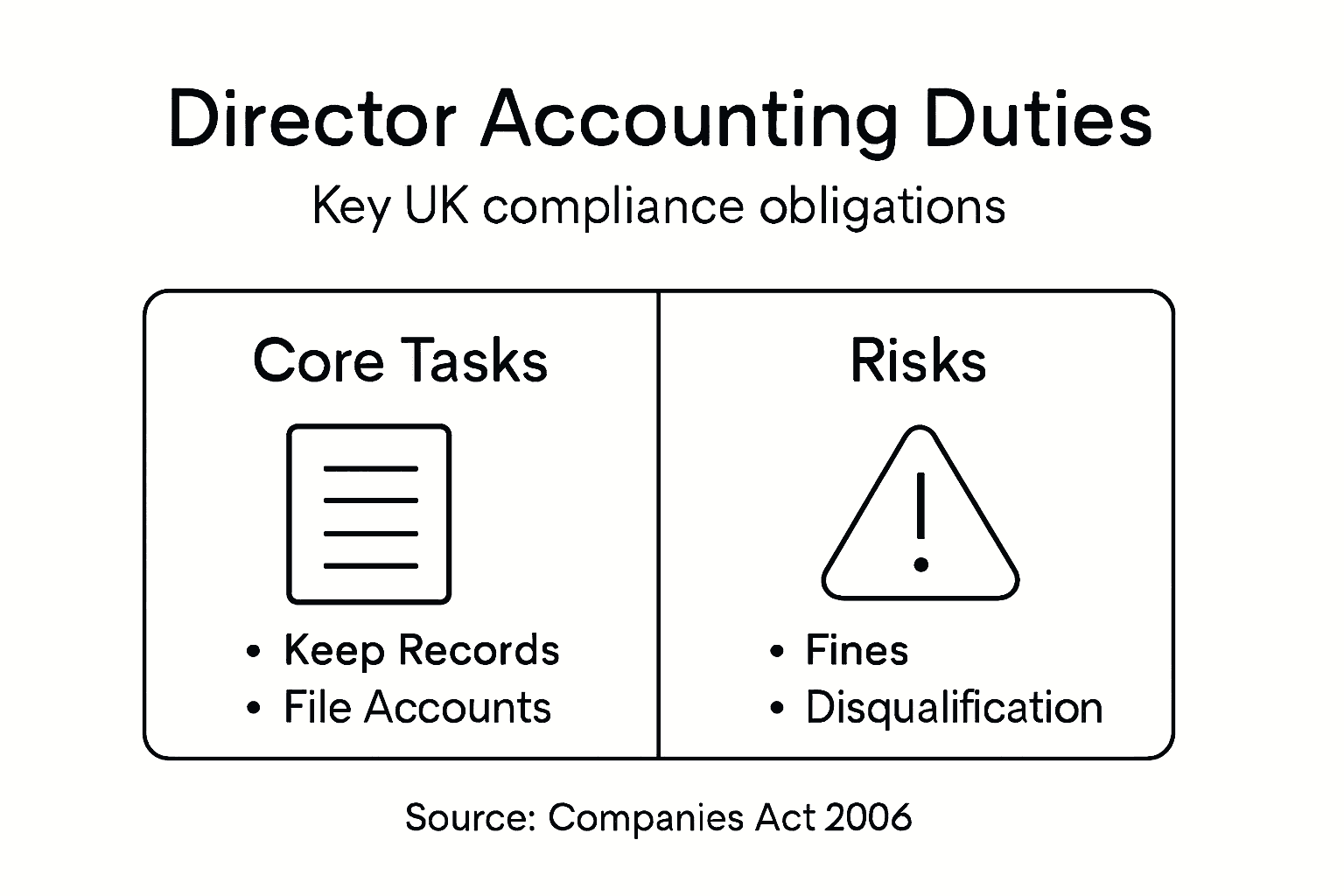
The reporting landscape demands meticulous attention to detail, with directors responsible for ensuring accuracy, completeness, and timely submission of all financial documentation.
Pro tip: Implement a robust digital record-keeping system that automatically tracks filing deadlines and maintains comprehensive financial documentation.
Risks, Liabilities, and Common Mistakes for Directors
Directors face substantial risks when navigating complex financial and legal responsibilities. Financial and accounting duties present significant challenges that can lead to serious legal and financial consequences if mismanaged.
Common risks and potential mistakes include:
Financial Record Keeping Errors
Incomplete transaction documentation
Inconsistent accounting practices
Failing to maintain required records
Neglecting six-year record retention rules
Compliance and Reporting Mistakes
Missing statutory filing deadlines
Submitting inaccurate financial statements
Overlooking regulatory changes
Inadequate internal financial controls
Legal and Personal Liability Risks
Potential personal financial exposure
Risk of directorship disqualification
Significant financial penalties
Potential criminal prosecution for severe breaches
Statutory Obligations require directors to demonstrate proactive financial management and transparency. Ignorance of legal requirements offers no protection against potential penalties, making continuous professional development and expert guidance crucial for effective governance.
The consequences of these mistakes can be devastating, potentially destroying a company’s reputation and creating substantial personal legal and financial risks for individual directors.
This table highlights potential consequences for directors failing statutory obligations:
Risk Category | Threat to Company | Impact on Director |
Poor Record Keeping | Loss of financial control | Personal legal exposure |
Compliance Lapses | Regulatory penalties | Disqualification risk |
Legal Breaches | Damaged reputation | Possible criminal prosecution |
Pro tip: Engage a qualified compliance professional annually to conduct a comprehensive review of your financial practices and governance procedures.
Ensure Your Company Directors Meet UK Accounting Compliance with Expert Support
Navigating the complex legal duties and accounting responsibilities outlined in the Companies Act 2006 can be challenging for directors. From maintaining accurate financial records to meeting strict statutory filing deadlines, these critical compliance requirements pose significant risks if not managed effectively. Common issues such as incomplete documentation, missed deadlines, and personal liability concerns can leave your company and directors vulnerable.

Partnering with Concorde Company Solutions provides you tailored accounting and compliance support designed to ease these burdens. Our expertise in statutory accounts, company tax returns, and bookkeeping ensures that your financial records remain accurate and up to date. We help directors understand and fulfil their obligations while safeguarding against costly errors. Take control of your financial governance today by visiting our website to learn how our reliable services can safeguard your company’s future and director compliance.
Frequently Asked Questions
What are the main accounting responsibilities of directors?
Directors are responsible for maintaining accurate financial records, preparing and submitting annual company accounts, ensuring tax compliance, managing financial reporting obligations, and overseeing the organisation’s financial performance.
How do different types of directors impact accounting practices?
Executive directors take charge of daily financial decisions, non-executive directors provide oversight and strategic advice, while managing directors lead financial strategy and performance. Each type brings unique skills to the board’s financial management.
What are the legal duties directors must adhere to under the Companies Act 2006?
Directors must act within the powers set out in the company’s constitutional documents, promote the success of the company by considering long-term impacts, and exercise independent judgment in their decisions.
What common mistakes should directors avoid to ensure compliance?
Directors should avoid poor record keeping, missing filing deadlines, submitting inaccurate financial statements, and failing to maintain adequate internal financial controls to mitigate legal and personal liability risks.
Recommended


Comments