
Role of Accountants in Startups – Avoiding Costly Pitfalls
- David Rawlinson
- Dec 30, 2025
- 7 min read

Most british startups lose money each year to unnecessary tax penalties, yet smart financial guidance can prevent these costly mistakes. New businesses in Leeds and Garforth are often stretched thin, and without specialised accounting support they risk slipping through regulatory cracks. This article breaks down what an accountant really does for small startups, so you understand the practical ways they protect you from financial trouble and help build lasting foundations.
Table of Contents
Key Takeaways
Point | Details |
Role of Accountants | Accountants in startups are vital strategic partners who guide financial decision-making and help establish a solid financial foundation during early stages. |
Financial Compliance | Maintaining compliance with UK regulations and accounting standards is crucial for startups to avoid penalties and ensure legal operation. |
Key Functions | Essential accounting functions include accurate record keeping, tax management, and preparing annual accounts to support business growth and transparency. |
Common Mistakes | Professional accountants help prevent costly financial errors by ensuring separation of personal and business finances and timely tax filings. |
Defining the Accountant’s Role in Startups
In the dynamic world of startups, an accountant serves as far more than a number cruncher. They are strategic financial partners who provide critical guidance during a company’s most vulnerable early stages. The role extends well beyond traditional bookkeeping into a comprehensive advisory function that can determine a startup’s financial trajectory.
According to job market research, startup accountants play a pivotal role in financial record keeping, budgeting, and ensuring rigorous compliance with financial regulations. Their primary responsibilities include generating accurate financial data that informs strategic business decisions, identifying potential cost-saving opportunities, and managing complex tax obligations including initiatives like Making Tax Digital.
Startup accountants bring specialised expertise in several key areas. They develop comprehensive financial forecasts, analyse spending patterns, manage cash flow, prepare essential financial statements, and provide strategic advice on funding strategies. By maintaining meticulous financial records and offering proactive guidance, these professionals help new businesses navigate financial complexities and build a stable foundation for sustainable growth.
Pro tip: When selecting an accountant for your startup, prioritise candidates with experience in your specific industry and a track record of supporting early-stage businesses through their growth phases.
Key Accounting Functions for New Businesses
New businesses face a complex landscape of financial responsibilities that require meticulous attention and strategic planning. Understanding the essential accounting functions is crucial for maintaining financial health, ensuring legal compliance, and setting a strong foundation for sustainable growth.
According to government business guidelines, key accounting functions include selecting an appropriate business structure, registering with Companies House or HMRC, maintaining separate business finances, and keeping accurate financial records. These foundational steps help new businesses track income and expenses effectively while establishing a clear financial framework.

Moreover, businesses must adhere to specific UK accounting standards, which involve preparing comprehensive financial statements that comply with legal requirements. Financial reporting standards such as FRS 102 provide critical guidelines for managing VAT, corporation tax submissions, and ensuring transparent financial reporting. This includes developing precise systems for documenting financial transactions, preparing annual accounts, managing payroll, and maintaining accurate tax records.
Pro tip: Invest in reliable accounting software that integrates seamlessly with HMRC systems to streamline your financial reporting and reduce the risk of compliance errors.
Here is a summary of essential accounting functions for UK startups and their business impact:
Accounting Function | Primary Objective | Typical Impact on Startups |
Business Structure Selection | Choose legal framework | Influences tax and liability |
Financial Record Keeping | Maintain accurate transaction records | Enables informed decision-making |
VAT and Tax Management | Ensure compliance with HMRC and FRS 102 | Avoids penalties and builds trust |
Annual Accounts Preparation | Compile financial performance reports | Supports funding and transparency |
Payroll Administration | Manage staff payments and deductions | Ensures legal compliance, supports growth |
UK Compliance and Legal Obligations for Startups
Navigating the complex landscape of legal and regulatory requirements is a critical challenge for UK startups. Understanding and adhering to these obligations from the outset can prevent costly penalties, legal complications, and potential business disruptions that could derail an emerging venture.
Government registration guidelines outline crucial compliance requirements for startups, particularly those structured as limited companies. These include mandatory registration with Companies House, appointing directors, and fulfilling responsibilities under the Companies Act 2006. Startups must maintain meticulous company and accounting records, file annual accounts and company tax returns, pay corporation tax, and ensure directors meet their comprehensive legal responsibilities.
Beyond registration, UK startups must navigate a complex web of regulatory obligations. This encompasses adhering to data protection regulations, securing appropriate business licences, managing tax submissions, complying with employment laws, and implementing sector-specific health and safety standards. Business compliance guidelines emphasise the importance of maintaining separate business accounts and meeting statutory record-keeping and reporting duties, which form the foundation of legal and financial transparency.
Pro tip: Consult with a professional accountant or legal advisor specialising in startup regulations to conduct a comprehensive compliance audit within your first six months of operation.
Financial Planning, Tax Efficiency, and Growth Support
Startup financial management represents a complex and critical challenge that demands strategic thinking, meticulous planning, and proactive decision making. Successfully navigating financial complexities can mean the difference between sustainable growth and premature business failure.
According to research from Oxford’s Small Business School, financial planning for startups encompasses managing funding sources, developing robust budgeting strategies, and creating accurate growth forecasts. This involves leveraging government tax relief schemes, identifying potential public funding initiatives, and building strategic connections within entrepreneurial ecosystems that provide critical capital and mentorship.
Academic research on financial management emphasises that effective financial planning is not merely about tracking numbers, but creating a comprehensive framework for business sustainability. This framework includes strategic profit maximisation, sophisticated cash flow management, comprehensive risk mitigation, and developing adaptive financial strategies that support scalable business growth. Startups must view financial planning as a dynamic process that evolves with their business, requiring continuous reassessment and strategic realignment.
Pro tip: Develop a quarterly financial review process that allows you to assess your startup’s financial health, adjust strategies, and maintain a clear view of your growth trajectory.
Common Startup Mistakes Accountants Help Prevent
Startups operate in a high-risk financial environment where seemingly minor mistakes can trigger catastrophic consequences. Navigating this complex landscape requires more than just good intentions - it demands professional financial expertise and strategic oversight.
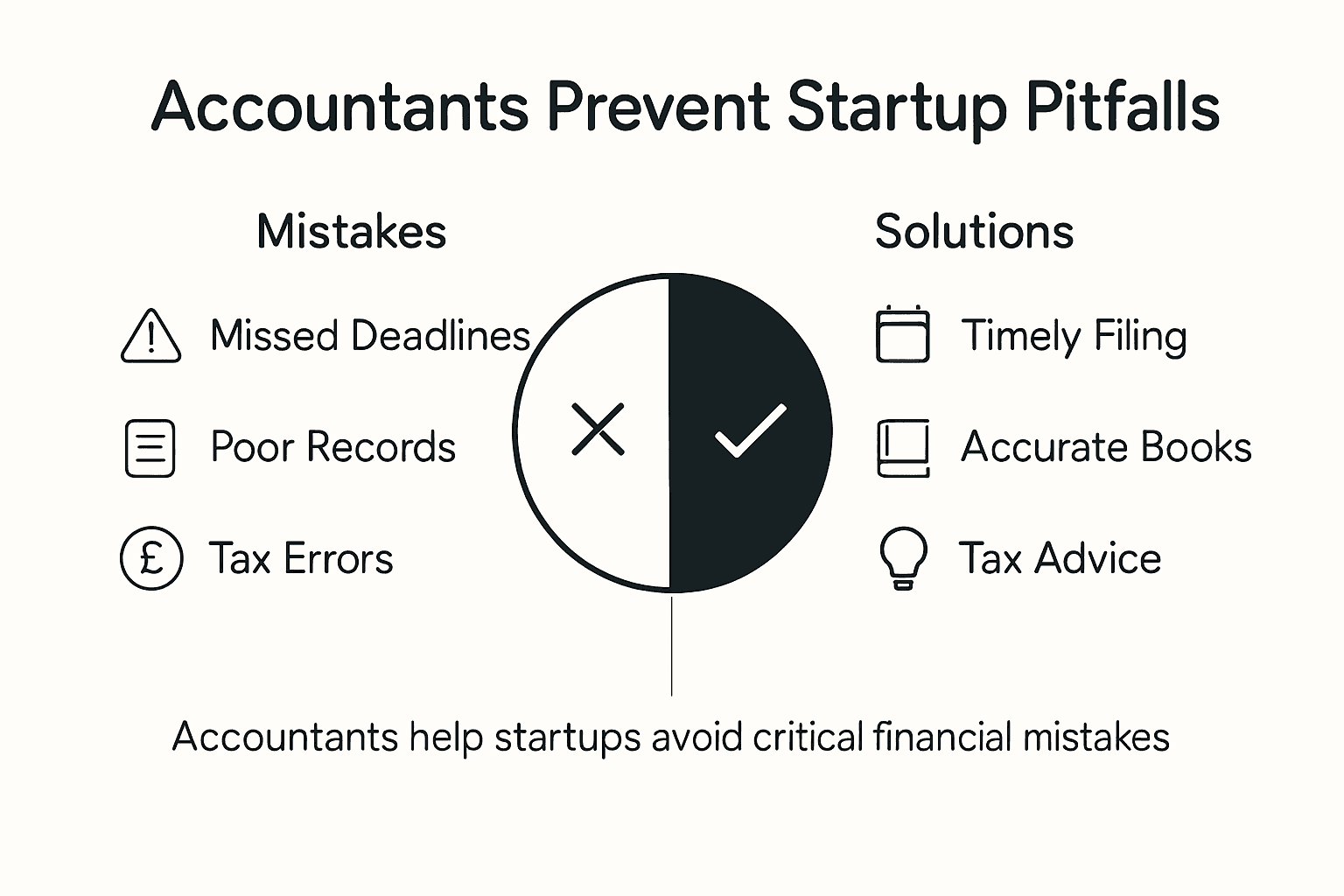
Government business guidelines highlight several critical areas where accountants prevent costly startup mistakes. These include maintaining clear separation between personal and business finances, ensuring accurate record keeping, meeting strict tax deadlines, filing tax returns correctly, and maintaining compliance with Companies House and HMRC regulatory requirements. Accountants provide crucial guidance on selecting appropriate business structures and developing robust financial management strategies that protect the business’s long-term sustainability.
Financial reporting standards research reveals another critical area of accountant intervention: identifying potential financial risks before they become critical issues. By conducting thorough going concern assessments, accountants help startups understand their solvency and liquidity risks, detect financial irregularities early, and ensure transparent reporting. This proactive approach prevents potential penalties, financial losses, and reputational damage that could otherwise derail a promising business venture.
Pro tip: Schedule monthly financial review sessions with your accountant to proactively identify and mitigate potential financial risks before they escalate.
The table below outlines common financial mistakes for startups and how a professional accountant mitigates each risk:
Startup Financial Mistake | Potential Risk | Accountant’s Preventative Action |
Mixing business and personal funds | Loss of financial clarity | Sets up separate accounts |
Inaccurate tax filings | Fines and investigations | Checks and submits timely returns |
Poor cash flow management | Insolvency or missed opportunities | Monitors and forecasts cash position |
Neglecting regulatory deadlines | Legal action or company strike-off | Tracks and meets all deadlines |
Protect Your Startup from Financial Pitfalls with Expert Accounting Support
Starting a new business brings many challenges, especially when it comes to managing finances and staying compliant with HMRC and Companies House regulations. This article highlights how crucial it is to have an accountant who can prevent common but costly mistakes like mixing business and personal finances, inaccurate tax filings, and poor cash flow management. If you want to avoid these dangers and build a strong financial foundation for your startup, you need a trusted partner who understands the unique demands faced by early-stage businesses.

At Concorde Company Solutions in Garforth, Leeds, we offer personalised accounting services tailored for startups and small businesses. From statutory accounts and company tax returns to payroll management and bookkeeping, our experts ensure timely and accurate financial record keeping that supports your growth while keeping you fully compliant. Discover how our reliable statutory accounts and clear, transparent pricing enable you to focus on growing your business without financial worries. Take the first step to secure your startup’s future today by visiting our website and contacting our team for support.
Frequently Asked Questions
What is the role of an accountant in a startup?
An accountant in a startup serves as a key financial advisor, providing guidance on financial record keeping, budgeting, compliance with regulations, and strategic financial planning. They help navigate financial challenges and ensure the startup has a solid financial foundation.
How can accountants help avoid common financial mistakes in startups?
Accountants help prevent common financial mistakes by ensuring proper separation of personal and business finances, accurate tax filings, effective cash flow management, and compliance with regulatory deadlines. They offer proactive strategies to mitigate risks before they escalate.
What are the key accounting functions that startups should focus on?
Key accounting functions for startups include selecting the appropriate business structure, maintaining accurate financial records, managing VAT and tax obligations, preparing annual accounts, and managing payroll. These functions are essential for legal compliance and financial sustainability.
Why is financial planning important for startups?
Financial planning is crucial for startups as it involves managing funding sources, creating robust budgeting strategies, and developing accurate forecasts. A well-structured financial plan supports sustainable growth, maximises profits, and helps in identifying potential financial risks early.
Recommended


Comments