
How to Optimise Tax Efficiency for Your Business
- Richard Ellis
- Feb 6
- 7 min read


Keeping pace with ever-changing HMRC rules can feel overwhelming for many Leeds and Garforth business owners. A clear understanding of what to document and claim makes a real difference in lowering your tax bills. By focusing on organised, detailed financial records, you can uncover valuable tax-saving opportunities and steer clear of costly compliance errors. This guide reveals practical steps to help you optimise your accounts and confidently meet all requirements set by HMRC.
Table of Contents
Quick Summary
Key Insight | Explanation |
1. Thoroughly assess financial records | Evaluate all financial documents to identify tax-saving opportunities and ensure compliance with UK regulations. |
2. Identify all deductions and reliefs | Explore every legitimate deduction available, such as operating expenses and staff costs, to reduce tax liability. |
3. Implement efficient expense strategies | Streamline expense management through digital tools and regular audits for better financial performance. |
4. Utilise tax planning tools | Leverage sophisticated digital tools for real-time tracking and compliance with tax regulations to maximise savings. |
5. Verify HMRC compliance regularly | Carry out regular audits and maintain transparent records to ensure adherence to HMRC guidelines and avoid penalties. |
Step 1: Assess current financial records thoroughly
Optimising tax efficiency begins with a comprehensive evaluation of your existing financial records. Thoroughly assessing your company’s financial documentation allows you to identify potential tax-saving opportunities and ensure complete compliance with UK accounting requirements.
To conduct a robust financial record assessment, focus on gathering and systematically reviewing these critical documents:
Bank statements for all business accounts
Sales invoices and receipts
Purchase invoices and expense records
Payroll documentation
Asset and depreciation records
Loan and credit agreements
Previous tax returns
Each financial document provides crucial insights into your business’s fiscal health and potential tax optimisation strategies. Pay special attention to transactions that might qualify for tax deductions or credits. Categorise expenses meticulously, separating personal and business expenditures to maintain clear financial boundaries.
Maintaining organised, detailed financial records is not just good practice - it’s a legal requirement for UK businesses.
Carefully cross-reference your records against financial statement standards to ensure accuracy and completeness. This systematic approach helps identify potential tax-saving opportunities while protecting your business from potential HMRC scrutiny.
Professional tip: Invest in digital accounting software that automatically categorises and tracks expenses, saving time and reducing manual record-keeping errors.
Step 2: Identify allowable deductions and reliefs
Reducing your tax liability requires a strategic approach to identifying every legitimate deduction and tax relief your business can claim. Understanding the nuanced landscape of corporation tax deductions can potentially save your company significant amounts of money each financial year.
Key areas to explore for tax deductions and reliefs include:
Operating expenses such as office rent, utilities, and equipment
Staff-related costs including salaries, pension contributions, and training
Research and development expenditures
Marketing and advertising expenses
Vehicle and travel costs related to business operations
Professional fees for legal and accounting services
Technology and software investments
Particularly noteworthy for innovative businesses are the R&D tax relief opportunities available to SMEs. These provisions allow companies to claim substantial additional deductions for qualifying research and development projects, effectively reducing their overall tax burden.
Strategic tax planning is not about avoiding taxes, but intelligently utilising the legitimate deductions and reliefs available to your business.
Carefully document all potential deductions, ensuring you maintain precise records that can withstand potential HMRC scrutiny. Consider consulting with a tax professional who can help you navigate the complex landscape of corporate tax reliefs and maximise your potential savings.

Professional tip: Keep a dedicated folder for tax-related documents throughout the year, making annual deduction identification significantly easier and more comprehensive.
Step 3: Implement efficient expense strategies
Streamlining your business expenses is crucial for maintaining robust financial health and maximising tax efficiency. Understanding how to manage business expenses effectively can significantly reduce your tax liability and improve overall financial performance.
Key strategies for implementing efficient expense management include:
Digital tracking of all business expenditures
Categorising expenses with precision and consistency
Implementing automated expense reporting systems
Establishing clear expense guidelines for staff
Regular expense audits to identify potential savings
Separating personal and business expenses completely
Maintaining comprehensive documentation for each transaction
Modern businesses can leverage technological solutions that align with HMRC’s digital transformation initiatives, which emphasise streamlined, transparent financial processes. These digital tools not only simplify expense tracking but also ensure compliance with current tax regulations.
Efficient expense management is less about cutting costs and more about strategic financial control.
Pay special attention to travel and subsistence expenses, as these areas often present significant opportunities for tax-efficient strategies. Develop a systematic approach to recording and claiming allowable expenses, ensuring every legitimate cost is properly documented and considered in your tax calculations.
Professional tip: Invest in cloud-based accounting software that automatically categorises and tracks expenses, saving time and reducing manual errors.
Step 4: Utilise appropriate tax planning tools
Modern businesses can dramatically improve their tax efficiency by leveraging sophisticated digital tools designed to streamline financial management. Making Tax Digital compatible software represents a critical advancement in strategic tax planning for UK enterprises.
Essential tax planning tools to consider include:
Cloud-based accounting platforms
Digital record-keeping systems
Real-time tax calculation software
Quarterly reporting tools
Expense tracking applications
Integrated financial management systems
HMRC-recognised compliance checkers
Businesses can access a range of HMRC-recommended online tools and calculators that simplify complex tax calculations. These digital resources enable precise estimation of tax liabilities, capital allowances, and potential reliefs, helping you make informed financial decisions.
Technology transforms tax planning from a complex chore into a strategic business advantage.
Choose tools that integrate seamlessly with your existing financial infrastructure and provide comprehensive reporting capabilities. Look for solutions that offer automatic updates to reflect the latest tax regulations, ensuring your business remains compliant and financially optimised.
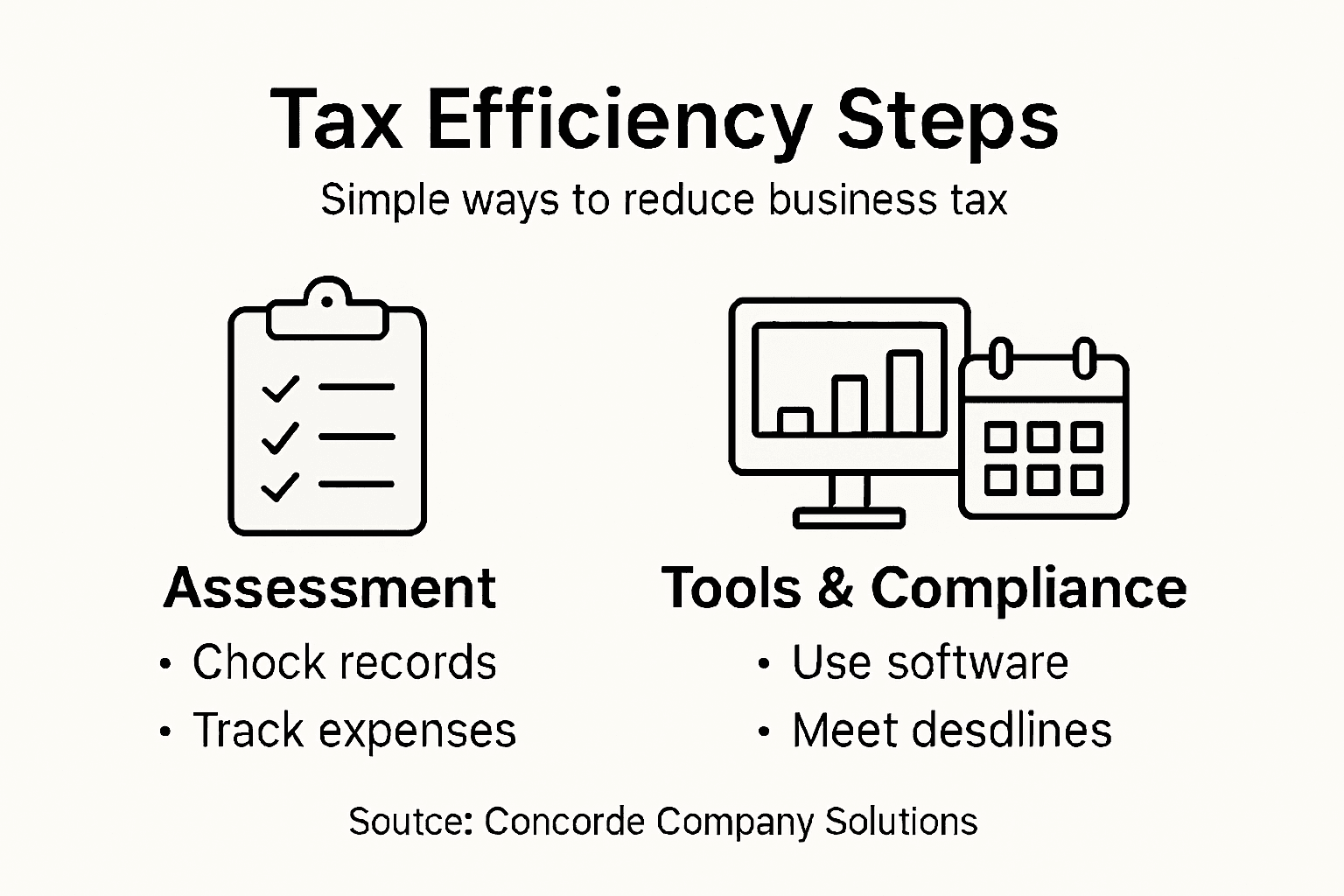
Here is a summary of how digital financial management tools can impact your business:
Tool Type | Primary Function | Business Impact |
Cloud Accounting Platforms | Real-time data and streamlined bookkeeping | Improved accuracy and quick reporting |
Automatic Expense Trackers | Categorise and monitor expenditures | Reduces errors, enhances compliance |
Compliance Checkers | Verify adherence to tax regulations | Minimises risk of penalties and audits |
Professional tip: Select tax planning tools that offer multi-platform accessibility, allowing you to manage your financial data securely from anywhere.
Step 5: Verify compliance with HMRC regulations
Ensuring your business meets all HMRC regulatory requirements is crucial for avoiding potential penalties and maintaining financial integrity. Understanding the intricacies of tax compliance guidelines will help you navigate the complex landscape of taxation with confidence.
Key steps to verify HMRC compliance include:
Regular internal audits of financial records
Detailed documentation of all financial transactions
Accurate and timely tax return submissions
Understanding current tax legislation
Maintaining transparent financial records
Proactive communication with tax authorities
Implementing robust record-keeping systems
Businesses must pay close attention to HMRC’s comprehensive compliance guidelines, which provide critical insights into potential tax risks and best practices. These guidelines help organisations understand and meet regulatory expectations while minimising the risk of costly errors or assessments.
Compliance is not just about following rules - it’s about building trust and demonstrating financial responsibility.
Remember that tax regulations evolve frequently, so staying informed about the latest updates is essential. Consider engaging with a professional tax advisor who can provide expert guidance and help you interpret complex regulatory requirements.
Consider these examples of effective tax-saving approaches compared to less efficient methods:
Approach | Efficient Strategy | Common Pitfall |
Expense Documentation | Digital records with categories | Manual, paper-based receipts |
Deduction Identification | Regular professional reviews | Annual last-minute submissions |
Compliance | Scheduled audits and alerts | Overlooked filing deadlines |
Professional tip: Create a dedicated compliance calendar that tracks key tax deadlines and regulatory changes to ensure you never miss an important submission.
Take Control of Your Business Tax Efficiency with Expert Support
Struggling to navigate the complex landscape of HMRC compliance and optimise your tax deductions? Many businesses face challenges in managing expenses efficiently and maximising allowable reliefs, as highlighted in the guide on how to optimise tax efficiency. Without thorough financial record assessments and reliable tax planning tools, costly mistakes or missed opportunities can occur.

Partner with Concorde Company Solutions to unlock strategic tax planning tailored for your business needs. Our expert team in Garforth, Leeds, offers personalised bookkeeping, company tax returns, and payroll management services designed to help you maintain accurate records, implement efficient expense strategies, and stay fully compliant with the latest regulations. Visit our website to explore how our statutory accounts and tax return services can be the trusted foundation for your financial success. Take the next step today and ensure your business benefits from every legitimate tax advantage available.
Frequently Asked Questions
What steps should I take to assess my current financial records for tax efficiency?
To optimise tax efficiency, start by thoroughly reviewing your financial records, including bank statements, sales and purchase invoices, and expense documentation. Gather these documents and categorise your expenses to identify possible tax-saving opportunities within the next month.
How can I identify allowable deductions that can lower my tax liability?
Identify allowable deductions by analysing specific areas like operating expenses, staff-related costs, and R&D expenditures. Document each of these deductions carefully and aim to create a comprehensive list within 30 days to maximise your savings.
What efficient expense strategies can I implement for my business?
Implement efficient expense strategies by categorising your business expenditures accurately and utilising digital tracking systems for better oversight. Conduct regular expense audits to identify potential savings and complete this process at least quarterly.
What tax planning tools should my business use to optimise tax efficiency?
Utilise appropriate tax planning tools such as cloud-based accounting platforms and real-time tax calculation software to streamline your financial management. Start exploring these tools now to enhance your reporting capabilities and ensure compliance within the next financial quarter.
How can I ensure compliance with HMRC regulations to avoid penalties?
Verify compliance with HMRC regulations by conducting regular internal audits and ensuring accurate documentation of all transactions. Maintain a compliance calendar to keep track of key tax deadlines and updates, and do this at the start of each financial year to stay organised.
Recommended


Comments