
Bookkeeping Process for Startups: A Practical Step-by-Step Guide
- David Rawlinson
- Jan 16
- 7 min read

British startups face a real challenge when just one missed record can lead to HMRC penalties or compliance headaches. For founders and financial managers in Leeds, getting bookkeeping right from the start is about more than following the rules. With over 60 percent of small businesses citing financial admin as their biggest hurdle, choosing smart record-keeping methods and software helps protect your venture and keeps your growth plans on track.
Table of Contents
Quick Summary
Key Insight | Explanation |
1. Assess Required Records | Identify necessary documents like invoices and bank statements for compliance with HMRC and Companies House. |
2. Choose Suitable Software | Select accounting software that integrates with your bank and suits the needs of your startup, prioritising user-friendliness. |
3. Set Up a Tailored Chart | Create a chart of accounts that accurately reflects your startup’s financial structure for precise tracking. |
4. Systematically Record Transactions | Document financial transactions consistently to ensure accurate records and simplify future audits. |
5. Conduct Regular Reconciliation | Regularly reconcile accounts to catch discrepancies, ensuring your financial records are accurate and up-to-date. |
Step 1: Assess required records and choose suitable software
Navigating the financial landscape of your startup requires strategic record-keeping and selecting the right accounting software. Understanding which documents you need to track and finding a digital solution that streamlines your financial management can significantly reduce administrative burden and support your business growth.
When assessing your record-keeping requirements, focus on documents mandated by HMRC and Companies House. These typically include sales invoices, purchase receipts, payroll records, bank statements, and VAT transaction logs. The goal is to maintain comprehensive financial documentation that supports accurate reporting and potential future audits. For UK startups, cloud-based accounting solutions have become increasingly popular due to their flexibility and integrated features that simplify compliance.
Choosing appropriate software involves evaluating several key factors. Consider solutions that offer automatic bank feeds, invoicing capabilities, expense tracking, and Making Tax Digital compatibility. Popular options like Xero, FreeAgent, QuickBooks, and Sage provide scalable platforms tailored for emerging businesses. Prioritise software that integrates seamlessly with your existing banking systems and offers user-friendly interfaces that do not require extensive accounting expertise.
Top Tip: Select accounting software that offers a free trial, allowing you to test features and user experience before committing to a subscription.
Here’s how popular UK accounting software compares for startups:
Software | Standout Feature | Best Suited For |
Xero | Strong integrations | Growing digital businesses |
FreeAgent | Simple interface | Freelancers and new SMEs |
QuickBooks | Automated expense tracking | SMEs needing automation |
Sage | Industry customisation | Larger or niche startups |
Step 2: Set up a chart of accounts tailored for startups
Establishing a robust chart of accounts represents a critical foundation for your startup’s financial infrastructure. This strategic framework will help you track income, expenses, assets, and liabilities with precision and clarity.

Designing your chart of accounts requires careful consideration of your specific business model and industry. Start by creating primary account categories that reflect your startup’s financial structure. These typically include revenue streams, operational expenses, capital investments, and overhead costs. When setting up these categories, consider using bookkeeping solutions for small businesses to streamline the process and ensure comprehensive financial tracking.
Organise your accounts hierarchically to provide granular insights into your financial performance. Begin with broad categories like revenue, expenses, assets, and liabilities. Then subdivide these into specific accounts relevant to your startup. For instance, revenue might include product sales, service income, and consulting fees. Expense categories could encompass marketing costs, salaries, rent, utilities, and technology investments. This structured approach enables precise financial reporting and supports strategic decision making by offering clear visibility into your business’s financial health.
Top Tip: Review and adjust your chart of accounts quarterly to ensure it continues to accurately represent your startup’s evolving financial landscape.
Step 3: Record financial transactions systematically
Systematically recording financial transactions is the backbone of maintaining accurate and compliant financial records for your startup. This crucial step ensures that every financial movement within your business is tracked precisely, providing a clear picture of your financial health.
Begin by establishing a consistent method for documenting all financial transactions. This means capturing every invoice, receipt, payment, and expense immediately and accurately. Create a standardised process where you record transactions as they occur, using your chosen accounting software to input details such as date, amount, category, and relevant description. Bookkeeping tips for companies recommend maintaining digital copies of all source documents to support your financial records and simplify potential future audits.
Implement a regular schedule for transaction recording to prevent backlogs and potential errors. Consider setting aside dedicated time daily or weekly to update your financial records. This might involve reconciling bank statements, logging expenses, tracking income, and ensuring all transactions are correctly categorised. By maintaining a disciplined approach to financial record keeping, you create a reliable financial trail that supports accurate reporting, tax preparation, and strategic business decision making.
Top Tip: Develop a consistent naming convention for your digital financial documents to make retrieval and organisation significantly easier.
Step 4: Reconcile accounts and verify data accuracy
Account reconciliation represents a critical checkpoint in maintaining your startup’s financial integrity. This process ensures that your internal financial records accurately reflect the actual transactions recorded by your bank and other financial institutions.
To begin reconciliation, gather your bank statements and compare them systematically with your internal accounting records. Reconciliation tools for startups can help automate this process, identifying discrepancies quickly and efficiently. Start by matching each transaction line by line, verifying the date, amount, and description. Pay special attention to any transactions that do not match between your records and bank statements. These might include unrecorded fees, unexpected charges, or data entry errors that require immediate investigation and correction.
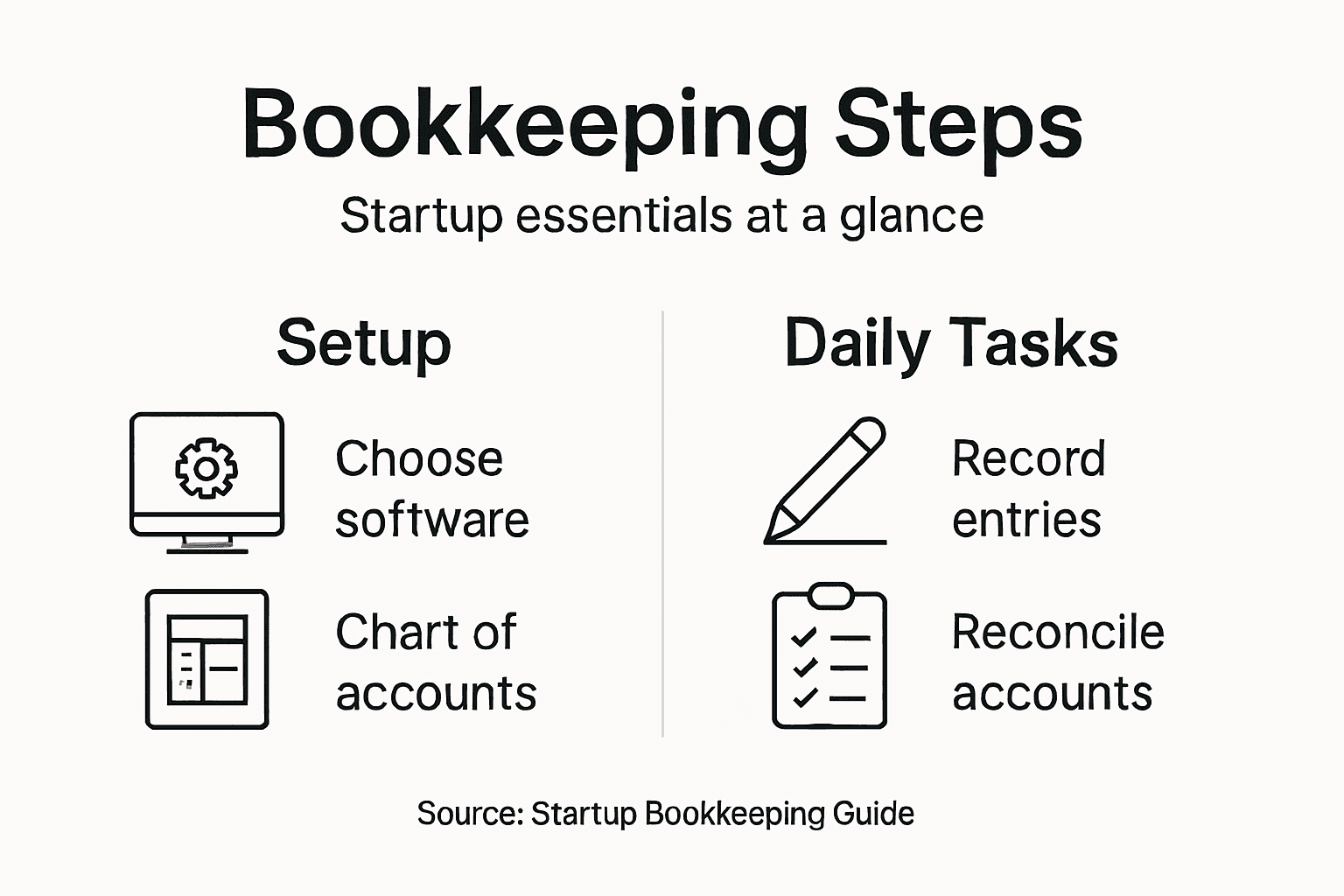
Develop a consistent monthly reconciliation routine to catch potential issues early. This practice not only helps prevent financial errors but also provides a comprehensive view of your startup’s cash flow and financial health. Look for patterns in discrepancies, investigate any unusual transactions, and ensure that all income and expenses are correctly categorised. By maintaining this disciplined approach, you create a reliable financial foundation that supports accurate reporting, tax compliance, and strategic business decision making.
Top Tip: Create a dedicated reconciliation checklist to standardise your monthly review process and reduce the likelihood of overlooking critical details.
Step 5: Prepare reports and review compliance status
Preparing financial reports and reviewing compliance status represents a critical milestone in your startup’s financial management journey. These processes ensure transparency, support strategic decision making, and maintain your business’s legal standing with regulatory authorities.
Begin by compiling essential financial statements that provide a comprehensive view of your startup’s financial performance. This includes generating profit and loss statements, balance sheets, and cash flow reports. Compliance requirements for UK businesses mandate detailed documentation that accurately reflects your financial activities. Pay close attention to key metrics such as revenue streams, expense categories, asset valuations, and liability assessments. Ensure that these reports adhere to UK accounting standards like UK GAAP or IFRS, providing a clear and honest representation of your financial position.
The table below clarifies key financial reports and their strategic uses:
Report Type | Main Purpose | Key Audience |
Profit & Loss | Tracks income and expenditure | Owners, investors |
Balance Sheet | Shows assets and liabilities | Regulators, accountants |
Cash Flow Report | Details money movement | Management, HMRC |
Conduct a thorough compliance review by systematically checking your adherence to regulatory requirements. This involves verifying timely submissions to HMRC and Companies House, confirming VAT reporting accuracy, and ensuring compliance with Making Tax Digital guidelines. Cross reference your financial records with official deadlines, tax obligations, and statutory filing requirements. By maintaining meticulous records and staying proactive about compliance, you protect your startup from potential penalties and demonstrate financial responsibility to stakeholders, investors, and regulatory bodies.
Top Tip: Create a digital compliance calendar with automated reminders to track critical reporting deadlines and regulatory submission dates.
Streamline Your Startup’s Bookkeeping with Expert Support
Starting a business brings exciting opportunities but managing the bookkeeping process can quickly become overwhelming. From selecting the right accounting software to maintaining a detailed chart of accounts and ensuring monthly reconciliations, these critical tasks demand time and precision to stay compliant with HMRC and Companies House requirements. If you are looking to build a solid financial foundation without the stress of navigating complex regulations alone Concorde Company Solutions is here to help.

Take control of your startup’s financial management today by partnering with a trusted local accountant in Garforth, Leeds. Our personalised approach covers everything from bookkeeping and payroll management to statutory accounts and company tax returns. Visit Concorde Company Solutions to discover how our transparent pricing and dedicated support will simplify your financial processes and give you confidence moving forward. Don’t let bookkeeping challenges hold your business back—contact us now to get started with expert assistance tailored to your unique needs.
Frequently Asked Questions
What records do I need to keep for my startup’s bookkeeping?
Maintaining accurate records for your startup is essential. Focus on key documents such as sales invoices, purchase receipts, payroll records, bank statements, and VAT transaction logs. Start by organising these documents immediately to ensure comprehensive financial tracking and compliance.
How do I choose the right accounting software for my startup?
Selecting appropriate accounting software involves evaluating features like automatic bank feeds, invoicing capabilities, and expense tracking. Compare various options and opt for software that aligns with your startup’s specific financial needs and integrates easily with existing banking systems.
What is a chart of accounts and how do I set it up for my startup?
A chart of accounts is a structured framework that categorises all financial transactions for your startup. Begin by creating primary account categories like revenue streams and expenses, then subdivide these into specific accounts relevant to your business model, ensuring you have a clear financial overview.
How often should I record financial transactions for my startup?
Record financial transactions systematically and consistently, ideally on a daily or weekly basis. Develop a standardised process to document each transaction promptly, which will help maintain accuracy and prevent errors in your financial records.
What does account reconciliation involve for my startup?
Account reconciliation is the process of ensuring that your startup’s internal financial records match your bank statements. Perform this reconciliation monthly by systematically comparing each transaction to catch any discrepancies and maintain financial integrity.
How can I prepare financial reports for my startup?
To prepare financial reports, start by compiling essential statements such as profit and loss reports, balance sheets, and cash flow reports. Ensure these reports reflect your startup’s financial performance accurately and adhere to UK accounting standards for transparency and compliance.
Recommended
Thanks for posting this detailed article. I was reading related information on Companies999 about Birmingham online accountants and this article adds more perspective.