
The Essential Guide to Accountants in Tax Planning
- David Rawlinson
- Nov 30, 2025
- 7 min read

Most british businesses discover that tax planning is far more than ticking boxes for HMRC. With over 80 percent of company owners admitting they feel uncertain about tax rules, professional advice becomes vital. The right accountant brings clarity, helps identify legal savings, and shields businesses from costly mistakes. This guide offers practical insights into the varied role of accountants in tax planning and shows how smart financial strategies can make a real difference.
Table of Contents
Key Takeaways
Point | Details |
Accountants’ Role | Accountants are essential in tax planning, offering strategic advice to optimise tax positioning and ensure legal compliance. |
Tax Strategies for Businesses | Effective tax planning includes maximising allowances and strategically timing financial transactions to minimise liabilities. |
Compliance Requirements | Maintaining accurate records and submitting timely returns are crucial for adhering to legal and HMRC standards. |
Benefits of Tax Planning | Proactive tax management can significantly improve cash flow, minimise liabilities, and support sustainable business growth. |
Defining Accountants’ Role in Tax Planning
Accountants play a strategic and multifaceted role in tax planning, serving as financial navigators who help businesses and individuals optimise their tax positioning while ensuring full legal compliance. Their expertise goes far beyond simple number crunching, encompassing comprehensive financial strategy and proactive tax management.
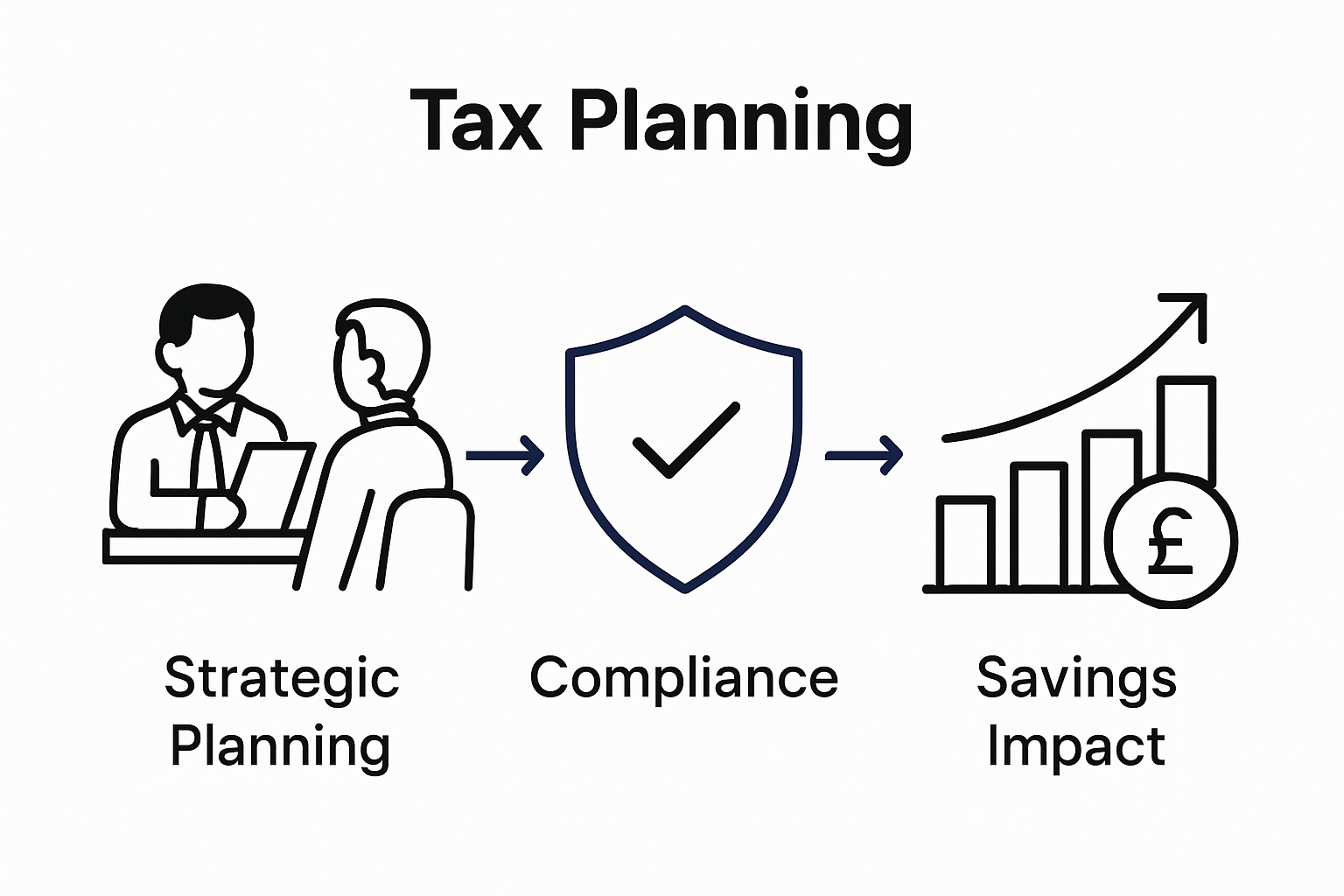
At its core, tax planning involves systematic analysis of a client’s financial situation to minimise tax liabilities through legal strategies and informed decision-making. Accountants leverage their deep understanding of tax legislation to identify legitimate opportunities for tax reduction, structure financial transactions efficiently, and provide strategic advice that aligns with both short-term cash flow needs and long-term financial objectives. This requires not just mathematical precision, but a nuanced understanding of complex tax regulations and their practical implications.
The key responsibilities of accountants in tax planning include:
Conducting thorough financial reviews and assessments
Identifying potential tax deductions and credits
Developing personalised tax strategies tailored to individual or business circumstances
Preparing and filing accurate tax documentation
Providing guidance on potential tax implications of financial decisions
Representing clients during tax audits or investigations
For businesses seeking comprehensive tax guidance, learn more about the role of accountancy firms in tax strategy and how professional support can transform your financial planning approach. Professional accountants are not just number processors, but strategic partners who help clients navigate the complex landscape of tax regulations while optimising their financial potential.
Tax Planning Strategies for UK Businesses
Tax planning is a critical financial strategy for UK businesses seeking to optimise their fiscal position and support sustainable growth. According to Gov UK Business Tax Road Map, the government is actively working to create a supportive tax environment that encourages business investment and reduces administrative complexities.
Effective tax planning involves several strategic approaches that help businesses legally minimise their tax liabilities while maintaining financial compliance. Strategic tax management requires a comprehensive understanding of current tax regulations, potential deductions, and proactive financial structuring. As Gov UK Spring Budget 2023 highlights, the UK government is committed to simplifying tax systems to support business growth and reduce administrative burdens.
Key tax planning strategies for UK businesses include:
Maximising available tax allowances and reliefs
Structuring business transactions to optimise tax efficiency
Timing income and expenditure strategically
Utilising capital allowances for business investments
Implementing effective record-keeping practices
Exploring tax-efficient employee compensation schemes
For businesses looking to navigate the complex landscape of corporate taxation, explore our comprehensive guide to corporate tax planning and discover how strategic financial management can transform your business’s fiscal approach. Understanding and implementing these strategies can significantly impact your company’s financial health and long-term sustainability.

Legal and HMRC Compliance Requirements
Navigating the complex landscape of legal and HMRC compliance is a critical responsibility for businesses and accountants alike. According to Gov UK Tax Administration: Large Businesses Transparency Strategy, organisations are now required to demonstrate heightened transparency through annual tax strategy publications approved by executive boards, signalling a shift towards more rigorous financial accountability.
Regulatory compliance extends far beyond simple record-keeping, encompassing a comprehensive approach to financial management and legal adherence. HMRC’s Economic Crime Supervision Handbook emphasises the critical importance of maintaining accurate financial records and implementing robust compliance mechanisms. Businesses must be prepared for potential compliance visits and demonstrate meticulous attention to regulatory requirements.
Key legal and HMRC compliance requirements include:
Maintaining comprehensive and accurate financial records
Submitting timely and precise tax returns
Implementing robust internal financial controls
Ensuring transparency in financial reporting
Adhering to current tax legislation and regulations
Conducting regular internal audits and compliance checks
For businesses seeking a comprehensive understanding of their compliance obligations, explore our limited company compliance guide to navigate the intricate landscape of legal and financial regulations with confidence. Proactive compliance is not just about avoiding penalties, but about establishing a foundation of trust and financial integrity.
Key Benefits for SMEs and Individuals
Tax planning offers transformative advantages for small and medium enterprises (SMEs) and individuals seeking financial optimisation. According to Gov UK Growth Support Service, HMRC provides dedicated tax specialists to help businesses navigate complex tax landscapes, access financial incentives, and ensure robust compliance strategies.
Strategic tax management delivers multiple tangible benefits beyond simple cost reduction. UK Business Investment Resources highlight how targeted tax relief schemes like the Enterprise Investment Scheme create opportunities for individuals and businesses to maximise their financial potential. These initiatives encourage investment while providing substantial tax advantages that can significantly impact financial planning and growth.
Key benefits of professional tax planning include:
Minimising tax liabilities through legal strategies
Identifying potential tax credits and deductions
Improving cash flow management
Providing strategic financial insights
Reducing risk of HMRC penalties
Supporting long-term business growth
For businesses and individuals looking to unlock their financial potential, discover essential tax return strategies for UK small businesses and gain expert insights into navigating the complex world of tax planning. Proactive tax management is not just about compliance, but about creating a robust financial foundation for sustainable success.
Common Pitfalls and How Accountants Help
Tax planning is fraught with potential risks that can significantly impact an organisation’s financial health. According to the Mid-sized Business Tax Strategy, professional agents play a crucial role in identifying and mitigating complex tax strategy challenges that businesses often overlook.
Strategic risk management is where accountants truly demonstrate their value. Government Research on Large Business Tax Strategy emphasises how professional accountants help organisations navigate intricate tax environments, transforming potential pitfalls into strategic opportunities. Their expertise extends beyond mere number crunching, encompassing comprehensive financial risk assessment and proactive compliance strategies.
Common tax planning pitfalls that accountants help businesses avoid include:
Misinterpreting complex tax legislation
Missing critical deadlines and filing requirements
Overlooking available tax deductions and credits
Inadequate record-keeping practices
Failing to anticipate potential HMRC investigations
Incorrect classification of business expenses
For businesses seeking to understand the comprehensive benefits of professional financial guidance, explore our complete guide to why businesses need accountants. Professional accountants are not just number processors, but strategic partners who protect your financial interests and help you navigate the complex world of tax compliance.
Partner with Expert Accountants to Master Your Tax Planning
Tax planning can be complicated and stressful with constant changes in legislation and the need for precise compliance. The article highlights common challenges such as misinterpreting tax laws, missing deductions, and navigating HMRC rules while aiming to reduce tax liabilities legally. Your goal is to build a tailored financial strategy that minimises tax, improves cash flow and avoids costly penalties through expert guidance.
Concorde Company Solutions understands these pressures and specialises in providing personalised accounting solutions designed to meet your unique business or personal tax needs. From company tax returns to bookkeeping and payroll management, our local team in Garforth, Leeds, is dedicated to offering transparent pricing and responsive support that builds your confidence and financial security.
Discover how working with professional accountants can transform your tax planning approach today. Explore our services to see how we manage statutory accounts and compliance so you can focus on growing your business. Learn more about how we support long-term tax efficiency and relief strategies in our tax return tips for UK small businesses. Don’t let tax complexities hold you back. Take control now with expert accounting guidance.
Have questions or ready to optimise your tax position today

Contact Concorde Company Solutions for trusted, personalised support that turns the complexities of tax planning into opportunities for success. Visit our website and start your journey toward financial clarity and compliance.
Frequently Asked Questions
What is the role of accountants in tax planning?
Accountants play a strategic role in tax planning by helping businesses and individuals minimise tax liabilities through informed decision-making and legal strategies. They provide comprehensive financial assessments, identify deductions and credits, and develop personalised tax strategies.
How can tax planning benefit small and medium enterprises (SMEs)?
Tax planning offers SMEs several benefits, including minimising tax liabilities, improving cash flow, reducing the risk of HMRC penalties, and supporting long-term business growth. It also helps businesses optimise their financial position through available tax allowances and reliefs.
What are the common pitfalls in tax planning that accountants can help avoid?
Common pitfalls include misinterpreting complex tax legislation, overlooking available deductions, missing filing deadlines, and inadequate record-keeping. Accountants help businesses navigate these challenges, ensuring compliance and maximising tax efficiency.
Why is compliance with HMRC regulations important in tax planning?
Compliance with HMRC regulations is crucial to avoid penalties and maintain financial integrity. It involves submitting accurate tax returns, keeping comprehensive financial records, and adhering to current tax legislation. Proper compliance builds trust with stakeholders and supports sustainable business operations.
Recommended


I note that the discussion resists the temptation of oversimplification. The inferential steps are transparent and traceable. The website offers an extended treatment of the underlying themes. Adoption trajectories are illustrated through platform-based media ecosystems.